
HER2 Breast Cancer
Latest News

Latest Videos


CME Content





























More News
Dr. Hans-Christian Kolberg on Safer Chemotherapy for Patients with HER2-positive Early Breast Cancer
Hans-Christian Kolberg, MD, doctor of Medicine, Marien Hospital Bottrop in Bottrop, Germany, discusses neoadjuvant chemotherapy with docetaxel, carboplatin, and weekly trastuzumab for patients with HER2-positive early breast cancer.
Clifford A. Hudis, MD, FACP, Vice President for Government Relations and Chief Advocacy Officer, Chief, Breast Medicine Service at Memorial Sloan Kettering Cancer Center, talks about the vague understanding medical professional currently have of HER-2 breast cancer and its resistance to certain therapies.

Kimberly L. Blackwell, MD, professor of Medicine, assistant professor of Radiation Oncology, Duke Cancer Institute, discusses upcoming trials for the HER2-antibody margetuximab.

Fred C. Kass, MD, oncology/hematology, internal medicine, Cancer Center of Santa Barbara, discusses HER2-positive breast cancer advancements.

While targeting HER2 mutations is mainly associated with breast cancer, there could be therapeutic potential with anti-HER2 agents in non-small cell lung cancer (NSCLC).

Pertuzumab (Perjeta), in combination with trastuzumab (Herceptin) and chemotherapy, was approved by the European Commission (EC) as a neoadjuvant therapy for adult patients who have HER2-positive, locally advanced, inflammatory, or early stage breast cancer and are at high risk of recurrence.

Shannon Puhalla, MD, assistant professor of medicine, Division of Hematology/Oncology, University of Pittsburgh, discusses a phase III study examining the combination of palbociclib and fulvestrant for the treatment of patients with relapsed metastatic hormone receptor-positive, HER2-negative breast cancer.

Erika P. Hamilton, MD, associate director, Breast Cancer and Gynecologic Cancer Research Program, principal investigator, Sarah Cannon Research Institute, discusses a phase 1b study examining ONT-380, an oral HER2-specific inhibitor, in combination with capecitabine and trastuzumab in the third-line setting and treatment of HER2-positive metastatic breast cancer.

Treatment with lapatinib plus a taxane was associated with a shorter duration of progression-free survival compared with trastuzumab plus a taxane as a frontline therapy for patients with HER2-positive metastatic breast cancer.

The level of TILs identified at the time of diagnosis were found to be an independent prognostic marker for pathologic complete response and event-free survival in patients treated with neoadjuvant HER2-target therapy plus chemotherapy for HER2-positive early breast cancer.
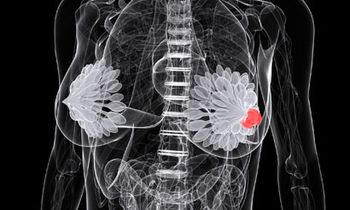
First-line treatment with lapatinib (Tykerb) and a taxane failed to improve progression-free survival (PFS) versus trastuzumab (Herceptin) plus a taxane in patients with HER2-positive metastatic breast cancer, according to final results from the phase III MA.31 trial.
Christopher Twelves, MD, Professor of Clinical Cancer Pharmacology and Oncology, University of Leeds, discusses a pooled analysis of eribulin for the treatment of patients with breast cancer.

Researchers will dissect topline results from the MARIANNE trial in an effort to understand why T-DM1 failed to triumph as a first-line treatment in the metastatic setting for patients with advanced HER2-positive breast cancer despite the promise of earlier findings.

Two HER2-targeting regimens anchored by T-DM1 failed to outperform the standard strategy in women with previously untreated advanced HER2-positive breast cancer, dealing a blow to efforts to move the drug into frontline settings.
William J. Gradishar, MD, discusses advances in the last year in the treatment of patients with HER2-positive breast cancer.

Frontline treatment with everolimus (Afinitor) combined with trastuzumab (Herceptin) and paclitaxel failed to delay disease progression versus trastuzumab and paclitaxel alone in patients with HER2-positive advanced breast cancer.

Women with HER2-positive breast cancer and high levels of stromal tumor-infiltrating lymphocytes (S-TILs) treated with chemotherapy alone had an 80% lower likelihood of disease recurrence compared to those with lower TIL counts.
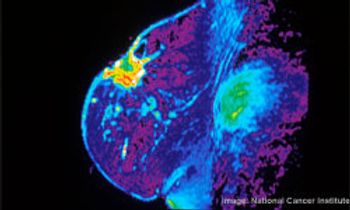
Frontline treatment with neratinib and paclitaxel demonstrated similar ORR and PFS as trastuzumab and paclitaxel while lowering the incidence of CNS metastases in patients with locally recurrent or metastatic HER2-positive breast cancer.

Ruth M. O’Regan, MD, director, Translational Breast Cancer Research, professor, hematology and oncology, medical oncology, Winship Cancer Institute, Emory University, discusses the mechanism of action of trastuzumab.

The FDA has assigned a priority review designation to palbociclib in combination with letrozole as a frontline treatment for postmenopausal patients with ER-positive, HER2-negative advanced breast cancer.
Sandra M. Swain, MD, Medical Director of the Washington Cancer Institute at MedStar Washington Hospital Center, discusses results and key takeaways from the final overall survival (OS) analysis of the CLEOPATRA study.

Dual HER2 blockade with pertuzumab and trastuzumab plus chemotherapy for the treatment of HER2-positive metastatic breast cancer improved median overall survival (OS) by almost 16 months over standard first-line therapy.

HER2 blockade may enhance the duration of response to fulvestrant, according to researchers from the University of Cincinnati College of Medicine.

Sunil Verma, MD, MSEd, FRCPC, discusses evolving standards of early stage HER2-positive breast cancer.

Debu Tripathy, MD, co-leader, Women's Cancer Program, University of Southern California Norris Comprehensive Cancer Center, discusses the goals of the SystHERs Registry.