

HEMATOLOGY
Latest News

Latest Videos


CME Content

























More News

Quick progress was seen with a novel class of agents, chimeric antigen receptor T-cell therapies, in the setting of diffuse large B-cell lymphoma—a swift jump from early phase clinical trials to FDA-approved products.

Javier Pinilla-Ibarz, MD, PhD, senior member of the Department of Malignant Hematology at Moffitt Cancer Center, discusses the current treatment landscape of chronic lymphocytic leukemia.
Despite progress seen with immune checkpoint inhibitors in Hodgkin lymphoma, there remains an unmet need for greater responses, which could be filled by potential combination approaches, according to Stephen M. Ansell, MD, PhD.

While significant progress has been made in the fight against cancer, including a decline in cancer deaths, the number of people projected to be diagnosed with cancer is on the rise, and there is still more work to be done, according to the newly released American Association for Cancer Research Cancer Progress Report.

Triple-negative myelofibrosis makes up 10% to 15% of patients with myelofibrosis, but it is associated with higher rates of leukemic transformation and poorer survival. Investigators at the University of Michigan set out to better understand the disease and found that the clinical, cytogenetic, and molecular features of triple-negative myelofibrosis were heterogeneous.
The combination of selinexor and dexamethasone induced an overall response rate of 26.2% and a median overall survival of 8.6 months in patients with penta-refractory multiple myeloma, according to phase IIb results presented at the 2018 SOHO Annual Meeting.
Despite decades of drug development and a deepening understanding of the biology of diffuse large B-cell lymphoma, physicians haven’t seen much improvement in cure rates, Thomas E. Witzig, MD, said during a presentation at the 2018 SOHO Annual Meeting.
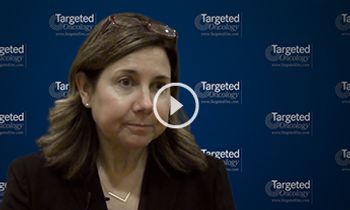
Laura Michaelis, MD, associate professor of medicine, Medical College of Wisconsin, discusses thrombotic risk for patients with essential thrombocythemia and polycythemia vera.
Consistent benefit was seen with carfilzomib (Kyprolis)-based regimens across subgroups of patients with multiple myeloma in the ASPIRE and ENDEAVOR trials, according to updated safety data reported at the 2018 SOHO Annual Meeting.
Adding the combination of venetoclax (Venclexta) and navitoclax (ABT-263) to chemotherapy induced an objective response rate of 66.7% in adults with relapsed/refractory acute lymphoblastic leukemia or lymphoblastic lymphoma, according to results from a small phase I study presented at the 2018 SOHO Annual Meeting.
In a presentation during the 2018 SOHO Annual Meeting, Terry J. Fry, MD, discussed some of the data that have been seen so far with CD19- and CD22-direct CAR T cells, and addressed resistance to these products.

Moxetumomab pasudotox has been approved by the FDA for the treatment of adult patients with relapsed or refractory hairy cell leukemia who have received at least 2 prior lines of therapy, including treatment with a purine nucleoside analog.
Predisposition to forms of myelodysplastic syndrome (MDS) and acute myeloid leukemia (AML) in pediatric patients can be caused by either classical inherited bone marrow failure syndromes or recently discovered genetic predisposition syndrome with autosomal dominant inheritance, Marcin Wlodarski, MD, explained.
Abdulraheem Yacoub, MD, associate professor of Hematology at the University of Kansas Cancer Center, discusses treatment beyond hydroxyurea in patients with polycythemia vera.<br />
Minimal residual disease data from the phase III MURANO trial has been added to the label for venetoclax (Venclexta) by the FDA for its approved use in combination with rituximab (Rituxan) for previously-treated patients with chronic lymphocytic leukemia.
The adoption of intensive pediatric treatment regimens has resulted in improved survival for adolescents and young adults with acute lymphoblastic leukemia over the past decade, said Wendy Stock, MD, at the 2018 SOHO Annual Meeting.
Hydroxyurea has been the primary treatment for polycythemia vera for decades and it works for the majority of patients, said Abdulraheem Yacoub, MD. However, there is a subset of patients who develop resistance or intolerance to hydroxyurea, and investigators are working to find a solution for those patients.
Ruxolitinib (Jakafi) is the only FDA-approved agent for the treatment of patients with myelofibrosis, making resistance to this agent a particularly difficult treatment challenge. Combinations with ruxolitinib may reinvigorate the impact of the JAK inhibitor in relapsed, progressive, or intolerant patients, explained Robyn M. Scherber, MD, MPH, in a presentation at the 2018 SOHO Annual Meeting.

Robyn M. Scherber, MD, MPH, physician, The Mays Cancer Center, the newly named center of UT Health San Antonio MD Anderson Cancer Center, addresses the management of patients with myelofibrosis after failure on ruxolitinib (Jakafi).<br />
Combining cladribine and low-dose cytarabine alternating with decitabine (Dacogen) resulted in high response rates and improved survival compared with currently established low-intensity therapies for patients with acute myeloid leukemia who are older than 60, according to results newly published in <em>Lancet Haematology.</em>
Kamal Menghrajani, MD, a hematologist/oncologist at Memorial Sloan Kettering Cancer Center, discusses the latest advancement in the research of acute myeloid leukemia. After treating this disease the same way with traditional chemotherapy for over 40 years, researchers have finally come to an understanding of what is happening in the AML cells, leading to a more precise treatment of these patients.

Gabriela S. Hobbs, MD, clinical director of the Leukemia Service and assistant in medicine at Massachusetts General Hospital, shares her advice for a community oncologist treating a patient with chronic myeloid leukemia.

Deepu Madduri, MD, assistant professor at Mount Sinai Hospital, discusses the biggest challenge oncologists currently face since the introduction of novel agents to the field of multiple myeloma.
A look back at all the FDA news that happened in the month of August 2018, including several new approvals, a priority review, breakthrough therapy designations, and more in a variety of cancer types.
An expert in hematologic malignancies, Harry Erba, MD, PhD, has been appointed director of both the Leukemia Program and Phase I Development in Hematologic Malignancies in the Division of Hematologic Malignancies and Cellular Therapy in the Department of Medicine at the Duke Cancer Institute in Durham, North Carolina.