

HEMATOLOGY
Latest News
Latest Videos


CME Content





























More News

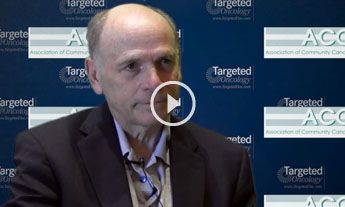
Thomas A. Gallo, MS, MDA, president of the Association of Community Cancer Centers, discusses his mission as president to “reflect, renew, and reignite” in order to create a more resilient oncology team for the community.

Larotrectinib induced an objective response rate of 80% in patients with advanced solid tumors who harbored <em>NTRK </em>gene fusions, according to results pooled from 3 small trials of the TRK inhibitor. Results were presented during the 2018 ESMO Congress.

Rising prescription drug prices continue to add to the burden of paying for quality healthcare. In an effort to confront such costs, the Centers for Medicare & Medicaid Services has rescinded a prohibition on step therapy for Medicare Advantage plans. But some contend such a policy will reduce patient access to optimal medication.
Sarah K. Tasian, MD, discusses what she finds most interesting about Philadelphia chromosome (Ph-like) acute lymphoblastic leukemia.

Julie M. Vose, MD, MBA, discusses resistance to BTK inhibitors in patients with non-Hodgkin lymphoma.
With 2 CAR T-cell therapies now approved and more moving quickly through early-phase clinical trials, 4 healthcare experts reflected on the evolving field of CAR T-cell therapy, their understanding of its current and future applicability for patients, the process for administration and the challenges and obstacles that remain unaddressed during an Association of Community Cancer Centers interactive panel.<br />

A supplemental new drug application for ibrutinib (Imbruvica) has been granted a priority review by the FDA for use in combination with obinutuzumab (Gazyva) as a frontline treatment for adult patients with chronic lymphocytic leukemia or small lymphocytic lymphoma.
David G. Maloney, MD, PhD, reviews the latest developments with CAR T-cell therapy in patients with non-Hodgkin lymphoma.
Lloyd Damon, MD, discussed novel therapies in AML with a focus on FLT3 and IDH1/2 inhibitors.<br />

Daniel A. Pollyea, MD, MS, discusses how far the field of acute myeloid leukemia has come in the last 1 to 2 years.

Danielle Brander, MD, discusses the current treatment landscape in the frontline setting for patients with chronic lymphocytic leukemia.
In a 16-0 vote, the FDA’s Oncologic Drugs Advisory Committee has recommended the approval of the rituximab biosimilar CT-P10 for 3 of the anti-CD20 monoclonal antibody’s non-Hodgkin lymphoma indications.
Shagun Arora, MD, discusses new agents and combination studies beyond chemoimmunotherapy for patients with CLL.
Guidelines from the International Lymphoma Radiation Oncology Group recommend the use of proton therapy in adults with mediastinal lymphomas and for young women. Specifically, clinicians should consider proton therapy in mediastinal disease that spans below the left main stem coronary artery and is near the front of, behind, or on the left side of the heart.
Rami S. Komrokji, MD, reflects on the diverse treatment landscape of AML and touches on the prognostic importance of biomarkers.
Mazyar Shadman, MD, discusses the evolution of therapy in CLL and how physicians are working to balance these novel agents with additional modalities.<br />
Ehab Atallah, MD, discusses the discontinuation of treatment for patients with chronic myeloid leukemia.<br />
Infographic: Here, we share the top 5 oncology news stories we reported this week, including the most recent FDA updates and expert insights on key developments in the field.
In an interview with <em>Targeted Oncology</em>, Jay Yang, MD, discussed the evolution of the treatment landscape for AML and the future outlook for these treatments.
A look back at all the FDA news that happened in the month of September 2018, including several new approvals, priority reviews, a breakthrough therapy designation, and more, in a variety of cancer types.
Javier A. Pinilla-Ibarz, MD, PhD, discusses updates in the treatment of patients with chronic lymphocytic leukemia.
Patients with CD30-expressing peripheral T-cell lymphoma who were treated with the combination of brentuximab vedotin and frontline chemotherapy experienced a statistically significant improvement in progression-free and overall survival, according to topline results from the phase III ECHELON-2 trial.
Philip Bierman, MD, discusses the current landscape of central nervous system involvement in aggressive lymphoma and the research that still needs to be conducted.
Antibody–drug conjugate therapies are making a larger impact on the treatment paradigm for patients with lymphomas, especially following promising data for brentuximab vedotin and inotuzumab ozogamicin.

Jonathon B. Cohen, MD, discusses findings from a study of polatuzumab vedotin, an anti-CD79b antibody-drug conjugate, with bendamustine and rituximab in patients with aggressive lymphomas.