

GENITOURINARY CANCERS
Latest News

December 19th 2019
By Darcy Lewis
A new study has found that enzalutamide given with androgen deprivation therapy significantly reduced the risk of metastatic progression or death in men with metastatic hormone-sensitive prostate cancer versus placebo plus ADT, including patients with low-volume disease and/or prior docetaxel therapy.<br />
Latest Videos







CME Content





























More News
The combination of onvansertib with abiraterone acetate decreased the prostate-specific antigen levels in most of the evaluable patients treated in a phase II study, which used the combination in adult patients with metastatic castration-resistance prostate cancer, according to a press release from onvansertib developer, Trovagene, Inc.

Male patients with advanced prostate cancer had a 97% response rate to relugolix, a gonadotropin-releasing hormone receptor antagonist, in the phase III HERO study, meeting the primary end point of the study. The trial also met all 6 of its key secondary end points, according to a press release from Myovant Sciences.




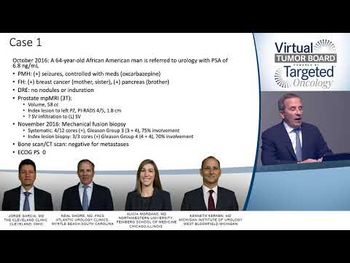


The early development of PARP inhibitors in 2003 focused on their use in combination with cytotoxic chemotherapy agents, but this was eventually abandoned because of excess toxicity.
In an interview with Targeted Oncology during the 2019 Prostate Cancer Consensus Conference, James L. Mohler, MD, explained the reasons for changes to the NCCN guidelines on genetic testing and counseling in prostate cancer. He also discussed what needs to be addressed in the future to further increase knowledge of genetic testing and improve its use.
William K. Oh, MD, discusses the rationale for presenting the data for the phase III ENZAMET trial in a plenary session at the 2019 ASCO Annual Meeting. He says these data were significant because it was a large randomized clinical trial for the treatment of newly diagnosed patients with metastatic hormone-sensitive prostate cancer.
Apalutamide plus androgen deprivation therapy maintained health-related quality of life in patients with metastatic castration-sensitive prostate cancer in addition to showing positive overall survival and radiographic progression-free survival outcomes in the phase III TITAN trial, said Neeraj Agarwal, MD.
A. Oliver Sartor, MD, discusses a discrepancy found between conventional imaging and PSMA PET/CT scanning for prostate cancer.
In an interview with Targeted Oncology, Alan Bryce, MD, discussed the significance of the data from PROfound for men with mCRPC. He also highlighted findings from the CARD trial and where the field is headed in terms of targeted therapies versus chemotherapies.

In October 2019, the FDA approved a new treatment option for patients with advanced ovarian, fallopian tube, or primary peritoneal cancer, as well as a new dosing regimen for patients receiving moderately emetogenic chemotherapy. Additionally, the FDA granted breakthrough therapy designations to 2 therapies, as well as an orphan drug designation, a priority review, and 2 fast track designations.
In an interview with Targeted Oncology, Raoul S. Concepcion, MD, discussed the existing challenges with implementing genetic testing and genetic counseling in community practices and how they can potentially be addressed.
The FDA has approved a supplemental New Drug Application for a single dose of aprepitant injectable emulsion for intravenous use in patients receiving moderately emetogenic chemotherapy. The approval expands the dose for aprepitant to include a 130 mg single-dose regimen for the prevention of acute and delayed chemotherapy-induced nausea and vomiting.<br />

James Mohler, MD, discusses the rationale for the latest updates to the National Comprehensive Cancer Network guidelines for genetic testing in prostate cancer.