



CAR T-Cell Therapy
Latest News
Latest Videos

CME Content





























More News

The review of the Biologics License Application for idecabtagene vicleucel has been put on hold. The FDA issued a Refusal to File letter due to the need for additional data from the developer of the drug.

Relevant professional meetings and oncology publications exploded with research and news about chimeric antigen receptor T cells, and this cellular therapy strategy is now being explored across hematologic and solid malignancies.
Patients with relapsed or refractory chronic lymphocytic leukemia who received a higher dose of CAR T cells, achieved complete responses, regardless of cell dose, which was highly correlated with long-term survival.
The FDA extended the Prescription Drug User Fee Act target action date for liso-cel due to the submission of additional information by the drug developer, which will require additional time to review.
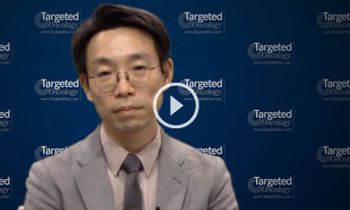
Jae Park, MD, discusses his key takeaways from chimeric antigen receptor T cells in the treatment landscape of patients with acute lymphoblastic leukemia.
Few options exist for patients with relapsed or refractory large B-cell lymphomas who have already undergone 2 rounds of systemic therapy. New research shows axicabtagene ciloleucel might be a strong option, but community oncologists must play a role in patient identification and post-treatment follow-up.
David G. Maloney, MD, PhD, reviews the protocols and infrastructure necessary to deliver chimeric antigen receptor T-cell therapy to patients receiving treatment in the outpatient setting.
Carlos R. Bachier, MD, discusses how an analysis of 3 clinical trials evaluating the efficacy of lisocabtagene maraleucel demonstrated the feasibility of outpatient administration of chimeric antigen receptor T-cell therapy.
“This designation supports the advancement of Kymriah, which could potentially address an unmet need in certain patients with follicular lymphoma, as we strive to reimagine medicine at Novartis. These patients are often faced with the burden of several years of various treatments as their disease continues to progress.”
Prasad S. Adusumilli, MD, FACS, discusses where he sees chimeric antigen receptor T-cell therapy fitting into the treatment landscape for patients with solid tumors.
Durable remissions were elicited with KTE-X19 in a majority of patients with relapsed or refractory mantle cell lymphoma, according to the updated results from the ZUMA-2 trial published in the New England Journal of Medicine. The treatment did, however, cause serious adverse events that were consistent with known toxicities of chimeric antigen receptor T-cell therapy.

In an interview with Targeted Oncology, Prasad S. Adusumilli, MD, FACS, discussed the expansion of chimeric antigen receptor T-cell research in the solid tumor space and the challenges researchers will need to overcome in order to make this therapy effective for patients outside of the hematologic treatment landscape.
A Biologics License Application has been submitted to the FDA for the investigational B-cell maturation antigen-directed chimeric antigen receptor T cell immunotherapy idecabtagene vicleucel as treatment of patients with multiple myeloma who have received at least 3 prior therapies.
David Miklos, MD, PhD, describes the toxicity profile of KTE-X19, a chimeric antigen receptor T-cell therapy, in the ZUMA-2 trial.
In an interview with Targeted Oncology at the 2020 International Congress on Hematologic Malignancies, Noopur Raje, MD, discussed emerging CAR T-cell therapies in multiple myeloma. She also explained how CAR NK cells differ from other CAR agents.
Dylan Essner explains how Epic, an electronic medical record, can be used by nurses and oncology providers who are treating patients with chimeric antigen receptor T-cell therapy.
Use of an off-the-shelf chimeric antigen receptor T-cell product may be feasible for use in patients with relapsed/refractory B-cell malignancies for whom no other available therapies exist, according to results of a phase I trial in adult and pediatric patients that were presented at the 2020 Transplant & Cellular Therapies Meeting in Orlando, Florida.
Outpatient treatment with lisocabtagene maraleucel had consistent efficacy and safety with that of a previously reported clinical trial involving patients who were treated at university medical centers, according to results of 3 studies reported at the 2020 Transplantation & Cellular Therapy Meetings in Orlando, Florida.
In an interview with Targeted Oncology at the 2020 Transplantation & Cellular Therapy Meetings, Craig Sauter, MD, discussed the retrospective real-world review of patients with hematologic malignancies who developed cytopenia post-chimeric antigen receptor T-cell therapy.
The majority of patients with relapsed or refractory non-Hodgkin lymphoma and chronic lymphocytic leukemia who were participants in a phase I/IIa trial had clinical responses to treatment with TAK-007, a cord blood–derived chimeric antigen receptor natural killer–cell therapy that targets CD19, with no major toxicities experienced by patients, according to a press release from the University of Texas MD Anderson Cancer Center.
In an interview with Targeted Oncology, Shoba A. Navai, MD, discussed the evolving role of CAR T-cell therapy in solid tumors, including sarcomas and how the efficacy and safety compare with CAR T cells in this space compared with hematologic malignancies.
Nina Shah, MD, discusses the question of whether CAR T-cell therapy is ready for primetime in patients with multiple myeloma.
In an interview with Targeted Oncology, Andrew J. Cowan, MD, discussed the findings from the first-in-human clinical trial evaluating the combination of a GSI and BCMA CAR T cells in patients with heavily pretreated multiple myeloma. He highlighted the next steps for this research and how he sees CAR T-cell therapy evolving over the coming years.
The real-world efficacy and safety demonstrated with tisagenlecleucel, a chimeric antigen receptor T-cell therapy for the treatment of patients with diffuse large B-cell lymphoma, was similar to results from the pivotal JULIET trial, according to Samantha Jaglowski, MD professor at the Ohio State University Comprehensive Cancer Center patients.
The CD19-directed CAR T-cell therapy lisocabtagene maraleucel demonstrated promising responses and a manageable toxicity profile in patients with high-risk chronic lymphocytic leukemia or small lymphocytic leukemia who have previously progressed on ibrutinib in the updated findings from the phase I/II TRANSCEND CLL 004 study.