




BREAST CANCER
Latest News
Latest Videos







CME Content





























More News

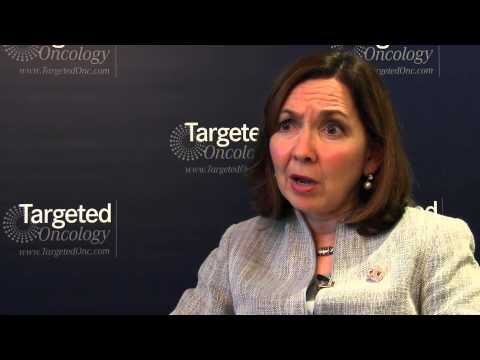
Erika P. Hamilton, MD, associate director, Breast Cancer and Gynecologic Cancer Research Program, principal investigator, Sarah Cannon Research Institute, discusses a phase 1b study examining ONT-380, an oral HER2-specific inhibitor, in combination with capecitabine and trastuzumab in the third-line setting and treatment of HER2-positive metastatic breast cancer.

Inhibition of the activin receptor-like kinase 1 (ALK1) protein may prevent metastasis of breast cancer, according to a study published in Cancer Research.

BRCA and other mutations occurred in more than 10% of estrogen-receptor–positive/HER2-negative invasive breast cancers in a cohort of women younger than 50 years of age, according to a report at the 2015 ASCO Annual Meeting.

Homologous repair deficiency or a high HRD score identified triple-negative breast cancers that had an increased likelihood of pathologic complete response to chemotherapy, according to a study reported at the 2015 ASCO Annual Meeting.

Adding palbociclib to standard fulvestrant more than doubled progression-free survival in pretreated patients who have HR-positive, HER2-negative breast cancer.






HER2-Negative Metastatic Breast Cancer







HER2-Negative Metastatic Breast Cancer

Treatment with lapatinib plus a taxane was associated with a shorter duration of progression-free survival compared with trastuzumab plus a taxane as a frontline therapy for patients with HER2-positive metastatic breast cancer.

The level of TILs identified at the time of diagnosis were found to be an independent prognostic marker for pathologic complete response and event-free survival in patients treated with neoadjuvant HER2-target therapy plus chemotherapy for HER2-positive early breast cancer.

Anne Marie McCarthy, PhD, research fellow, Massachusetts General Hospital, discusses a study that examined breast density, a risk that can help target breast cancer, in black women compared to white women.

Philip S. Rosenberg, PhD, senior investigator, Division of Cancer Epidemiology and Genetics, National Cancer Institute, discusses a study that examined patterns in breast cancer rates.