

BREAST CANCER
Latest News
Latest Videos




CME Content





























More News
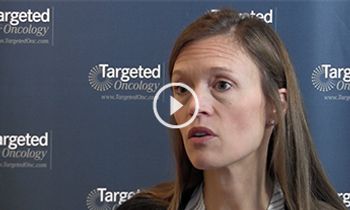
Carey Anders, MD, assistant professor for the Department of Medicine, Division of Hematology and Oncology, UNC Chapel Hill, discusses the exclusion of patients with breast cancer who have developed brain metastases from clinical trials.
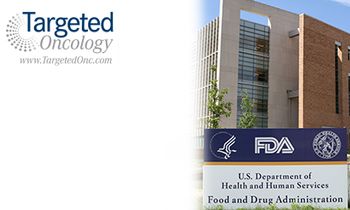
Single-dose fosaprepitant dimeglumine (Emend for injection) in combination with antiemetic agents has been approved by the FDA for the preventing

Approximately 33% of patients with HER2-positive breast cancer have also been found to have a luminal subtype resistant to chemotherapy and trastuzumab. Peter Beitsch, MD, discusses the triplet neoadjuvant regimen of pertuzumab, trastuzumab, and chemotherapy, and its effect on the subtype in the Neoadjuvant Breast Registry Symphony Trial (NBRST) study.

A team of researchers at both the Fred Hutchinson Cancer Research Center and Johns Hopkins Medical Institute have discovered that cancer metastization occurs through the migration of malignant cells in groups, rather than single cells, in a recent study.

Patrick Borgen, MD, speaks out on the recently approved USPSTF breast cancer screening guidelines.

​Charles M. Perou, PhD, professor of Genetics, Pathology & Laboratory Medicine, Lineberger Comprehensive Cancer Center, UNC School of Medicine, discusses precision medicine in breast cancer and currently known biomarkers.

Geoffrey Shapiro, MD, PhD, director, Early Drug Development Center, Dana Farber, discusses the role of cyclin-dependent kinase (CDK4) in some breast cancer subtypes and the lack of targeted agents in triple-negative breast cancer.

A comparison preclinical study pitting a sugary diet with one less sweet shows the former resulting in increased breast cancer tumor growth and metastasis.

A new 26-gene-screening panel, dubbed myBRCA HiRisk, hitting the market in the first quarter of 2016 aims to advance the prevention of hereditary breast and ovarian cancer.
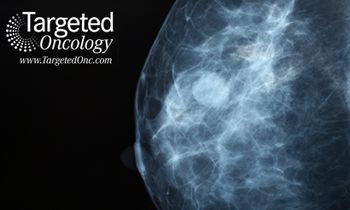
Despite the initial controversy caused over 6 years ago, the US Preventive Services Task Force (USPSTF) has released a final version of its guidelines that stick to its initial assessment.

Saeed Rafii, MD, PhD, MRCP, discusses the phase Ib JAVELIN solid tumor trial. The trial looks at the anti-PD-L1 antibody avelumab in patients with locally advanced or metastatic breast cancer.
​Benjamin Smith, MD, discusses a recent study looking at local treatments in breast cancer and the complication burdens associated with them. Smith says that any complications arising in patients with breast cancer within 2 years are strongly associated with their treatments.
Shak says the study examined the prospective outcomes of 1626 women and showed that at 5 years, less than 1% of women had a distant recurrence.
Twelves said historically, chemotherapy combinations have been created utilizing empirical evidence, which he says is not a sound rationale for the combinations. He adds that due to certain biological properties of eribulin mesylate, the treatment warrants further investigation as a combination therapy.

APOBEC3B was investigated in a retrospective study of a cohort available for analysis from a Dutch study. Results shows patients with high levels of APOBEC3B had much worse outcomes compared to those with low levels.

Debu Tripathy, MD, discusses the further investigation into immunotherapy's role in treating breast cancer.

​Gordon B. Mills, MD, PhD, says individualized treatment, as opposed to treating patients solely based on their malignancy type, must happen in order to improve patient outcome.

Denise Yardley, MD, says one of the biggest challenges the malignancy poses is triple negative breast cancer's heterogeneity, resulting in medical professionals having to rely on clinical path features that do not provide enough preciseness in treatment.
Linda Vahdat, MD, discusses the antibody drug conjugate glembatumumab vedotin being used in the treatment of women with triple negative breast cancer who have a high expression of gpNMB.

The FDA has approved a new treatment consisting of a non-alcohol formulation of docetaxel in patients with breast cancer, non-small cell lung cancer, prostate cancer, gastric adenocarcinoma, and head and neck cancer.

Joanne Blum, MD, PhD, discusses the function of the oral PARP inhibitor talazoparib (BMN 673) in BRCA mutation subjects with locally advanced and/or metastatic breast cancer.

Sabine Siesling discusses breast conserving surgery versus mastectomy. Siesling says her and her team found that internationally, the survival rate of breast cancer patients is lower when a mastectomy is performed, as compared to breast conserving surgery.
​Andrew D. Seidman, MD, attending physician, Breast Cancer Medicine Service, Memorial Sloan-Kettering Cancer Center, discusses the shift paradigm of breast cancer treatment and the development of targeted agents that disrupt certain pathways.

Eric P. Winer, MD, discusses the survival rates of women with early stage breast cancer who received bevacizumab and/or carboplatin.

Peter Beitsch, MD, breast surgeon, Medical City Dallas Hospital, discusses a triplet of chemotherapy, trastuzumab, and pertuzumab in the adjuvant and neoadjuvant settings.