

BREAST CANCER
Latest News
Latest Videos



CME Content





























More News

Although groundbreaking research findings are met with much fanfare during large medical conferences, their practical application to the community oncology clinic may not always be immediately clear.
Integrating a geriatric assessment into the care of older adults who are receiving cancer treatment in communi­ty oncology practices improves patient and caregiver satisfaction and encourages commu­nication about aging-related concerns, accord­ing to results of a clinical trial that enrolled 541 patients with advanced cancer.
The present and future benefits of telehealth in oncology can be observed through Tahoe For­est Cancer Center and its affiliation with the UC Davis Cancer Center, use of other remote clinics, and participation in virtual tumor boards. Even though there are roadblocks to telehealth reaching more locations and more patients, the potential benefit warrants the time needed to get over those hurdles.
The FDA granted approval to countless treatments across cancer types throughout 2019 until the end of the year, with a final approval on December 31<sup>st </sup>for the first BRCA targeted therapy in pancreatic cancer. Following the excitement for a new year of further advances, Targeted Oncology followers on Twitter shared their thoughts on some of the most impactful FDA approvals in 2019.
David Rimm, MD, PhD, discusses the key takeaways from the results of a phase I/II trial presented in a poster at the 2019 San Antonio Breast Cancer Symposium, which evaluated neoadjuvant checkpoint inhibition in a small subset of patients with triple-negative breast cancer.<br />

In December 2019, the FDA approved a number of new treatments in lung cancer, pancreatic cancer, urothelial carcinoma, breast cancer, and prostate cancer. A tissue complete assay was also approved by the FDA for use in a clinical trial evaluating pembrolizumab.
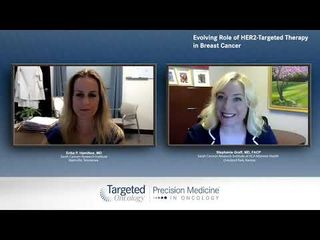
During a Targeted Oncology tweet chat, Erika P. Hamilton, MD, and Stephanie Graff, MD, discussed treatment options and considerations for the case of a patient with ER-positive, HER2-negative breast cancer who relapsed on letrozole, an aromatase inhibitor.
The combination of off-the-shelf, antibody-targeted natural killer cells and IL-15 superagonist N-083 with low-dose metronomic chemoradiation, adenoviral and year tumor-associated antigen vaccines, and a PD-L1 checkpoint inhibitor had ongoing durable complete responses in patients with triple-negative breast cancer who failed standard-of-care treatment, according to a press release from NantKwest Inc., manufacturer of the NK cell-based therapy.


Fam-trastuzumab deruxtecan-nxki has been granted an accelerated approval by the FDA for the treatment of adult patients with unresectable or metastatic HER2-positive breast cancer who have received at least 2 prior lines of anti–HER2-based regimens in the metastatic setting.
A biologics license application has been submitted to the FDA for margetuximab in combination with chemotherapy for the treatment of patients with metastatic HER2-positive breast cancer, according to a press release from MacroGenics, Inc.<br />
The FDA has granted Breakthrough Therapy Designation to the addition of tucatinib to trastuzumab and capecitabine for the treatment of patients with locally advanced unresectable or metastatic HER2-positive breast cancer, including those with brain metastases who received prior treatment with trastuzumab, pertuzumab, and T-DM1, according to a press release from Seattle Genetics.<br />
Adam M. Brufsky, MD, PhD, FACP, discusses the TBCRC049 trial, which looks at the safety and efficacy of the tucatinib/trastuzumab/capecitabine combination to treat leptomeningeal metastases in HER2-positive breast cancer.
In a 500-patient randomized trial, the pharmacokinetics, clinical activity, and safety of pertuzumab and trastuzumab administered as a subcutaneous fixed-dose combination were found to be noninferior to the intravenous versions of the drugs.
A pathologic complete response rate of 44% was observed with a neoadjuvant durvalumab (Imfinzi)-based regimen administered to patients with triple-negative breast cancer, according to results of a phase I/II study presented in a poster at the 2019 San Antonio Breast Cancer Symposium.
Sara M. Tolaney, MD, MPH, discusses the results of the monarcHER trial, which examined adding the CDK4/6 inhibitor abemaciclib and endocrine therapy to trastuzumab versus trastuzumab plus chemotherapy in advanced hormone receptor-positive, HER2-positive breast cancer.
Nearly 12 years after discontinuing treatment, anastrozole, an aromatase inhibitor, maintained a preventive effect for postmenopausal women at high risk for breast cancer. Women assigned to anastrozole were 49% less likely to have developed breast cancer compared with women assigned to placebom according to data presented at the 2019 San Antonio Breast Cancer Symposium.