

Bladder Cancer
Latest News
Latest Videos



CME Content

























More News
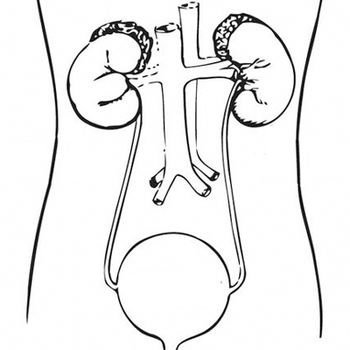
Median overall survival findings from treatment with pembrolizumab (Keytruda) were significantly longer compared with chemotherapy in patients with recurrent, advanced urothelial carcinoma, according to mature results from the phase III KEYNOTE-045 study.

Andrea Apolo, MD, medical oncologist at the National Cancer Institute and chief of the bladder cancer section of the Genitourinary Malignancies Branch, discusses the recent updates presented at the 2017 ESMO Annual Congress regarding avelumab (Bavencio) monotherapy for patients with urothelial carcinoma.
Jonathan E. Rosenberg, MD, discusses the muscle-invasive bladder cancer guidelines and their significance for the treatment of patients with muscle-invasive bladder cancer.
Thomas Flaig, MD, has been named chair of the NCCN Clinical Practice Guidelines in Oncology (NCCN Guidelines) Panel for Bladder Cancer.
Elizabeth Plimack, MD, chief of the division of genitourinary medical oncology and director of genitourinary research at Fox Chase Cancer Center in Philadelphia, discusses the combination of epacadostat and pembrolizumab (Keytruda) for the treatment of patients with urothelial carcinoma.
Jorge Garcia, MD, discusses how the field of bladder cancer has transformed with the FDA approval of pembrolizumab, and how oncologists should choose between 5 checkpoint inhibitors now available for the second-line setting and beyond.
Andrea Apolo, MD, discusses the pooled analysis of the phase Ib Javelin Solid Tumor study,<span style="font-size:10.8333px"> </span>and the phase I study of cabozantinib, nivolumab, and ipilimumab
Arlene Siefker-Radtke, MD, discusses the current status of biomarker research in bladder cancer, and the impact immunotherapy has had in the field.
Elizabeth Plimack, MD, recaps recent advances in bladder cancer and discussed the need for diverse approaches to further improve patient outcomes.
The European Medicines Agency’s Committee for Medicinal Products for Human Use (CHMP) has given its support on indications for atezolizumab (Tecentriq) in non–small cell lung cancer (NSCLC) and urothelial carcinoma.

Andrea B. Apolo, MD, discusses a pooled analysis of 2 cohorts of the phase 1b JAVELIN trial, which is exploring avelumab (Bavencio) for the treatment of patients with metastatic urothelial carcinoma.
Updated phase II results from the KEYNOTE-052 trial showed that first-line treatment with pembrolizumab produced a long-lasting response for patients with cisplatin-ineligible advanced urothelial cancer.

Daniel P. Petrylak, MD, professor of Medicine and Urology, co-director, Signal Transduction Research Program, Yale School of Medicine, discusses the KEYNOTE-045 trial, a phase III open-label study of pembrolizumab (Keytruda) versus paclitaxel, docetaxel, or vinflunine in recurrent, advanced urothelial carcinoma.

Arjun Balar, MD, assistant professor, Department of Medicine, and director, Genitourinary Medical Oncology Program, NYU Langone Medical Center, discusses biomarker findings and mature clinical results from KEYNOTE-052, which explored first-line pembrolizumab (Keytruda) in cisplatin-ineligible advanced urothelial carcinoma.
Daniel P. Petrylak, MD, discusses the KEYNOTE-045 study results and the next steps with pembrolizumab in urothelial carcinoma.
Immunotherapy agents have been rapidly absorbed into the treatment paradigm for various cancer types. Nowhere is this more obvious than in the treatment for patients with bladder cancer. In May alone, 3 checkpoint inhibitors were approved for use in bladder cancer, bringing the total of checkpoint inhibitors approved in this field to 5 agents.
A study presented at the 2017 American Urological Association Annual Meeting demonstrated that a split-dose of gemcitabine and cisplatin as a neoadjuvant chemotherapy regimen for treating muscle-invasive bladder cancer has a good pathologic response with a high safety profile.
Christophe Massard, MD, PhD, discusses ongoing clinical trials evaluating durvalumab, toxicities to be aware of with the agent, and the impact the approval has had in the field.
Findings from a recent pilot study done at the University of Pittsburgh Medical Center showed a potential link between e-cigarette use and bladder cancer.

Phillip Abbosh, MD, PhD, assistant professor, Fox Chase Cancer Center, discusses immune correlates of pathologic response in bladder cancer patients undergoing neoadjuvant chemotherapy.

Siamak Daneshmand, MD, associate professor of Urology, Director of Clinical Research, Keck School of Medicine of USC, discusses blue light cystoscopy compared with white light cystoscopy for patients with bladder cancer.

When epacadostat, an IDO1 inhibitor, was combined with pembrolizumab (Keytruda), a PD-1 inhibitor, responses were seen in 35% of patients with advanced urothelial carcinoma, according to findings presented during the 2017 ASCO Annual Meeting.

It’s been a busy month at the FDA. Here’s a look back at all the news in the oncology field to come out of the FDA during the month of May.
The addition of ramucirumab to docetaxel led to a statistically significant improvement in progression-free survival versus docetaxel alone in previously treated patients with locally advanced or unresectable or metastatic urothelial carcinoma.
Edward Messing, MD, discusses his paper which found patients who underwent chemotherapy following transurethral resection of bladder tumor were less likely to have tumor recurrence.