Here is a look back on all the FDA happenings from the month of August 2024.
Jordyn Sava is an editor for Targeted Oncology.
Here is a look back on all the FDA happenings from the month of August 2024.

In an interview, Jaime Merchan, MD, explained the background and data from a biomarker analysis of the CLEAR trial in advanced renal cell carcinoma.

Mayra Shanley, PhD, discussed background and future directions for evaluating IL-21 natural killer cells for the treatment of glioblastoma.
NXP800 was granted orphan drug designation from the FDA in ARID1a-deficient ovarian, fallopian tube, and primary peritoneal cancers.
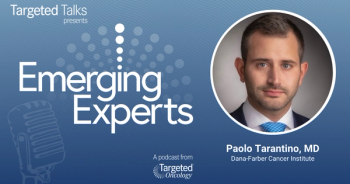
In this episode of Emerging Experts, Paolo Tarantino, MD, discusses the latest developments in breast cancer research and treatment.

The phase 3 SOHO-02 trial has enrolled its first patient with advanced non–small cell lung cancer harboring activating HER2 mutations.
A new drug application for TLX101-CDx, an investigational PET imaging agent designed to differentiate progressive or recurrent glioma from treatment-related changes, has been submitted to the FDA.

In an interview, Anil Parwani, MD, PhD, discussed how artificial intelligence can be used in medical education and training, as well as its role in personalized medicine.
New data on zongertinib for HER2-positive non–small cell lung cancer will be presented at the IASLC 2024 World Conference on Lung Cancer, shedding light on its potential as a novel treatment option for this patient population.
The TruSight Oncology Comprehensive test has been approved by the FDA as a companion diagnostic for NTRK-fusion positive solid tumors and RET-fusion positive non–small cell lung cancer.
The FDA has granted a second orphan drug designation to opaganib in oncology, this time for patients with neuroblastoma.

Habte Yimer, MD, discussed the findings from the phase 3 ALPINE trial and explored how these results are shaping clinical decisions in chronic lymphocytic leukemia treatment.
LITESPARK-005 showed that belzutifan improved progression-free survival and objective response vs everolimus in patients with advanced clear cell renal cell carcinoma previously treated with immune checkpoint and antiangiogenic therapies.
When given in combination, sonrotoclax and zanubrutinib shows promise in relapsed/refractory chronic lymphocytic leukemia/small lymphocytic lymphoma, according to data from the BGB-11417-101 study.
64Cu-SAR-bisPSMA gained FDA fast track status for advanced prostate cancer imaging.
The FDA issued a complete response letter for linvoseltamab aimed at treating relapsed/refractory multiple myeloma post multiple therapies.
The VISTA-101 clinical trial is investigating KVA12123, a VISTA-blocking immunotherapy, in advanced solid tumors.
The US label for lenvatinib has been updated to include new clinical efficacy data for its use as a first-line treatment in advanced non-clear cell renal cell carcinoma, based on results from the KEYNOTE-B61 trial.
Backed by the phase 1 ARTEMIS-001 trial, the FDA has granted GSK5764227 a breakthrough therapy designation for the treatment of extensive-stage small cell lung cancer.

In an interview with Targeted Oncology, Hope S. Rugo, MD, FASCO, discussed data from the ELEVATE trial of elacestrant combinations in ER-positive/HER2-negative metastatic breast cancer.
The FDA has lifted the partial clinical hold on the phase 1 YL202-INT-101-01 trial, allowing enrollment to resume in the US for patients with advanced NSCLC harboring EGFR mutations and HR-positive/HER2-negative breast cancer.
In an interview with Targeted Oncology, Evandro D. Bezerra, MD, discussed the real-world effectiveness of brexu-cel for relapsed/refractory B-cell acute lymphocytic leukemia.
In an interview with Targeted Oncology, Aristotelis Tsirigos, PhD, discussed a study evaluating a self-taught artificial intelligence tool that can accurately diagnose cases of adenocarcinoma.
PT217 has received an orphan drug designation from the FDA for the treatment of patients with neuroendocrine carcinoma.

The ON-SITE study has enrolled its first patient to evaluate an AI-based image analysis module for lung cancer.
In an interview with Targeted Oncology, Regina Barragan-Carrillo, MD, discussed the goals of a study evaluating camu camu with ipilimumab and nivolumab for treating metastatic renal cell carcinoma.

The phase 3 inMIND trial evaluating tafasitamab in combination with lenalidomide and rituximab in relapsed or refractory follicular lymphoma showed promising progression-free survival findings, according to topline results.

In an interview, Amrita Krishnan, MD, discussed several key advancements and challenges in the field of multiple myeloma.
The FDA has given positive feedback on the planned phase 3 study for the combination of amezalpat, atezolizumab, and bevacizumab in the first-line treatment of unresectable or metastatic hepatocellular carcinoma.
A new drug application has been submitted to the FDA for UGN-102, an intravesical solution for treating low-grade, intermediate-risk non–muscle-invasive bladder cancer.