The FDA granted fast track designation to ALE.P02, an antibody-drug conjugate targeting Claudin-1 (CLDN1), for use in patients with advanced/metastatic CLDN1-positive squamous solid tumors.
Jordyn Sava is an editor for Targeted Oncology.
The FDA granted fast track designation to ALE.P02, an antibody-drug conjugate targeting Claudin-1 (CLDN1), for use in patients with advanced/metastatic CLDN1-positive squamous solid tumors.

The phase 1 INSIGHT-003 trial showed that adding eftilagimod alpha to pembrolizumab and chemotherapy achieved a median overall survival of 32.9 months in metastatic non–small cell lung cancer.
The FDA has approved FoundationOne Liquid CDx as a companion diagnostic for patients with metastatic non–small cell lung cancer with MET exon 14 skipping alterations eligible for tepotinib.

A pivotal phase 2 trial of WU-CART-007, an anti-CD7 CAR T-cell therapy for relapsed/refractory T-cell acute lymphoblastic leukemia or T-cell lymphoblastic lymphoma treatment, will begin in 2025.
The FDA-cleared Spectral CT 7500 RT, a detector-based computed tomography radiotherapy solution aimed to enhance radiation therapy with spectral 4DCT imaging.

The ECLIPSE trial, a pivotal, phase 3, multi-center, open-label, randomized clinical study, has met its primary end point in metastatic castration-resistant prostate cancer.
The phase 2 CELLVX-230 trial is assessing the potential of FK-PC101 to prevent prostate cancer recurrence and delay additional treatments post-surgery.

The key secondary end point of overall survival was met in the DREAMM-7 trial of belantamab mafodotin for the treatment of patients with relapsed/refractory multiple myeloma.
Revumenib is now an FDA-approved treatment for adult and pediatric patients with relapsed/refractory KMT2A-rearranged acute leukemia.
Patient dosing has begun in a phase 1 trial evaluating QXL138AM, a masked immunocytokine targeting CD138, in advanced solid tumors and multiple myeloma.
The FDA has approved a re-engineered formulation of nilotinib with no mealtime restrictions for adult patients with newly diagnosed Ph-positive CP- and AP-CML, or for those resistant or intolerant to prior therapy, including imatinib.
The FDA has approved the investigational new drug application of AS1986NS for prostate cancer detection and treatment.
A new BLA for datopotamab deruxtecan aims for FDA accelerated approval to treat EGFR-mutated NSCLC based on data from multiple TROPION trials, following FDA feedback.
The SELECT-MDS-1 trial showed no significant complete response rate improvement with tamibarotene plus azacitidine for high-risk myelodysplastic syndrome, leading to the trial being discontinued.
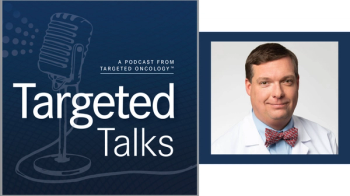
In this episode of Targeted Talks, Douglas Flora, MD, LSSBB, FACCC, discusses the transformative impact of artificial intelligence in oncology.
In an interview with Targeted Oncology, Michael Mauro, MD, delved into the rapidly advancing field of chronic myeloid leukemia treatment.

A phase 1 trial of pembrolizumab plus denileukin diftitox shows 27% response and 33% clinical benefit in recurrent solid tumors, with manageable toxicity.
The FDA approved a phase 3 trial to assess amezalpat with the current standard of care in unresectable or metastatic hepatocellular carcinoma.

Cyrus M. Khan, MD, discussed recent advancements in CLL treatment, particularly the shift to nonchemotherapy options and the availability of CAR T-cell therapy.
Elraglusib is undergoing investigation in an open-label, multicenter, phase 1/2 trial for the treatment of patients with Ewing sarcoma.
In the phase 2 AUGMENT-101 trial, revumenib met its primary end point by achieving a complete remission or complete remission with partial blood count recovery in relapsed/refractory NPM1-mutant acute myeloid leukemia.

In an interview, Craig A. Portell, MD, offered an in-depth look at sequencing therapies in relapsed/refractory mantle cell lymphoma.

ALLO-316 demonstrated a 50% overall response rate and 33% complete response rate in CD70-positive advanced RCC in the phase 1 TRAVERSE trial.
Neal Shore, MD, FACS, discussed a study on survival outcomes in metastatic castration-sensitive prostate cancer comparing apalutamide with abiraterone acetate.
Following the clearance of an investigational new drug application from the FDA, a phase 1 trial will examine the novel antibody-drug conjugate BL-M17D1 in patients with advanced or metastatic solid tumors.
NKTR-255 in combination with durvalumab following chemoradiation was well-tolerated in patients with non–small cell lung cancer, with a safety profile similar to earlier studies.
In an interview with Targeted Oncology, Ariel Lopez-Chavez, MD, discussed recent developments in the small cell lung cancer space.
The FDA approved obecabtagene autoleucel for the treatment of relapsed/refractory B-cell acute lymphoblastic leukemia.
MB-108 shows activity and is well tolerated in recurrent glioblastoma, with preclinical data supporting its combination with MB-101 CAR T-cell therapy for improved outcomes.
In an interview with Targeted Oncology, Neal Shore, MD, FACS, discussed the background, findings, and implications of a real-world study of enzalutamide and apalutamide in patients with metastatic castration-sensitive prostate cancer.