Opinion|Videos|March 4, 2026
Tagraxofusp and the CD123 Expression Profile in BPDCN
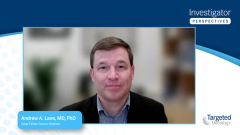
Author(s)Andrew A. Lane, MD, PhD
BPDCN breakthroughs: CD123-targeting tagraxofusp and venetoclax-azacitidine combinations boost remissions, limit myelosuppression, and help reach transplant.
Episodes in this series
The treatment of blastic plasmacytoid dendritic cell neoplasm (BPDCN) evolved with the approval of tagraxofusp-erzs (Elzonris), the first CD123-targeted therapy. In this episode, Andrew A. Lane, MD, PhD, Dana-Farber Cancer Institute, discusses how has the introduction of targeted therapy has fundamentally changed the primary treatment goal for patients with newly diagnosed BPDCN.
CD123 is universally and highly expressed on BPDCN cells. Because CD123 expression is significantly lower on normal hematopoietic stem cells, it provides a distinct "therapeutic window," allowing for potent anti-tumor activity with relatively manageable bone marrow toxicity.
Lane goes on to discuss clinical data from the pivotal study ((NCT02113982), which led to the agent’s FDA approval. Across data from 2 cohorts of a multicenter, open-label, nonrandomized single-arm trial, 7 of 13 patients (54%) in the first cohort who were treated with tagraxofusp achieved a complete remission (CR) or CR with a skin abnormality not indicative of active disease (CRc). In the second cohort, which comprised 15 patients, 1 patient achieved CR and 1 experienced a CRc. Additionally, the median duration of CR/CRc was not reached (range, 3.9-12.2 months).
He noted that this is a landmark improvement over historical outcomes. One of the most significant clinical advantages of this targeted approach is the absence of traditional myelosuppression. Unlike intensive chemotherapy, tagraxofusp does not typically cause profound neutropenia or associated opportunistic infections, making it an attractive option for the older patient population typical of BPDCN.
In addition, the majority of patients who achieve a response following frontline treatment are able to proceed to an allogeneic stem cell transplant. However, even in patients ineligible for transplant, some have maintained remissions exceeding 18 months on tagraxofusp alone. Understanding this mechanism is vital for explaining the treatment rationale to patients and coordinating the transition from induction to consolidative transplant therapy.
Newsletter
SubscribeRelated Content
Advertisement