Opinion|Videos|May 14, 2026
Financial Access, Patient Assistance Programs, and Adherence Monitoring Strategies
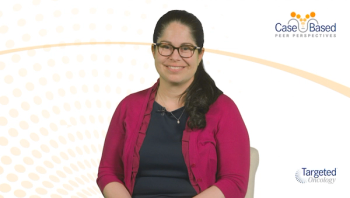
Author(s)Deborah Doroshow, MD, PhD
Dr. Doroshow addresses financial toxicity as a central concern in Sandra's case and broader challenge in HER2-directed therapy access. Sandra has high-deductible Affordable Care Act marketplace plan with $6,000 annual deductible, is currently on medical leave with uncertain prospects for returning to work and is understandably worried about out-of-pocket expenses that reset each calendar year.
Dr. Doroshow addresses financial toxicity as a central concern in Sandra's case and broader challenge in HER2-directed therapy access. Sandra has high-deductible Affordable Care Act marketplace plan with $6,000 annual deductible, is currently on medical leave with uncertain prospects for returning to work and is understandably worried about out-of-pocket expenses that reset each calendar year.
Dr. Doroshow explains her systematic approach to discussing cost with patients. Because she cannot predict upfront what any given drug will cost an individual patient, her first step involves engaging the practice's specialty pharmacist to investigate insurance coverage and determine expected copay. She highlights a critical distinction in how different types of cancer drugs are covered: While complete denials are relatively rare for Food and Drug Administration-approved agents listed in National Comprehensive Cancer Network guidelines, extraordinarily high copays for novel oral targeted therapies are commonplace. She provides example of oral medications being approved by insurance but with copays of $10,000 per month, amounts unaffordable for virtually any patient.
The discussion delves into complexity of patient assistance program navigation. Dr. Doroshow emphasizes clinicians should actively help patients complete these applications rather than simply directing them to apply independently. Programs often require online submission with detailed financial documentation, which can be technically daunting for patients not comfortable with computer-based forms or managing cancer treatment alongside full-time employment. On adherence monitoring, Dr. Doroshow notes she rarely encounters patients who stretch doses to save money, likely because her practice is often successful in obtaining free or cost-reduced medications through assistance programs.
In the next episode, "Treatment Sequencing Beyond Second Line: Evidence for Cross-Class Sequencing and Future Considerations," Dr. Doroshow discusses how second-line therapy choices affect third-line options and the current evidence supporting different sequencing strategies.
Newsletter
SubscribeRelated Content
Advertisement