Opinion|Videos|March 4, 2026
Optimizing BPCDN Treatment Through Collaborative Care Models
Author(s)Andrew A. Lane, MD, PhD
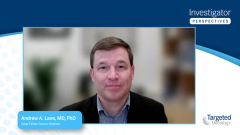
In this episode, Andrew A. Lane, MD, PhD, Dana-Farber Cancer Institute, discusses the future of BPCDN treatment and how a collaborative care model should play a role in this rare disease.
Episodes in this series
The management of blastic plasmacytoid dendritic cell neoplasm (BPDCN) requires seamless integration between the community oncologist, the BPDCN specialist, and the transplant center. In this episode, Andrew A. Lane, MD, PhD, Dana-Farber Cancer Institute, discusses the future of BPCDN treatment and how a collaborative care model should play a role in this rare disease.
According to Lane, the treatment roadmap begins with an assessment of patient fitness. To be a candidate for CD123-targeted therapy, patients should generally have a normal cardiac ejection fraction, reasonable renal function, and a baseline serum albumin of 3.2 g/dL or higher. If these criteria are met, the community oncologist can initiate the workup and coordinate the first cycle of targeted therapy, which often takes place at a tertiary center equipped for intensive CLS monitoring.
Once the patient is stabilized and enters cycle 2, care can frequently transition back to the community setting. In addition, he noted that early HLA typing of the patient and their siblings should be a priority.
Lane noted that as the landscape progresses, by maintaining high vigilance for symptoms, adhering to safety protocols, and fostering academic partnerships, the oncologists can continue to transform BPDCN into a manageable, and often curable, condition.
Newsletter
SubscribeRelated Content
Advertisement