Commentary|Videos|July 25, 2025
Drug Approval Hurdles: Funding and Regulation Slow Lifesaving Cures
Author(s)Benjamin L. Schlechter, MD
Fact checked by: Sabrina Serani
Unpredictable FDA and funding woes delay crucial drug approvals, depriving thousands of patients access to vital treatments for diseases like colon cancer.
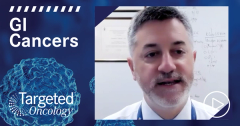
In an interview with Targeted Oncology, Benjamin Schlechter, MD, senior physician at Dana-Farber Cancer Institute, discusses the next steps of research for the combination of botensilimab and balstilimab in colorectal cancer.
To Schlechter, the primary objective for the promising new drug combination of botensilimab and balstilimab is to secure FDA approval in the United States and EMA approval in Europe. These regulatory clearances are crucial for making the drug widely available to patients who desperately need it.
A significant step towards achieving this goal is the planned phase 3 clinical trial for refractory disease. This trial, a CCTG (Canadian Cancer Trials Group) initiative, is slated to take place across multiple international sites, including Canada, Australia, and France. The successful completion of this trial is anticipated to be a pivotal factor in obtaining the necessary regulatory approvals, ultimately allowing the drug to reach patients in need.
The future of large-scale American trials for this drug, however, remains uncertain, according to Schlechter. The progression of these trials is heavily dependent on funding and research investment. There is a widely acknowledged struggle in academic research, which is currently grappling with significant funding shortages and regulatory changes. This challenge extends even to the biotechnology sector. Unpredictable and unusual behavior from the FDA creates a "chilling" effect on investors. Their primary role is to invest capital and generate returns, and when regulatory landscapes are unstable, they become hesitant to take risks on new drug development. This uncertainty, even without direct policy changes, harms drug companies by making it difficult to plan and invest with confidence.
To Schlechter, the consequence of this regulatory and funding uncertainty is dire: thousands of patients are being deprived of access to potentially life-saving drugs. For instance, in the context of colon cancer, approximately 50,000 to 55,000 patients die annually. A significant portion of these, 20% to 30%, are nonhepatic cases, where the combination of botensilimab and balstilimab shows the most promise. This translates to thousands of patients each year for whom the completion of critical clinical trials in the United States is being delayed due to the prevailing uncertainty. However, this issue isn't isolated to this particular drug; it is a systemic problem affecting the development of numerous drugs.
In essence, to Schlechter, there is a significant crisis in research and funding. While it's difficult to quantify the precise impact, the uncertainty in federal regulation and funding for research and basic science is estimated to be depriving tens of thousands of people annually of access to beneficial medications.
Related Content
Advertisement