Commentary|Videos|July 25, 2025
Dr Schlechter on the Efficacy and Safety of BOT/BAL in CRC
Author(s)Benjamin L. Schlechter, MD
Fact checked by: Sabrina Serani
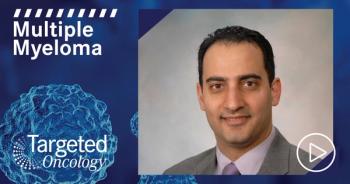
Benjamin Schlechter, MD, discusses the safety and efficacy findings from the C-800-01 phase 1 trial evaluating botensilimab and balstilimab in colorectal cancer.
In an interview with Targeted Oncology, Benjamin Schlechter, MD, senior physician at Dana-Farber Cancer Institute, discusses the safety and efficacy findings from the phase 1 C-800-01 trial (NCT03860272) presented at the 2025 ESMO GI Congress.
These updated findings include an expanded cohort of 123 patients with metastatic colorectal cancer (CRC) without active liver metastases, showing a 2-year survival rate of 42% and a median overall survival (OS) of 20.9 months. These figures are a notable improvement compared with the 5- to 8-month median OS typically observed with best supportive care in third-line or later microsatellitestable (MSS) metastatic CRC settings.
The combination therapy also yielded a confirmed objective response rate (ORR) of 20% and a disease control rate of 69%. Among patients treated in the fourth-line setting or beyond (n = 37), the ORR was approximately 19%, and 2-year survival stood at 43%, confirming the regimen’s potential durability even in the most refractory cases. The median duration of response reached 16.6 months.
"Importantly, the [patients] with the most treatment did the same as the people with less treatment. And that speaks to the fact that the fact that the drug is fundamentally different than chemotherapy. Botensilimab works on the immune system to allow the immune system to do its job correctly. And as a result, if you have an immune system, these drugs have the capacity, potentially, to work. They don't work universally. They work very well in a subset of patients, about 20%," says Schlechter.
Additionally, no new safety signals were reported, and immune-related adverse events remained manageable across dosing levels.
"There's nothing unexpected or unusual about this drug. It's a member of a class of drugs. It behaves like a member of this class of drugs, and so I would say it behaves expectedly," Schlechter says.
With these positive findings, Schlechter still has questions regarding how to best identify patient benefit.
"Our ability as oncologists to predict winners and losers in this game is really, really hard, and so as yet, I can't know in advance who's going to benefit," Schlechter says.
REFERENCE:
Agenus’ BOT/BAL achieves 42% two-year survival in refractory MSS CRC, advances toward registration with FDA alignment on phase 3. News release. Agenus Inc. July 7, 2025. Accessed July 11, 2025. https://tinyurl.com/4ydpxdkk
Related Content
Advertisement