
An explanation of the design, efficacy, and adverse events of L-MIND, a trial investigating a combination treatment for R/R DLBCL.
An explanation of the design, efficacy, and adverse events of L-MIND, a trial investigating a combination treatment for R/R DLBCL.
Dr Grzegorz S. Nowakowski reviews the currently available second-line treatment options for transplant-ineligible R/R DLBCL.
A discussion on the clinical factors that put patients at risk of having relapsed DLBCL.

Bruce Feinberg, DO, discusses a survey researching chimeric antigen receptor T-cell therapy’s growing usage by community oncologists for diffuse large B-cell lymphoma.

Manali Kamdar, MD, discusses data from the 2 clinical trials that supported the recent FDA approval of lisocabtagene maraleucel for the treatment of patients with relapsed or refractory large B-cell lymphoma.

Matthew S. McKinney, MD, discusses the tolerability observed in the LOTIS-2 trial of loncastuximab tesirine of patients with relapsed/refractory diffuse large B-cell lymphoma.

Shared insight on how expert oncologists select therapy for patients with nonmetastatic castration-resistant prostate cancer.

Expert perspectives on optimal patient follow-up, with particular regard for PSMA imaging, in nonmetastatic castration-resistant prostate cancer.

Neil Vasan, MD, PhD, discusses how past studies have supported de-escalated approaches and other improvements to treatment for patients with HER2-positive breast cancer.
Gunther Koehne, MD, PhD, discusses his hopes for future advances for patients with hematologic malignancies.

Nathan A. Pennell, MD, PhD, discusses the study design and goals of an ongoing phase 1 trial of a novel RET inhibitor for patients with non–small cell lung cancer and medullary thyroid cancer.
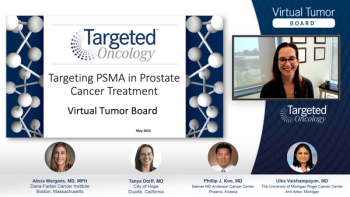
A discussion on the use of lutetium-PSMA-617 for prostate cancer treatment.
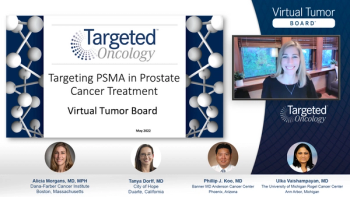
Experts in genitourinary oncology present data from the VISION clinical trial, studying patients with PSMA-positive metastatic castration-resistant prostate cancer.
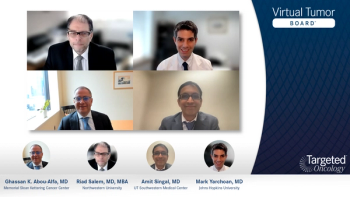
Focused discussion on the frontline treatment options available for patients diagnosed with metastatic hepatocellular carcinoma.

Leonard Kalman, MD, explains the disparities in clinical trial enrollment, which include access to care, lack of education, and low cancer screening rates.
Panelists debate the role of imaging in conjunction with or in place of biopsy in the setting of metastatic hepatocellular carcinoma.
Neal Shore, MD, FACS, discusses the purpose behind investigating enzalutamide in a cohort of patients with metastatic hormone-sensitive prostate cancer who were previously treated with local therapy as a post-hoc analysis of the ARCHES study.
Paul G. Richardson, MD, discusses the unmet medical needs that still exist in the multiple myeloma space.

Ian W. Flinn, MD, PhD, discusses the study design and results of the phase 2 trial of the antibody-drug conjugate polatuzumab vedotin-piiq plus bendamustine and rituximab for patients with relapsed/refractory diffuse large B-cell lymphoma.

Before closing out their discussion on HER2+ breast cancer, expert oncologists share excitement for emerging treatment strategies and ongoing clinical trials.

Returning to the patient case, experts review available frontline treatment options in the setting of nonmetastatic castration-resistant prostate cancer.
A brief review of the prevalence of familial risk and other high-risk factors for prostate cancer, followed by recommendations for patient follow-up and genetic testing.

Sam S. Chang, MD, MBA, discusses the research of N-803 in combination with BCG in patients with BCG-unresponsive non-muscle invasive bladder cancer.

Cathy Eng, MD, FACP, FASCO, discusses the types of patients who should be tested for biomarkers in the anal cancer space.
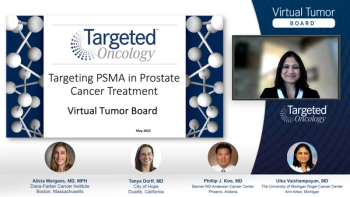
Dr Ulka Vaishampayan presents the case of a 67-year-old man with metastatic castration-resistant prostate cancer.
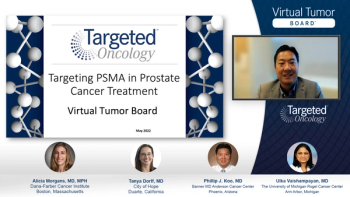
Phillip J. Koo, MD, provides a detailed explanation of the process of PSMA-PET imaging scans for prostate cancer.
Shifting to a second patient case of metastatic hepatocellular carcinoma, experts consider best diagnostic practices and the initiation of therapy.

David Barrington, MD, discusses the key takeaways regarding the factors associated with variation of adjuvant treatments for patients with stage 1B, grade 3 endometrial cancer.
A brief discussion on the role of systemic therapies in combination with or following TACE/TARE in unresectable hepatocellular carcinoma.

Andreas Saltos, MD, discusses the key takeaways of the phase 1/1b clinical trial exploring the use of binimetinib plus erlotinib in patients with non–small cell lung cancer harboring either KRAS or EGFR mutations.