Articles by Amit Singal, MD

Panelists discuss how lenvatinib has significantly impacted the systemic therapy landscape for hepatocellular carcinoma (HCC) across different stages. As a first-line treatment, it offers a viable alternative to sorafenib, demonstrating noninferior overall survival with improved progression-free survival and response rates. Its role extends to combination regimens and advanced-stage disease management.
Panelists discuss how, when a patient progresses to second-line therapy, key considerations include prior treatment response, toxicity, patient comorbidities, and therapeutic goals. Lenvatinib shows potential beyond first-line treatment, offering efficacy in patients progressing on systemic therapies, with emerging data supporting its role in treatment sequencing.
Panelists discuss how ongoing trials in first-line advanced hepatocellular carcinoma (HCC) may reshape treatment paradigms, influencing tyrosine kinase inhibitor (TKI) and immune checkpoint inhibitor (ICI) use. Patient selection depends on clinical (liver function, ECOG status) and biological (PD-L1, VEGF expression) factors. Lenvatinib remains a key TKI, balancing efficacy and safety. As emerging regimens (CARES-310, CheckMate-9DW) gain traction, lenvatinib’s role evolves, with experts assessing its place in monotherapy and combinations.
Panelists discuss how current first-line systemic therapies for advanced hepatocellular carcinoma (HCC) include atezolizumab + bevacizumab and durvalumab + tremelimumab, replacing tyrosine kinase inhibitors (TKIs) like sorafenib and lenvatinib. Emerging combinations with anti–PD-L1 agents enhance efficacy. TKI + immune checkpoint inhibitor (ICI) combinations offer synergistic benefits but pose toxicity, cost, and biomarker challenges.
Panelists discuss how emerging evidence suggests that combining transarterial chemoembolization (TACE) with systemic therapy could redefine the standard of care for hepatocellular carcinoma (HCC). Trial outcomes may drive shifts toward more personalized locoregional approaches. However, challenges in implementation include optimizing patient selection, managing toxicity, and ensuring multidisciplinary coordination.
Panelists discuss how the role of systemic therapy in intermediate-stage hepatocellular carcinoma (HCC) is evolving with combinations like immunotherapy and targeted agents enhancing locoregional treatment. LEAP-012 and EMERALD-1 evaluate lenvatinib + pembrolizumab and durvalumab-based regimens with transarterial chemoembolization (TACE), respectively. Their findings may redefine treatment paradigms, improving outcomes and expanding therapeutic options.

The panelist discusses, for intermediate-stage unresectable hepatocellular carcinoma (uHCC), key clinical pearls include prioritizing transarterial chemoembolization (TACE) as a first-line therapy, with systemic options for TACE-ineligible patients or progression; consider lenvatinib or atezolizumab plus bevacizumab based on liver function and risk factors. Evaluate treatment success via a radiologic response (mRECIST criteria), AFP levels, and toxicity profiles; modify treatment upon radiologic progression, prohibitive toxicity, or declining performance status.
Panelists discuss how combining systemic therapy with locoregional treatments like transarterial chemoembolization (TACE) aims to enhance therapeutic efficacy by addressing its limitations, such as incomplete tumor necrosis and hypoxia-induced progression. Tyrosine kinase inhibitors (TKIs) like lenvatinib and immune checkpoint inhibitors (ICIs) counteract TACE-induced resistance by inhibiting angiogenesis and boosting immune response, improving overall tumor control.
Panelists discuss how systemic therapy plays a crucial role in embolization-eligible hepatocellular carcinoma (HCC), particularly for patients with progressive or extensive disease. In locally advanced cases, systemic therapies, including immunotherapy combinations and tyrosine kinase inhibitors (TKIs), are first-line options. Patients typically transition from transarterial chemoembolization (TACE) to systemic therapy upon progression, high tumor burden, or liver function decline.
The panelist discusses how for patients initially eligible for embolization, systemic therapy may be combined with transarterial chemoembolization (TACE) upfront for high-risk disease (ie, large tumor burden, elevated AFP) or reserved for progression after regional therapy in lower-risk cases. Treatment decisions should be individualized based on tumor characteristics, liver function, and patient preferences.
The panelist discusses how the patient underwent transarterial chemoembolization (TACE) 3 times with an initial partial response. However, at the end of the 6-month treatment period, the patient had disease progression. The panelist advises that the best treatment option for the patient would be systemic therapy.
The panelist discusses first-line options including atezolizumab plus bevacizumab, lenvatinib, and sorafenib. Second-line treatments include regorafenib, cabozantinib, and ramucirumab. Clinical trials should be prioritized when available.
The panelist discusses the case of a 60-year-old man diagnosed with unresectable hepatocellular carcinoma (HCC). The patient has a history of metabolic dysfunction-associated steatohepatitis managed with lifestyle changes and medication. Initially, there was no clinical or radiographic evidence of cirrhosis. The patient recently presented to his gastroenterologist complaining of abdominal pain in the upper right quadrant and fatigue.
Expert panelists consider later-line treatment options for a patient with recurrent hepatocellular carcinoma.
Comprehensive insight on several clinical trials analyzing frontline combination therapies for patients with unresectable hepatocellular carcinoma.
In the setting of unresectable hepatocellular carcinoma, experts consider the role of frontline atezolizumab + bevacizumab given data from IMbrave150.
A brief review of treatment options for patients with Child-Pugh B grade metastatic hepatocellular carcinoma.
Panelists consider the adverse event profile of frontline TKI therapy in patients with metastatic HCC and review options for dosing and dose reduction.
Comprehensive discussion on the PFS subgroup data from REFLECT, which compared frontline lenvatinib and sorafenib therapy in metastatic HCC.
Shared insight on clinical trial data in metastatic hepatocellular carcinoma supporting frontline use of sorafenib and lenvatinib, respectively.
Focused discussion on the frontline treatment options available for patients diagnosed with metastatic hepatocellular carcinoma.
Panelists debate the role of imaging in conjunction with or in place of biopsy in the setting of metastatic hepatocellular carcinoma.
Shifting to a second patient case of metastatic hepatocellular carcinoma, experts consider best diagnostic practices and the initiation of therapy.
A brief discussion on the role of systemic therapies in combination with or following TACE/TARE in unresectable hepatocellular carcinoma.
Expert perspectives on the role of transarterial radioembolization in unresectable hepatocellular carcinoma following FDA approval.
Sharing the first patient case of unresectable hepatocellular carcinoma, experts consider optimal screening and diagnosis practices in this setting.

Amit Singal, MD, discusses options after surgical resection for patients with hepatocellular carcinoma.
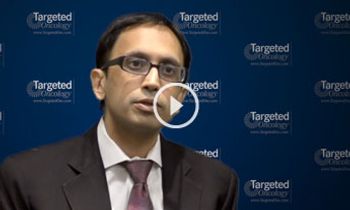
Amit Singal, MD, discusses the current treatment landscape for patients with hepatocellular carcinoma and how the treatments differ among patients caught in early-stage versus late-stage at the 2019 International Liver Cancer Association Annual Conference.