
In an interview with Targeted Oncology, Omar Nadeem, MD, discussed the first results from the Immuno-PRISM study in patients with high-risk smoldering myeloma.
In an interview with Targeted Oncology, Omar Nadeem, MD, discussed the first results from the Immuno-PRISM study in patients with high-risk smoldering myeloma.
In an interview with Targeted Oncology, Courtney Van Houzen, PharmD, shared her experience in bringing bispecific antibody treatments to a community setting.
John M. Burke, MD, examines how new obesity treatments, such as GLP-1 agonists, might influence future cancer rates.
Meredith McKean, MD, MPH, discussed findings from a longer-term follow-up study evaluating fianlimab plus cemiplimab for the treatment of metastatic melanoma.
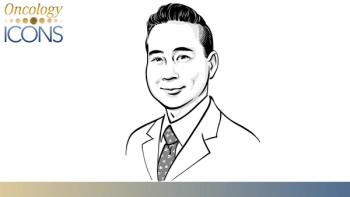
Eric Cheung, DO, Targeted Oncology’s second 2024 Oncology Icon, discussed his journey in oncology, advances in treatment, and his patient-centered approach to care.

Amy Selly, CNP, AOCNP, discusses how physicians can support their patients' survivorship journeys.
Amy Selly, CNP, AOCNP, discusses the challenges facing cancer survivors from underserved populations.
Amy Selly, CNP, AOCNP, discusses the role support plays in the cancer survivor experience.
Amy Selly, CNP, AOCNP, discusses the varying challenges facing cancer patients and survivors.
Amy Selly, CNP, AOCNP, discusses how cancer as a chronic illness impacts definitions of survivorship.
Amy Selly, CNP, AOCNP, discusses the different definitions of cancer survivorship.
Yufei Liu, MD, PhD, discussed the importance of careful data interpretation to accurately assess the efficacy of new treatment options in oncology.

Angeles Alvarez Secord, MD, MHSc, discusses key takeaways from the PICCOLO trial.

Jacob E. Berchuck, MD, discussed research behind using a blood-based liquid biopsy in prostate cancer and findings presented at the 2024 ESMO Congress.
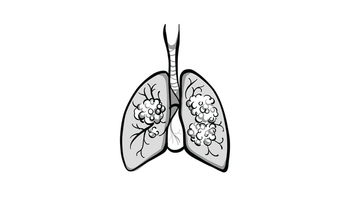
Ana Baramidze, MD, PhD, discussed 5-year follow-up results from the EMPOWER-Lung study evaluating cemiplimab vs chemotherapy in advanced first-line non–small cell lung cancer.
David Braun, MD, PhD, discusses how biomarkers are evolving for the treatment of renal cell carcinoma.
Jaime Merchan, MD, discusses what the potential clinical implications or takeaways for colleagues are based on findings from the phase 3 CLEAR study in advanced renal cell carcinoma (RCC).

Byoung Chul Cho, MD, PhD, discusses the implications of the CHRYSALIS-2 study of amivantamab and lazertinib.
In an interview with Targeted Oncology, Rupesh Kotecha, MD, discussed a machine learning tool designed to predict local failure after stereotactic radiosurgery for brain metastases.

Anil Parwani, MD, PhD, explains his visions and plans for further development and integration of artificial intelligence technology in cancer diagnosis and prognosis.

M. Michele Blackwood, MD, FACS, provided an overview of the significant advancements with personalized medicine with genomic testing in the breast cancer space.
Robert Jotte, MD, PhD, discusses findings from the phase 3 KRYSTAL-12 study evaluating adagrasib in KRAS G12C-mutated NSCLC.
For Breast Cancer Awareness Month, Oranus Mohammadi, MD, discussed the remarkable progress made in improving survival rates for patients with breast cancer.

Jeffrey Wong, MD, discusses findings on the use of Cu 64 anti-CEA M5A as a PET imaging agent for advanced rectal cancer presented at the 2024 American Society for Radiation Oncology Annual Meeting.

In an interview with Targeted Oncology, Jeffrey Wong, MD, discussed the potential and future directions of Cu 64 anti-CEA M5A as a PET imaging agent for advanced rectal cancer.

In an interview, Jeffrey Wong, MD, and Anthony Stein, MD, provided an in-depth discussion on a phase 2 trial of total marrow and lymphoid irradiation with cyclophosphamide and etoposide in high-risk acute leukemia.

Toni Choueiri, MD, discusses the rationale behind the drug combination of tivozanib and nivolumab in the TiNivo-2 study.
Savita Dandapani, MD, PhD, discussed combining radium-223 and SBRT for metastatic castration-sensitive prostate cancer.

Chunhui Han, PhD, discusses what biology-guided radiotherapy is and how it differs from traditional radiotherapy techniques.