Ohio State’s BRIDGE program coordinates age-tailored cancer care, tackling fertility, careers, and research gaps to transform outcomes for AYA patients.
Ohio State’s BRIDGE program coordinates age-tailored cancer care, tackling fertility, careers, and research gaps to transform outcomes for AYA patients.
CAR T therapy spreads beyond academic centers, but insurance, cost and policy gaps keep most eligible lymphoma patients from receiving it.
A new program for young cancer patients breaks disease silos, showing how multidisciplinary teamwork improves coordination, insights, and care.
In an interview, Rawan Faramand, MD, discussed her research on cost-effectiveness of graft modification to prevent GVHD in hematopoietic cell transplant.
Rawan Faramand, MD, discusses how reducing the cost of GVHD therapy could benefit health systems.
Rawan Faramand, MD, explains how a cost analysis supported Orca-T engineered graft by reducing the need for GVHD therapy vs standard prophylaxis.
Andrzej Jakubowiak, MD, PhD, explains promising results for KRd maintenance and the potential of modifying the posttransplant maintenance paradigm in multiple myeloma.

Experts discuss the critical role exercise plays in improving survival and quality of life in patients with cancer.
Andrzej Jakubowiak, MD, PhD, addressed why using multidrug regimens to remove the need for autologous transplant in multiple myeloma could benefit patients.
Ohio State’s BRIDGE model unites research, wraparound care, digital tools and support services to improve outcomes in early-onset cancers.
Blood MRD reveals hidden DLBCL after chemo; ALPHA3 trials off-the-shelf CD19 CAR T, boosting MRD clearance with low toxicity.
A trial comparing triplet maintenance to lenalidomide alone demonstrated improved progression-free and overall survival in transplant-eligible multiple myeloma.
Ohio State’s BRIDGE Program targets early-onset and AYA cancers, adding fertility, financial, and psychosocial support alongside specialists.
Luciano Costa, MD, PhD, María Victoria Mateos, MD, PhD, and Roberto Mina, MD, shared their thoughts on the use of teclistamab and CRS management earlier in multiple myeloma.
Robert Coleman, MD, discusses how relacorilant plus nab‑paclitaxel boosts survival in platinum‑resistant ovarian cancer.
Andrzej Jakubowiak, MD, PhD, discusses how the ATLAS trial intensified, then deescalated posttransplant maintenance in newly diagnosed multiple myeloma.
Helena Yu, MD, discusses unmet needs and new frontiers in lung cancer treatment.
AACR data suggest 60% of early-onset cancers could be found with existing tests, prompting calls for earlier, risk-based screening.
Amandeep Salhotra, MD, discusses preclinical findings that could support the addition of a BCL2 inhibitor to address acute or chronic graft-vs-host disease.
Dr Roberto Borea explores how BMI impacts NSCLC survival and molecular pathways, revealing key T-cell and redox data for IO and TKI treatment cohorts.
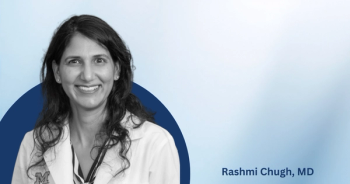
Rashmi Chugh, MD, discusses the outcomes and goals of a promising study for ozekibart plus chemotherapy in patients with relapsed Ewing sarcoma.

Community oncology teams partner with health systems to deliver advanced therapies safely, using hybrid dosing, toxicity backup, and local follow-up.
In the ARES trial, MaaT013 led to improvement in refractory lower GI chronic GVHD, a key unmet need in patients receiving hematopoietic cell transplant.
Dr. Alexander B. Olawaiye speaks on how the ROSELLA trial shows relacorilant plus nab-paclitaxel improves survival in platinum-resistant ovarian cancer.
How community oncology prepares for CAR T and gene therapy: safety gains, tech, payer shifts, and 3 must-have capabilities to expand access.
An ongoing trial could establish new standard of care for chronic graft-vs-host disease.
Persistent itch can signal serious immunotherapy skin toxicity; learn triage tips, risk factors, and when to refer to dermatology fast.
Amandeep Salhotra, MD, discusses a retrospective observational analysis comparing Orca-T to standard graft with posttransplant cyclophosphamide.
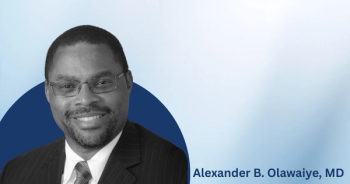
Dr Alexander Olawaiye discusses the impact of the FDA approval of relacorilant plus nab-paclitaxel in platinum-resistant ovarian cancer.
The ACCESS study of post-transplant cyclophosphamide in stem cell transplant showed that even 6/8 and 5/8 HLA matches can be considered as donors.