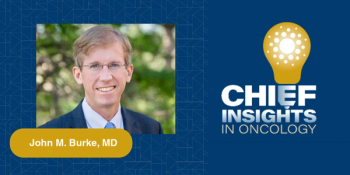
Izalontamab brengitecan (iza-bren) is an antibody-drug conjugate and bispecific antibody undergoing evaluation in small cell lung cancer.
John Burke, MD, is a hematologist, medical oncologist, and blood cancer specialist at Rocky Mountain Cancer Centers.
Izalontamab brengitecan (iza-bren) is an antibody-drug conjugate and bispecific antibody undergoing evaluation in small cell lung cancer.
Findings from the PARADIGM trial suggest that the use of azacitidine and venetoclax could replace intensive chemotherapy in younger, fit patients with acute myeloid leukemia.

Experts explore the evolving landscape of chronic lymphocytic leukemia treatment, highlighting targeted therapies, MRD strategies, and future innovations.

Trial results in multiple myeloma at the 2025 ASH Annual Meeting provide potential practice-changing paradigm shifts.

The FDA's new guidance reshapes oncology trial designs, emphasizing overall survival as a key endpoint to enhance drug development and patient safety.

Recent studies highlight the potential of minimal residual disease (MRD) testing to influence treatment decisions in multiple myeloma and chronic lymphocytic leukemia.

Discover how recent studies shift minimal residual disease testing from a prognostic tool to a key player in managing hematological malignancies.
Recent advancements in multiple myeloma treatment highlight the promise of trispecific antibodies like JNJ-5322, potentially enhancing patient outcomes significantly.
A novel trispecific antibody, JNJ-5322, shows remarkable efficacy in treating multiple myeloma, achieving a 100% response rate in trials.
John Burke, MD, discusses his editor-in-chief column from the July 2025 issue of Targeted Therapies in Oncology.
John M. Burke, MD, discusses the FDA ODAC's decision on the use of daratumumab in high-risk smoldering multiple myeloma and its implications for clinical practice.

The FDA evaluates glofitamab and daratumumab for lymphoma and myeloma treatments, highlighting trial demographics and clinical outcomes in recent ODAC meeting.

President Donald J. Trump has signaled that lowering the costs of prescription drugs will be a priority for his second term.

John M. Burke, MD, highlights findings from the AQUILA, DREAMM 7, and MajesTEC-5 trials in multiple myeloma.

John M. Burke, MD, shares his tips for offering bispecific antibody therapy in a community setting.
John M. Burke, MD, provides practical tips for administering mosunetuzumab in a community setting.

ASH 2024 featured practice-changing studies in lymphoid malignancies, including tafasitamab’s impact in FL, ibrutinib’s OS benefit in MCL, and promising epcoritamab data in CLL.

CDK4/6 inhibitors like abemaciclib and ribociclib improve invasive disease-free survival in breast cancer trials, but controversy surrounds study designs, bias, and cost-effectiveness, raising critical questions about their clinical benefit.

Oncology trials often celebrate treatments improving progression-free survival, yet toxicity-related censoring can bias results. Emphasizing overall survival and quality of life offers clearer insights into true clinical benefit.
John M. Burke, MD, examines how new obesity treatments, such as GLP-1 agonists, might influence future cancer rates.
GLP-1 agonists, widely used for obesity and diabetes management, have been associated with a reduced risk of most obesity-related cancers, offering promise in decreasing the overall cancer burden in the US.
As gene editing technology continues to advance, it could fundamentally change the landscape of cancer treatment.
The 2024 ASCO Annual Meeting was invigorating and inspired a renewed commitment to advancing cancer treatment.

A cyberattack on Change Healthcare disrupted patient scheduling, billing, and potentially exposed patient data. It caused financial strain on medical practices and took weeks to recover from.
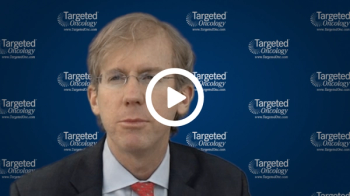
John M. Burke, MD, discusses results from a phase 2 study which evaluated brentuximab vedotin, nivolumab, doxorubicin, and dacarbazine for the treatment of early-stage and advanced classical Hodgkin lymphoma.
A new drug called belantamab mafodotin significantly improved survival in relapsed multiple myeloma patients compared to a standard treatment.

Ongoing and future trials will attempt to demonstrate the benefi t of NK cell therapies in lymphomas, multiple myeloma, sarcomas, and glioblastoma multiforme, among others.
If the title is correct, an article in the November 10 issue of the Journal of Clinical Oncology shows that many randomized trials in oncology are improperly designed and many drugs used in oncology have been approved based on the wrong end point.
According to John M. Burke, MD, it is hard to imagine that results presented at ESMO in the urothelial cancer space will not lead to the complete replacement of conventional chemotherapy as the standard first-line treatment.
February 10th 2026

July 26th 2025
July 25th 2025
September 10th 2025