
LYMPHOMAS
Latest News
Latest Videos



CME Content





























More News

In a prospective postmarketing assessment, the use of tisagenlecleucel for treatment of adult patients with diffuse large B-cell lymphoma, lead to responses that were similar to studies of children and adolescents with B-cell acute lymphoblastic leukemia.
Recent updates to the JULIET study, presented at the 2019 SOHO Annual Meeting, show that tisagenlecleucel has sustained benefit throughout the course of the trial with high response rates, and long duration in adults with relapsed/refractory diffuse large B-cell lymphoma.
In a retrospective study of patients with replaced or refractory Hodgkin lymphoma, checkpoint inhibition prior to haploidentical stem cell transplantation improved progression-free survival and risk for relapse, based on results presented at the 2019 SOHO Annual Meeting.

In an interview with <em>Targeted Oncology</em>, Gregorz S. Nowakowski, MD explained the details of the ECOG-ARIN 1412 trial and how the positive results related to patients with DLBCL will further improve outcomes for patients with all lymphoma types.
In an interview with Targeted Oncology, Sattva S. Neelapu, MD, discussed the evolving role for CAR T-cell therapy in patients with B-cell lymphomas. He also highlighted the toxicities commonly associated with these therapies and how physicians can treat these AEs as they arise.

The FDA has granted a New Drug Application for zanubrutinib a priority review for the treatment of patients with mantle cell lymphoma who have previously received at least 1 prior treatment.
In an interview with <em>Targeted Oncology</em>, Chong, a fellow at the University of Pennsylvania, discussed the 4-year follow-up data for CAR T cells in patients with DLBCL and FL. She also addressed the challenges that need to be overcome in order to give more patients access to this type of therapy.
Take a look back on the FDA happenings, including approvals, fast track designations, priority reviews, and more from the month of July 2019.
In an interview with <em>Targeted Oncology</em>, Peter Martin, MD, assistant professor of medicine, Division of Hematology/Oncology, Weil Cornell Medicine, recounts physician crossfire discussions related to frontline MCL treatment and provides his own expert opinion on the subject.
PF-05280586, a biosimilar for rituximab, has been approved by the FDA for use as a single-agent or in combination with chemotherapy for the treatment of adult patients with CD20-positive B-cell non-Hodgkin lymphoma, or in combination with chemotherapy for patients with CD20-positive chronic lymphocytic leukemia.
A single-arm, multicenter phase II trial held in China analyzed the Bruton’s tyrosine kinase inhibitor zanubrutinib for treatment of patients with relapsed/refractory mantle cell lymphoma. Previously, the investigational BTK inhibitor gained a breakthrough designation from the FDA based on early results from the phase II trial that showed zanubrutinib to be highly active.<br />
The FDA has granted a fast track designation for CLR 131 as a potential treatment for patients with relapsed or refractory diffuse large B-cell lymphoma. The designation was based on data from the DLBCL cohort of the ongoing phase II CLOVER-1 trial which is investigating CLR 131 in patients with relapsed/refractory B-cell lymphomas.
The FDA has accepted 6 supplemental Biologics License Applications (sBLAs) for review for a potential update to the dosing schedule for pembrolizumab across several indications.
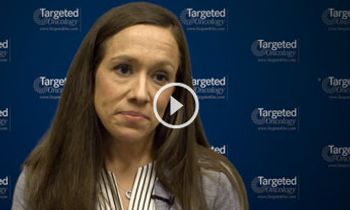
Lori A. Leslie, MD, discusses the rationale for investigating the PI3K-delta inhibitor umbralisib in patients with relapsed or refractory marginal zone lymphoma in a multi-center, open-label phase II study. On trial, only patients with MZL were enrolled who had received at least 1 prior line of therapy. These patients received single-agent umbralisib once daily until progression or unacceptable toxicity.
In June 2019, the FDA approved a number of agents many fields, including diffuse large B-cell lymphoma, head and neck squamous cell carcinoma, small cell lung cancer, gastroenteropancreatic neuroendocrine tumors, and multiple myeloma. The FDA also approved the fifth biosimilar for trastuzumab and another biosimilar for bevacizumab across several indications.
Lenalidomide plus standard R-CHOP immunochemotherapy may help select patients with activated B-cell-type diffuse large B-cell lymphoma who have a poor prognosis, based on data from the phase III ROBUST trial presented at the 2019 International Conference on Malignant Lymphoma.<br />
Mitchell Smith, MD, PhD, discussed the most recent research and agents under investigation for the treatment of indolent lymphomas. He also highlighted how conversations transpire when discussing the watch-and-wait approach with his asymptomatic patients.







Hodgkin Lymphoma