LUNG CANCER
Latest News
Latest Videos




CME Content





























More News
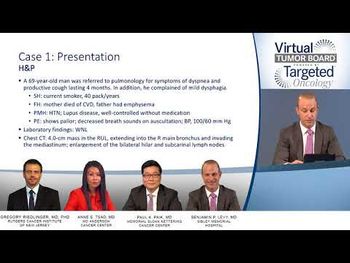

Frontline pembrolizumab (Keytruda) has been approved by the European Commission for use in combination with standard chemotherapy as a treatment for patients with metastatic nonsquamous non–small cell lung cancer without <em>EGFR</em> or <em>ALK</em> mutations. The approval is based on results from the phase III KEYNOTE-189 trial.
The review period for a supplemental biologics license application seeking the approval of atezolizumab (Tecentriq) for use in combination with bevacizumab (Avastin), carboplatin, and paclitaxel or the first-line treatment of patients with metastatic nonsquamous non–small cell lung cancer has been extended by the FDA.
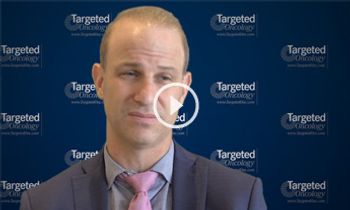
Benjamin P. Levy, MD, clinical director of Medical Oncology at John Hopkins Sidney Kimmel Cancer Center at Sibley Memorial Hospital, discusses genotyping in lung cancer, particularly focusing on <em>ROS1 </em>and <em>TRK </em>mutations.
Leading lung cancer researcher and clinician, Vassiliki A. Papadimitrakopoulou, MD, is the recipient of the 2018 Addario Lectureship Award presented by The Bonnie J. Addario Lung Cancer Foundation for her groundbreaking clinical research in immunotherapy.
A look back at all the FDA news that happened in the month of August 2018, including several new approvals, a priority review, breakthrough therapy designations, and more in a variety of cancer types.
Benjamin P. Levy, MD, discusses his clinical considerations for the management of non
In an interview with <em>Targeted Oncology</em> prior to the FDA approval of nivolumab in SCLC, Paul A. Bunn Jr, MD, discusses the potential agents for the treatment of SCLC, the challenges in treating this patient population, and the ongoing search for biomarkers to guide treatment decisions.


Considering Triplet Therapy for Nondriver NSCLC
Sai-Hong Ignatius Ou, MD, PhD, discusses the ALK inhibitors that are currently available for the treatment of <em>ALK</em>-positive NSCLC, as well as ongoing research in this space. He also sheds light on optimal sequencing strategies with these available agents.<br />
H. Jack West, MD, recently discussed the treatment options and considerations he makes when treating patients with stage III and IV non–small cell lung cancer. West, medical director of the Thoracic Oncology Program, Swedish Cancer Institute, explained the nuances that go into his treatment decisions when discussing 2 case scenarios during a <em>Targeted Oncology </em>live case-based peer perspective presentation.