



LUNG CANCER
Latest News
Video Series

Latest Videos




CME Content





























More News

An expert discusses how the IMforte trial demonstrated that adding lurbinectedin to maintenance atezolizumab significantly improved progression-free survival (2.1 to 5.4 months) and overall survival (10.6 to 13.2 months) with an HR of 0.73.
An expert discusses how the IMpower133 trial established atezolizumab plus chemotherapy as standard care for extensive-stage small cell lung cancer (ES-SCLC), improving overall survival from 10.3 to 12.3 months, though most patients still don't achieve long-term survival.
Discover how zipalertinib, an oral TKI, addresses unmet needs in treating EGFR exon 20 insertion-mutated non-small cell lung cancer.
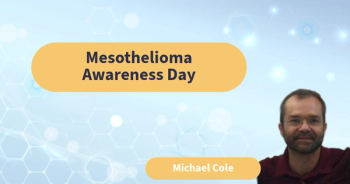
Michael Cole shares his decade-long battle with malignant pleural mesothelioma, highlighting treatment choices, resilience, and the vital doctor-patient relationship.

Oncologists explore advanced treatment options for ROS1-positive non-small cell lung cancer, highlighting improved efficacy and personalized therapy choices.
Roy S. Herbst discusses advancements in EGFR-targeted therapies for early-stage NSCLC, highlighting improved survival rates and the role of molecular residual disease.
Innovative treatments like JAK2 inhibitors and bispecific antibodies show promise in overcoming immunotherapy resistance in non-small cell lung cancer.

During a live event, Misty D. Shields, MD, PhD, discusses how trilaciclib reduces myelosuppression and other complications in small cell lung cancer.
New data from the THIO-101 trial shows ateganosine combined with cemiplimab significantly improves progression-free survival in advanced lung cancer patients.

A new subcutaneous formulation of amivantamab shows high efficacy and improved safety for advanced NSCLC patients, enhancing treatment convenience.

The COCOON study reveals a new dermatology management strategy that significantly reduces skin-related adverse effects in patients with lung cancer patients undergoing treatment with amivantamab and lazertinib.
Zipalertinib demonstrates significant efficacy and manageable safety in treating EGFR exon 20 insertion–mutated NSCLC, offering hope for patients.
Firmonertinib shows significant antitumor activity in EGFR PACC-mutated NSCLC, with promising results in CNS penetration and manageable safety profiles.
FDA designates olomorasib and pembrolizumab as breakthrough therapy for advanced KRAS G12C-mutant lung cancer, showing promising response rates in trials.
Osimertinib combined with chemotherapy significantly enhances overall survival in advanced EGFR-mutated non-small cell lung cancer, according to FLAURA2 trial results.
New data highlightstaletrectinib's impressive efficacy and safety in treating ROS1-positive non–small cell lung cancer, offering hope for patients.
In separate, live events, Sandip P. Patel, MD; David P. Carbone, MD, PHD; and their event participants considered treatment options for a patient with metastatic non–small cell lung cancer.
Zongertinib receives FDA breakthrough therapy designation for treating HER2-mutant non-small cell lung cancer, promising new hope for patients.
TT125-802, a promising bromodomain inhibitor, gains FDA fast track status for treating advanced non-small cell lung cancer, addressing critical patient needs.
The European Commission approves tislelizumab for neoadjuvant treatment of resectable NSCLC, enhancing survival rates and offering new hope for patients.
Treatment strategies for non–small cell lung cancer are increasingly driven by biomarker testing, making rapid and reliable biopsy an area that has attracted new interest among lung cancer specialists.
Innovent's bispecific antibody, IBI363, enters a global phase 3 trial for IO-resistant lung cancer, the first of its kind, offering new hope for this patient group.
New combination therapy shows promising results for advanced non-small cell lung cancer, offering hope for patients with limited treatment options.
The FDA designates iza-bren as a breakthrough therapy for advanced EGFR-mutant NSCLC, promising improved outcomes for patients with limited options.