




LUNG CANCER
Latest News
Latest Videos



CME Content





























More News
The FDA has approved the combination of osimertinib plus chemotherapy for the treatment of EGFR-mutated non-small cell lung cancer.
The FDA has now fully approved tepotinib for the treatment of metastatic non-small cell lung cancer.

Address the challenges and recommended approaches for managing the patient’s untreated brain metastases.
Discuss the role of molecular profiling and KRAS G12C testing in guiding treatment decisions of this case.
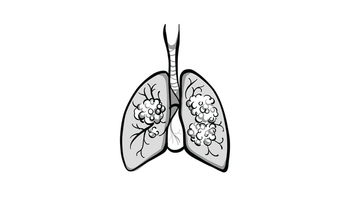
Participants in virtual events discussed the key issue of whether to initiate therapy immediately or wait for test results that could show the best approach in patients with advanced lung cancer.
In an interview, Martin F. Dietrich, MD, PhD, discussed his observations on the latest and upcoming trials that target biomarkers in earlier-stage non–small lung cancer.
Assess whether the initial therapy aligned with standard guidelines based on disease stage.
Provide an overview of the patient's presentation, diagnosis, and initial treatment plan.
Along with the FDA, the European Medicines Agency has also accepted the application of nivolumab and chemotherapy in operable non–small cell lung cancer.
A fast track designation to UV1 combination therapy for malignant mesothelioma from the FDA signifies expedited review and development for a promising treatment option, offering hope for patients with malignant pleural mesothelioma.

During a Targeted Oncology™ Case-Based Roundtable™ event, Balazs Halmos, MD, discussed with participants how they interpret the ADAURA trial and the approach to adjuvant targeted therapy in non–small cell lung cancer This is the second of two articles based on this event.
In an interview with Targeted Oncology, Charu Aggarwal, MD, MPH, discussed the real-world study evaluating the link between molecular genotyping and survival among patients with non–small-cell lung cancer.
Patients with extensive-stage small cell lung cancer experienced longer rates of survival when treated with atezolizumab induction and maintenance therapy vs placebo.
The phase 3 EVOKE-01 trial of sacituzumab govitecan in non–small cell lung cancer missed its primary end point, showing a numerical but not significant improvement in overall survival.
The combination of avutometinib and sotorasib received FDA fast track designation for the treatment of KRAS G12C-mutant non–small cell lung cancer.
The tumor treating fields device has been given premarket approval in combination with standard therapies for the treatment of platinum-resistant non–small cell lung cancer.
Sarah B. Goldberg, MD, MPH, presented these findings to demonstrate the effective time to use immuno-oncology combination therapy during the 41st Annual Chemotherapy Foundation Symposium Innovative Cancer Therapy for Tomorrow.
Following a patient death in the phase 2 IOV-LUN-202 trial, the FDA has issued a clinical hold.

Anne S. Tsao, MD, and Edward B. Garon, MD, MS, conclude their discussion with a look to the future of TROP2 and associated targeted therapy approaches in non–small cell lung cancer.
During a Targeted Oncology™ Case-Based Roundtable™ event, Balazs Halmos, MD, discussed with participants how they would approach the case of a patient with T3N0 lung adenocarcinoma of stage IIB. This is the first of 2 articles based on this event.

Firas B. Badin, MD, discusses the improvements seen with repotrectinib compared with first-generation ROS1-targeting tyrosine kinase inhibitors for patients with advanced ROS1-positive non–small cell lung cancer.
In a phase 1 study of 10 evaluable patients with refractory/relapsed malignant pleural mesothelioma, the median overall survival was 17.6 months for patients treated with the combination of galinpepimut-S and nivolumab.
The FDA did not fully approve sotorasib for the treatment of patients with KRAS G12C-mutated non–small cell lung cancer.
Thoracic oncologists discuss the progress made and unmet needs that remain in the non–small cell lung cancer treatment space.
Medical oncologists discuss where antibody-drug conjugates fit in the overall non–small cell lung cancer treatment landscape and review the ongoing EVOKE-01 and EVOKE-03 clinical trials.