
HEMATOLOGY
Latest News

Latest Videos




CME Content





























More News

Ublituximab (TG-1101) in combination with ibrutinib (Imbruvica) met its primary endpoint of showing an improvement in objective response rate (ORR) compared with ibruitinib monotherapy in patients with previously treated high-risk chronic lymphocytic leukemia (CLL). In a presentation of findings from the phase III GENUINE trial during the 2017 ASCO Annual Meeting, data were reviewed demonstrating that the combination had an ORR of 78% in this patient population.
Lenalidomide consolidation therapy following induction with fludarabine and rituximab (Rituxan) was found to increase long-term survival over survival rates seen with FR or FR plus cyclophosphamide in an overall survival plateau that intrigued researchers when examined in patients with symptomatic, treatment-naive chronic lymphocytic leukemia without an 11q deletion.
The FDA has scheduled a public hearing of its Oncologic Drugs Advisory Committee (ODAC) to address a biologics license application (BLA) for tisagenlecleucel-T (CTL019) for patients aged 3 to 25 years with relapsed/refractory B-cell acute lymphoblastic leukemia (ALL). The hearing is planned for July 12, 2017.
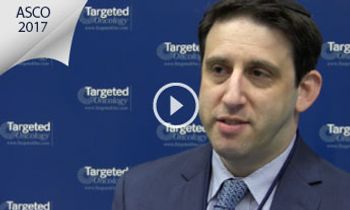
Eytan M. Stein, MD, internist, hematologic oncologist, Memorial Sloan Kettering Cancer Center, discusses the results of a phase I dose escalation and expansion study of enasidenib in mutant <em>IDH-2</em> relapsed or refractory acute myeloid leukemia (AML) during the 2017 ASCO Annual Meeting.
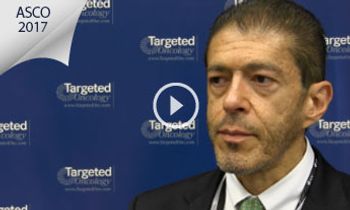
Jorge Cortes, MD, deputy chair of the Department of Leukemia, The University of Texas MD Anderson Cancer Center, discusses initial results from the BFORE trial, which is exploring bosutinib (Bosulif) versus imatinib (Gleevec) for newly diagnosed chronic myeloid leukemia.

A new drug application from Jazz Pharmaceuticals has been accepted by the FDA for a novel CPX-351 injection (Vyxeos) for the treatment of acute myeloid leukemia.
Axicabtagene ciloleucel (KTE-C19; axi-cel) has been granted a priority review by the FDA for transplant-ineligible patients with relapsed or refractory non-Hodgkin lymphoma.
Rekha Rao, PhD, assistant professor, University of Kansas Medical Center, discusses a study of the synergistic activity of p97 inhibitors with histone deacetylase 6 inhibitors in mantle cell lymphoma (MCL).
Martin Dreyling, MD, professor of medicine, University of Munich Hospital in Grosshadern, discusses primary results of the pivotal CHRONOS-1 study, which looked at copanlisib in patients with relapsed or refractory indolent B-cell lymphoma.
The NCCN published its first set of guidelines for myeloproliferative neoplasms in October 2016 and is already looking to update and expand these guidelines to match the need for direction in diagnosing and treating patients with MPNs.

Sattva S. Neelapu, MD, associate professor, The University of Texas MD Anderson Cancer Center, discusses primary results of the ZUMA-1 trial investigating axicabtagene ciloleucel (KTE-C19) in patients with refractory aggressive non-Hodgkin lymphoma.
Subcutaneous administration of rituximab (Rituxan) produced nearly identical response rates and toxicity as IV administration in the first-line treatment of follicular lymphoma.
Martin Dreyling, MD, discusses results of the phase II CHRONOS-1 study in patients with relapsed or refractory indolent B-cell lymphoma.
John P. Leonard, MD, discusses advancements across hematologic malignancies and pivotal trial data he is anticipating at the 2017 ASCO Annual Meeting.
Gail J. Roboz, MD, discusses the recent FDA approval of midostaurin and what else is emerging in the treatment landscape in AML.
Steven Coutre, MD, discusses ongoing efforts to enhance frontline outcomes for patients with CLL.
Pembrolizumab has been approved by the European Commission for the treatment of adult patients with relapsed or refractory classical Hodgkin lymphoma.
Richard M. Stone, MD, discusses the impact that midostaurin could have for patients with AML, as well as ongoing research with the agent.
NYU Langone’s Perlmutter Cancer Center (PCC) has announced that Ahmad Samer Al-Homsi, MD, MBA, will lead a new bone marrow transplantation program at the center for treating blood-borne cancers, including leukemia, lymphoma, and multiple myeloma.

An overview of FDA news that happened in April.
Daratumumab has been approved by the European Commission for use in combination with lenalidomide and dexamethasone or bortezomib and dexamethasone for the treatment of patients with multiple myeloma following at least 1 prior therapy.
Midostaurin (Rydapt) has been approved by the FDA for the treatment of adult patients with newly diagnosed <em>FLT3</em>-positive acute myeloid leukemia (AML) in combination with standard cytarabine and daunorubicin induction and cytarabine consolidation.
Stephen M. Ansell, MD, PhD, discusses emerging combinations being investigated in patients with mantle cell lymphoma, the possible role of immunotherapy, and challenges oncologists are still struggling with in this population.
Consolidation therapy with lenalidomide, bortezomib, and dexamethasone (RVD) extended progression-free survival in patients with multiple myeloma when used in conjunction with stem cell transplantation compared with RVD alone

Oddbjørn Straume, MD, PhD, associate professor, department of Clinical Science, Haukeland University Hospital, discusses a study investigating BGB324 with pembrolizumab or dabrafenib/trametinib in patients with advanced non-resectable or metastatic melanoma.