
HEMATOLOGY
Latest News
Latest Videos




CME Content





























More News

A supplemental new drug application seeking to add overall survival data from the phase III ENDEAVOR trial to the label for carfilzomib (Kyprolis) for use in patients with relapsed or refractory multiple myeloma has been accepted by the FDA.
A supplemental new drug application for bosutinib (Bosulif) has been granted a priority review by the FDA for the first-line treatment of patients with Philadelphia chromosome-positive chronic myeloid leukemia. The agency is scheduled to make a final decision by December 2017.<br />
A historic approval of the first chimeric antigen receptor (CAR) T-cell therapy has been issued by the FDA, authorizing the use of tisagenlecleucel (Kymriah) for the treatment of patients up to 25 years of age with B-cell precursor acute lymphoblastic leukemia that is refractory or in second or later relapse.
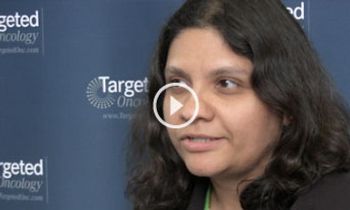
Rekha Rao, PhD, assistant professor, University of Kansas Medical Center, discusses the need to develop novel therapies in mantle cell lymphoma, including a study that explored the synergistic activity of p97 inhibitors with histone deacetylase 6 inhibitors.
A supplemental biologics license application for obinutuzumab (Gazyva) in combination with chemotherapy, followed by obinutuzumab alone, has been granted a priority review by the FDA for the first-line treatment of patients with follicular lymphoma.
Results from a recent retrospective study published in the<em> Journal of Clinical Oncology</em><sup> </sup>revealed hospice enrollment is low and use of aggressive treatment is high for elderly patients with acute myeloid leukemia.
According to results from a trial conducted by investigators from the Children’s Oncology Group, treatment with arsenic trioxide consolidation was effective and safe in newly diagnosed pediatric patients with acute promyelocytic leukemia, allowing a significant reduction in cumulative anthracycline doses.
Eunice Wang, MD, discusses a study examining the biology of newly diagnosed patients with <em>FLT3</em>-positive acute myeloid leukemia who achieved a response to the FLT3 TKI crenolanib combined with chemotherapy.
Carfilzomib (Kyprolis) reduced the risk of death by 21% compared with bortezomib (Velcade) in patients with relapsed/refractory multiple myeloma, according to results from the phase III ENDEAVOR trial, now published in the<em> Lancet Oncology.</em>

Sattva S. Neelapu, MD, associate professor, The University of Texas MD Anderson Cancer Center, discusses the design of the ZUMA-1 trial in non-Hodgkin lymphoma.
Inotuzumab ozogamicin (Besponsa) has received FDA approval for the treatment of adults with relapsed or refractory B-cell precursor acute lymphoblastic leukemia (ALL), based on findings from the phase III INO-VATE trial.
A supplemental biologics license application (sBLA) for brentuximab vedotin (Adcetris) has been granted a priority review by the FDA for the treatment of patients with cutaneous T-cell lymphoma (CTCL), according to Seattle Genetics, which codevelops the antibody-drug conjugate with Takeda.

Suzanne L. Topalian, MD, director, Melanoma Program, professor of Surgery, Johns Hopkins Medicine, discusses the impact of anti-PD-1 and anti-PD-L1 agents in the treatment of merkel cell carcinoma.
Development of chimeric antigen receptor T-cell therapies is in the works for both hematologic malignancies and solid tumors, but the most promising results to date have been seen with CD19-targeted CAR T cells in the treatment of B-cell acute lymphoblastic leukemia.
Sagar Lonial, MD, professor and chair, Department of Hematology & Medical Oncology, Emory University School of Medicine, chief medical officer, Winship Cancer Institute of Emory University, discusses the importance of partnering with a myeloma center when managing multiple myeloma.
Shaji Kumar, MD, discusses ixazomib, daratumumab triplets, denosumab, and CAR T-cell therapy in multiple myeloma.
Supplemental New Drug Applications were recently submitted in the United States and Europe for carfilzomib (Kyprolis). The sNDAs were submitted based on data from 2 phase III studies showing carfilzomib improves overall survival for patients with relapsed/refractory multiple myeloma.
The combination of carfilzomib (Kyprolis), lenalidomide (Revlimid), and dexamethasone reduced the risk of death by 21% compared with lenalidomide and dexamethasone alone for patients with relapsed multiple myeloma following prior treatment with 1 to 3 regimens.
Mutations in FLT3 have long been recognized in a portion of patients with acute myeloid leukemia. Yet it took more than 15 years until an agent targeting FLT3 mutations came to fruition with the FDA approval of midostaurin in April 2017, marking about 40 years since the last new agent was approved to treat patients with AML.
Duvelisib, a PI3K-delta/gamma inhibitor, in combination with fludarabine, cyclophosphamide, and rituximab showed high rates of responses and bone marrow minimal residual disease negativity in younger patients with previously untreated chronic lymphocytic leukemia.
Keith Stewart, MB, ChB, discusses treatment decisions centered around the care of patients with multiple myeloma, including the roles of autologous stem cell transplant and MRD testing.
Sagar Lonial, MD, professor and chair, Department of Hematology & Medical Oncology, Emory University School of Medicine, chief medical officer, Winship Cancer Institute of Emory University, discusses CAR T-cell therapy for myeloma and other hematologic malignancies.
CPX-351 (Vyxeos), a fixed-combination of daunorubicin and cytarabine, has been approved by the FDA for adult patients with newly diagnosed therapy-related acute myeloid leukemia (t-AML) or AML with myelodysplasia-related changes (AML-MRC), based on an improvement in overall survival (OS) in a phase III study.
A new drug application (NDA) for acalabrutinib has been granted a priority review by the FDA for patients with previously-treated mantle cell lymphoma (MCL), according to AstraZeneca, the manufacturer of the highly selective, potent BTK inhibitor.
A look back at all the FDA news that occurred in July.