
HEMATOLOGY
Latest News
Latest Videos

CME Content





























More News

An objective response rate was achieved in 18 of 37 patients with relapsed/refractory non-Hodgkin lymphoma who received the combination of the BTK inhibitor ibrutinib with the PI3K inhibitor buparlisib, according to findings of a phase I/II trial reported at the 2018 ASCO Annual Meeting.
Rafael Fonseca, MD, recently shared the treatment considerations and decisions he makes when treating patients with multiple myeloma. Fonseca, professor of medicine, chair, Department of Internal Medicine, Mayo Clinic, explained how he would treat these patients based on case scenarios during a <em>Targeted Oncology </em>live case-based peer perspectives presentation.

Durable complete remissions were seen in 46% of patients with high-risk diffuse large B-cell lymphoma treated with the CAR T-cell therapy lisocabtagene maraleucel at 6 months. These results come from the updated findings from the phase I, multicenter TRANSCEND trial that were presented at the 2018 ASCO Annual Meeting.
According to results presented at the 2018 ASCO Annual Meeting, moxetumomab pasudotox, a first-in-class recombinant immunotoxin targeting CD22, demonstrated deep and durable responses in a substantial proportion of pretreated patients with relapsed/refractory hairy cell leukemia.
Based on data reported at the 2018 ASCO Annual Meeting, the primary endpoint of the phase III RELEVANCE trial was not met with the combination of rituximab plus lenalidomide showing similar efficacy results compared with rituximab plus chemotherapy in treatment-naive patients with follicular lymphoma. The chemotherapy-free regimen, however, did show a more favorable toxicity profile.
According to initial results from a phase Ib/II study presented at the 2018 ASCO Annual Meeting, 50% of a small group of patients with relapsed or refractory non-Hodgkin lymphoma achieved responses from the combination of an anti-CD47 antibody plus rituximab.
Treatment-naive patients with chronic lymphocytic leukemia achieved high rates of minimal residual disease–negative status of 77% with peripheral blood testing after 6 cycles from treatment with ibrutinib (Imbruvica) and venetoclax (Venclexta). Additionally, patients in the CAPTIVATE trial, wihch was presented during the 2018 ASCO Annual Meeting, achieved an objective response rate of 100%.
An FDA analysis of data from 2 randomized clinical trials investigating pembrolizumab in multiple myeloma showed inconsistent results regarding the relationship between immune-related adverse events and objective responses. The KEYNOTE-183 and KEYNOTE-185 trials were reviewed during the 2018 ASCO Annual Meeting.
According to the phase III ARROW study, a prolonged progression-free survival was found when carfilzomib was administered with a new dosing schedule of 70 mg/m<sup>2</sup> once weekly with dexamethasone compared to the standard of care, a twice-weekly schedule, in patients with relapsed/refractory multiple myeloma.
Risk of disease progression or death decreased by 80% with the addition of ibrutinib to rituximab compared with rituximab alone for patients with Waldenström macroglobulinemia.
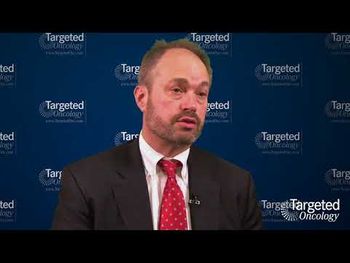


Optimizing Targeted Therapy in IgVH-Unmutated CLL

Steven E. Coutre, MD, professor at the Stanford University Medical Center, discusses the importance of molecular profiling in hematologic diseases, including acute lymphoblastic leukemia.

Based on data from the ongoing phase III ADMIRAL study, a new drug application for gilteritinib has been granted a priority review by the FDA for the treatment of adult patients with <em>FLT3</em> mutation–positive relapsed or refractory acute myeloid leukemia, according to Astellas Pharma, the manufacturer of the FLT3 inhibitor.
The use of triplet regimens for the treatment of patients with relapsed multiple myeloma has become one of the most favorable treatments recently. OPTIMISMM, a phase III trial, investigated bortezomib and dexamethasone with or without pomalidomide as another triplet regimen option for use in earlier lines of therapy, said Peter Voorhees, MD.<br />
According to topline results from the phase III ILLUMINATE trial, the combination of ibrutinib and obinutuzumab improved progression-free survival compared with chlorambucil plus obinutuzumab in patients with chronic lymphocytic leukemia or small lymphocytic lymphoma.

Andrew L. Pecora, MD, president of the Physician Services Division and chief innovation officer at Hackensack Meridian Health, discusses the significance of his findings when combining an anti-CTLA-4 and anti-PD-1 in patients with multiple myeloma. He sought out to find whether these 2 drugs could be combined safely after an autologous stem cell transplant.
In an interview with <em>Targeted Oncology, </em>Andrew M. Evens, DO, MSc, discusses the clinical trials that are ongoing at Rutgers for patients with mantle cell lymphoma. He shares some details of the current treatment landscape and how that will evolve as more data becomes available from trials like those at his institution.
Expression of genes from the B-cell receptor pathway predicted shorter progression-free survival and overall survival in patients with mantle cell lymphoma, according to results from an examination of a subsection of patients in the ongoing Fondazione Italiana Linfomi MCL-0208 clinical trial.
Palbociclib, a CDK4/6 inhibitor, has demonstrated success against ibrutinib resistance in primary human samples and mantle cell lymphoma cell lines with the mutated BTKC481S protein. Its use has sparked an investigation of combination therapies targeting CDK4 in MCL, said Selina Chen-Kiang, PhD.