



EGFR+ Lung Cancer
Latest News
Latest Videos




CME Content





























More News

Treatment with high-dose osimertinib showed positive survival and central nervous system progressive disease control in a real-world cohort of patients with EGFR-mutant non–small cell lung cancer, but these results were not statistically significant.

The FDA has approved ramucirumab in combination with erlotinib for the first-line treatment of patients with metastatic non–small cell lung cancer harboring EGFR exon 19 deletions or exon 21 mutations.
"Adjuvant osimertinib is the first targeted agent in a global randomized trial to show a statistically significant and clinically meaningful improvement in disease-free survival in patients with stage IB/II/IIIA EGFR mutation–positive non–small cell lung cancer."

Suresh S. Ramalingam, MD, discusses the phase III FLAURA trial.
The study results indicated clinical efficacy against central nervous system metastases in a cohort of patients. Almonertinib also displayed an overall favorable safety profile.

Interim findings of the ongoing phase II ZENITH20 trial demonstrated that poziotinib induced a 68.7% disease control rate when used as treatment of patients with pretreated non–small cell lung cancer harboring an EGFR exon 20 insertion.
In a Targeted Oncology case-based peer perspectives live discussion, Charu Aggarwal, MD, MPH, discussed systemic treatment options for stage III non–small cell lung cancer, based on a real case of a 63-year-old male patient.
Brain metastasis responses were elicited from treatment with pembrolizumab in patients with non–small cell lung cancer, in a PD-L1–positive cohort of a phase II clinical trial conducted by researchers at Yale Cancer Center. According to a YCC press release, pembrolizumab prolonged overall survival with limited toxicity in these patients.
The FDA has provided clearance to an Investigational New Drug application for GT103 for the treatment of solid tumors. A phase I clinical trial will be initiated to evaluate this novel targeted immunotherapy in patients with refractory non–small cell lung cancer, announced Grid Therapeutics, LLC.
The combination of tislelizumab, a PD-L1 antibody, pemetrexed and platinum-based chemotherapy achieved a statistically significant prolongation in progression-free survival compared with pemetrexed and platinum chemotherapy alone as first-line treatment of patients with nonsquamous non–small cell lung cancer, meeting the primary end point of a phase III BGB-A317-304 trial.





A 69-Year Old Man With Metastatic BRAF V600E-Mutated Metastatic NSCLC
Osimertinib demonstrated statistically significant and clinically meaningful benefit as treatment of patients with stage Ib, II, and IIIA EGFR-mutant non–small cell lung cancer with complete tumor resection in the phase III ADAURA clinical trial.
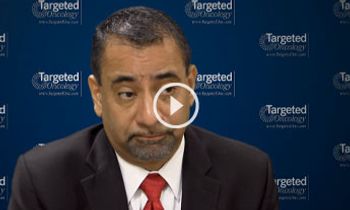
Luis E. Raez, MD, discusses targeted therapies for patients with lung cancer who have genetic alterations.
The addition of pemetrexed and carboplatin chemotherapy to gefitinib doubled progression-free survival and significantly improved overall survival in patients with non–small cell lung cancer harboring an EGFR mutation compared with gefitinib alone, according to results from a randomized phase III clinical <a>trial</a>.
Icotinib, an EGFR tyrosine kinase inhibitor, demonstrated similar efficacy to gefitinib as a treatment of brain metastasis in patients with EGFR-mutated non–small cell lung cancer, results from a Chinese retrospective study showed.
The FDA has accepted the Biologics License Application for and granted Priority Review to the combination of nivolumab plus ipilimumab with limited chemotherapy as a first-line treatment of patients with metastatic or recurrent non–small cell lung cancer who have no EGFR or ALK genomic tumor aberrations, according to a press release from Bristol Myers Squibb. The Prescription Drug Free User Act target action date is set as August 6, 2020, and the combination was granted Fast Track designation.
In an interview with Targeted Oncology, James A. Reeves, MD, discussed how targeted therapies are being used presently in lung cancer and the potential of these agents in the future.
The FDA has accepted and granted a priority review to a supplemental Biologics License Application for pembrolizumab for the treatment of adult and pediatric patients with unresectable or metastatic solid tumors with tissue tumor mutational burden-high who have progressed following prior treatment and who have no satisfactory alternative treatment options.
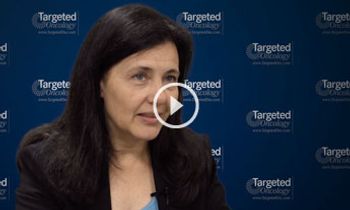
Heather Wakelee, MD, discusses how physicians are treating patients with advanced lung cancer using targeted therapies, such as EGFR tyrosine kinase inhibitors in patients harboring an EGFR mutation.