



Bone Marrow & Stem Cell Transplant
Latest News
Latest Videos



CME Content





























More News

In an interview, Mwanasha Merrill discussed the implication of findings from a phase 2 trial of pembrolizumab after autologous stem cell transplantation for the treatment of patients with peripheral T-cell lymphoma.

Allogeneic transplant is, today, a curative therapy for a variety of blood cancers, including many cases of acute monocytic leukemia, acute lymphoblastic leukemia, and myelodysplastic syndromes.

Salman Fazal, MD, discusses acute and chronic graft-versus-host-disease and younger match unrelated donor transplant for patients with cancer.

Researchers used split-dose busulfan, fludarabine, and post-transplant cyclophosphamide on 6 patients in a phase 2 study, and further research is warranted.
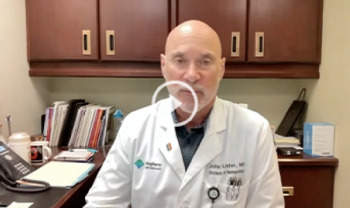
John Lister, MD, discusses the current role of stem cell transplant in the treatment of T-cell lymphoma, and some of the latest advances in the space.

In an interview, John Lister, MD, discussed the utility of stem cell transplant in T-cell lymphoma, including ongoing clinical trials and future needs.

Roland Walter, MD, PhD, and Johannes Schetelig, MD, debated on the sequencing of allogeneic stem cell transplant in patients with relapsed or refractory acute myeloid leukemia.

Johannes Schetelig, MD, MSc, discusses the sequencing of allogeneic stem cell transplant to achieve the best response in patients with acute myeloid leukemia/

Study results suggest that patients with myelodysplastic syndrome have the potential to benefit from HCT regardless of their genetic mutations.

In an interview with Targeted Oncology, Yago Nieto, MD, PhD, discussed the implications of findings from the phase 1 study assessing olaparib and high-dose chemotherapy in patients with relapsed/refractory lymphomas.
Samer A. Srour, MD, MS, discusses what challenges need to be faced when moving forward with the phase 1 trial of Orca-Q in patients undergoing haploidentical allogeneic hematopoietic stem cell transplantation.
Findings from a phase 3 trial published in JAMA Oncology suggest allo-HCT may not provide an OS benefit for patients with intermediate-risk acute myeloid leukemia during first complete remission.
Though the benefit of consolidative stem cell transplant for patients who received A+CHP appeared less pronounced vs those treated with the CHOP regimen, the method is still supported for patients with CD30-positive peripheral T-cell lymphomas.
Mitchell E. Horwitz, MD, discusses the next steps for research following the FDA approval of omidubicel.

Lori Muffly, MD, discusses findings a sub-analysis of a phase 1 study investigating briquilimab with low-dose total body radiation and fludarabine.
In an interview with Targeted Oncology, Soyoung Park, MD, discusses the criteria used for determining transplant eligibility and choosing between the different types of transplants for patients with cancer.
Samer A. Srour, MD, discusses research on Orca-Q for patients undergoing haploidentical allogeneic hematopoietic stem cell transplantation.
In an interview with Targeted Oncology, Salman Fazal, MD, discussed differences between older matched sibling donors vs younger unrelated donors in stem cell transplants and donor preferences at his institution for patients with cancer.
Salman Fazal, MD, discusses the use cases for older matched sibling donors vs younger unrelated donors in stem cell transplants for patients with cancer.
In an interview, Samer A. Srour, MD, MS, reviewed data from the dose-expansion phase of an ongoing phase 1 trial of Orca-Q in the haploidentical stem cell transplant setting for patients with high-risk hematologic malignancies.
In an interview with Targeted Oncology, Mitchell E. Horwitz, MD, discussed the FDA approval of omidubicel for the treatment of patients with blood cancers in need of an allogeneic hematopoietic stem cell transplant.
Samer A. Srour, MD, discusses Orca Q graft and how it’s revolutionized haploidentical allogeneic hematopoietic stem cell transplantation in patients with hematologic malignancies.

Nelson J. Chao, MD, offers closing thoughts on his treatment approach for a 35-year-old woman with chronic GVHD, and looks to the future of GVHD treatment.
A GVHD expert outlines the treatments available for patients with chronic GVHD and steroid-refractory chronic GVHD.
Nelson J. Chao, MD, gives an overview of acute and chronic GVHD, and details the classical presentation and staging process.