
Add-on parsaclisib showed improvement in spleen volume and symptoms in patients with myelofibrosis who were having a suboptimal response to a stable dose of ruxolitinib.
Sara Karlovitch is an associate editor with Targeted Oncology. She received a duel degree in Journalism and Government and Politics from the University of Maryland.
Add-on parsaclisib showed improvement in spleen volume and symptoms in patients with myelofibrosis who were having a suboptimal response to a stable dose of ruxolitinib.

In an interview with Targeted Oncology, Ashley E. Ross, MD, PhD, discusses new prostate cancer screening and staging options as well as therapies for both earlier and later-stage disease.

Alrizomadlin, a MDM2-p53 inhibitor has been granted a fast track designation by the FDA for the treatment of relapsed/refractory unresectable or metastatic melanoma who are relapsed or refractory to prior immune-oncologic agents.
Srdan Verstovsek, MD, PhD, discussed the future of myelofibrosis treatment, unmet clinical needs in this patient population, and new therapy options in an interview with Targeted Oncology™.

Preliminary research suggests that lopofosine I-131 in combination with external beam radiation is safe and tolerable in patients with relapsed or refractory head and neck cancer.

The FDA has approved ruxolitinib for the treatment of chronic graft-versus-host disease after failure of one or two lines of systemic therapy in adult and pediatric patients 12 years and older.
A biologics license application has been submitted to the FDA for betibeglogene autoemcel gene therapy for the treatment of adult, adolescent, and pediatric patients with B-thalassemia who require regular blood cell transfusions.
The FDA has approved cabozantinib for the treatment of patients 12 years of age and older with locally advanced or metastatic differentiated thyroid cancer that has progressed following prior vascular endothelial growth factor receptor-targeted therapy and who are radioactive iodine-refractory or ineligible.

Osimertinib (Tagrisso) plus bevacizumab does not produce a superior progression-free survival (PFS) benefit over osimertinib monotherapy in patients with non-squamous non-small cell lung cancer harboring an EGFR mutation. However, for patients who have a history of smoking or an exon 20 deletion, the combination may prove beneficial.
Cabozantinib is a feasible perioperative treatment and induced responses in patients with intermediate and poor-risk metastatic renal cell carcinoma.

Outcomes for patients with mantle cell lymphoma are poor after ibrutinib fails, pointing to a need for the development of safe and effective targeted therapies.
An accelerated approval has been granted by the FDA to zanubrutinib, for the treatment of marginal zone lymphoma in patients who have received 1 prior anti-CD20-based therapy.

The current standard of care for BCC is surgical excision. However, the procedure is often time consuming, expensive, and may lead to cosmetic and functional morbidity.
The FDA has accepted the biologics license application for tislelizumab, an anti-PD-1 immune checkpoint inhibitor for the treatment of unresectable recurrent locally advanced or metastatic esophageal squamous cell carcinoma in previously treated patients.
Enrollment has been completed in the VERSATILE-002 trial, a phase 2 study of PDS0101 for the treatment of advanced human papillomavirus-associated head and neck cancer that has returned or spread.

Compared to those who are overweight or of a normal weight, patients who are obese are more likely to have better disease-specific and overall survival in metastatic castration-resistant prostate cancer.
The FDA has granted a breakthrough device designation to the NovoTTF-200T System, a tumor treating fields delivery system, for the treatment of unresectable or metastatic liver cancer.

The first patient has been dosed in the phase 1b/2 trial of ERAS-007, an extracellular signal-regulated kinase inhibitor, for the treatment of advanced non-small cell lung cancer.

The JAK1/JAK2 inhibitor Ruxolitinib has numerous clinical uses for the treatment of polycythemia vera, especially for adult patients who have had an inadequate response to hydroxyurea.
The combination of fludarabine, cytarabine, idarubicin and G-CSF and venetoclax produces durable responses and has an acceptable safety profile in patients with newly diagnosed acute myeloid leukemia.
Zanubrutinib, a next-generation Bruton’s tyrosine kinase inhibitor, was safe and effective in patients with chronic lymphocytic leukemia or small lymphocytic lymphoma carrying chromosome 17p13.1 deletion.
In an interview with Targeted Oncology, Michael Kolodziej, MD, the senior advisor for ADVI Health as well as an American College of Physicians Fellow, discussed the impact the COVID-19 pandemic has had on oncology practice.
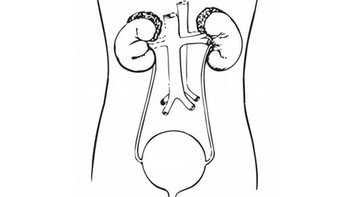
Bishoy M. Faltas, MD, discussed the use of genomic testing in urothelial canncer in greater detail, in an interview with Targeted Oncology.
Retrospective data show a low prevalence of esophagitis among immune checkpoint inhibitor-related adverse event in patient with cancer.

In an interview with Targeted Oncology™, Cathy Eng, MD, FACP, FASCO, discussed existing and novel biomarkers in anal cancer and ongoing research in the space.

In an interview with Targeted Oncology™, Ming Zhao, MD, discussed how the efficacy of HAIC-FO for the treatment of HCC compares to sorafenib as investigated in the FOHAIC-1 clinical trial.
Two international studies of oregovomab in combination with other anticancer therapies for the treatment of previously treated, recurrent ovarian cancer have dose its first patients, and patients are being recruited to receive the drug in a phase 3 study conducted in the United States.

Erica Stringer-Reasor, MD discusses the results of a phase 2 study examining the combination of tucatinib, trastuzumab, and capecitabine in patients with HER2-positive breast cancer with leptomeningeal metastasis.
P-PSMA-101, an autologous CAR-T product for the treatment of metastatic castrate-resistant prostate cancer, produces a durable response.
In an interview with Targeted Oncology, Ghassan K. Abou-Alfa, MD, discusses the efficacy of tislelizumab in HCC in greater detail, along with safety and the agent’s mechanism of action.