The FDA has granted breakthrough therapy designation to 177Lu-PSMA-617, an investigational radioligand therapy for the treatment of metastatic castration-resistant prostate cancer.
Sara Karlovitch is an associate editor with Targeted Oncology. She received a duel degree in Journalism and Government and Politics from the University of Maryland.
The FDA has granted breakthrough therapy designation to 177Lu-PSMA-617, an investigational radioligand therapy for the treatment of metastatic castration-resistant prostate cancer.

The FDA has accepted the biologics license application for the anti-PD-1 antibody drug balstilimab for the treatment of recurrent of metastatic cervical cancer with disease progression on or after chemotherapy.
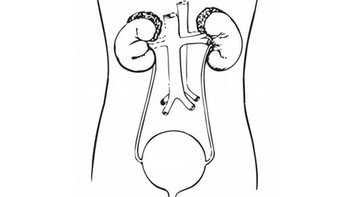
In an interview with Targeted Oncology, Parminder Singh, MD, discussed the need for bladder-sparing therapies in an older patient population of muscle-invasive bladder cancer and the findings from the INTACT clinical trial.

Results of a single-arm phase 2 study of regorafenib plus nivolumab in patients with mismatch repair–proficient/microsatellite stable colorectal cancer found a discrepancy in efficacy between the Japanese and North American Population.
The FDA has extended the review period of the supplemental new drug application for ruxolitinib as treatment of patients aged 12 years or older with steroid-refractory chronic graft-versus-host disease.
The combination of regorafenib and avelumab showed modest anti-tumor activity and survival rates in patients with heavily-pretreated biliary tract solid tumors.

Niraparib has an acceptable safety profile for patients with platinum-sensitive recurrent ovarian cancer, regardless of the dose being adjusted for weight, according to updated results from the phase 3 NORMA trial.
The FDA has accepted the biologics license application for peg-filgrastim, a proposed pegfilgrastim biosimilar.

The FDA has granted a breakthrough therapy designation to teclistamab for the treatment of relapsed or refractory multiple myeloma.

Sugemalimab, an anti-PD-L1 antibody, helps to prolong progression-free survival in patients with locally advanced, unrespectable stage III non–small cell lung cancer without disease progression after either concurrent or sequential chemotherapy.
The FDA has accepted and granted priority review to a new drug application for pacritinib for the treatment of patients with myelofibrosis and severe thrombocytopenia, defined as a platelet count less than 50x109/L.
The FDA has approved Guardant360, a liquid biopsy companion diagnostic for tumor mutation profiling or comprehensive genomic profiling to identify patients with locally advanced or metastatic non-small cell lung cancer who have a KRAS G12C mutation and may benefit from sotorasib.
In an interview with Targeted Oncology, Deepu Madduri, MD discussed the need for further CAR T-cell therapy research, expanding it into other hematology malignancies. She also discussd management of the common adverse events associated with CAR T cells.
Melflufen flufenamide has been deemed non-inferior to pomalidomide for the treatment of relapsed/refractory (R/R) multiple myeloma.
The American Urological Association updated its guidelines on Renal Masses and Localized Renal Cancer, expanding the use of genetic counseling and updating the use of active surveillance.
In an interview with Targeted Oncology, Benjamin Levy, MD, discusses the importance of molecular testing in lung cancer, the efficacy and future of targeted therapies, and upcoming practice-changing trials.
In an interview with Targeted Oncology, Risa Wong, MD, discussed platinum versus non-platinum containing chemotherapy as a later-line treatment for metastatic urothelial carcinoma.

The investigational CDK4/6 ARK5 inhibitor, ON 123300, has been dosed in the first time in a patient whose is enrolled in a phase 1 trial of ON 123300 for the treatment of advanced cancers.
The FDA has accepted the biologic license application (BLA) for ublituximab in combination with umbralisib for the treatment of patients with chronic lymphocytic leukemia and small lymphocytic lymphoma.
The combination of ibrutinib and venetoclax showed a favorable benefit-risk profile in patients with relapsed or refractory chronic lymphocytic leukemia treated in the VISION/HOVON 141.
The FDA has granted breakthrough therapy designation to the combination of VS-6766 and defactinib for the treatment of all patients with recurrent low-grade serous ovarian cancer.
In an interview with Targeted Oncology, Sergio A. Giralt, MD, discussed recent data from the study.
The FDA has accepted a supplemental new drug application for zanubrutinib for the treatment of adult patients with marginal zone lymphoma who have received 1 prior anti-CD20-based therapy. The agent was also granted priority review, with a Prescription Drug User Fee Act target action date of September 19, 2021.

In an interview with Targeted Oncology, Thomas Marron, MD, PhD, discussed neoadjuvant cemiplimab for the treatment of hepatocellular carcinoma.

The first patient has been dosed in a study designed to evaluate the safety and feasibility of IL13Rα2 chimeric antigen receptor T cell therapy for the treatment of leptomeningeal brain tumors, such as glioblastoma, ependymoma, and medulloblastoma.

The United States Preventive Services Task Force is recommending that individuals at average risk of colorectal cancer begin screening exams at age 45 rather than 50 years of age due to the risk of early on-set colorectal cancer.
Regeneron is resuming enrollment of patients with follicular lymphoma and diffuse large B-cell lymphoma in monotherapy trial of odronextamab after the FDA lifted the partial clinical hold placed on the agent in December 2020.
In an interview with Targeted Oncology, Xiuning Le, MD, PhD, discuss the findings from cohort 5 of the ZENITH20 study including the strategy of splitting the dose in half to reduce adverse events associated with poziotinib.
In an interview with Targeted Oncology, Haris Ali, MD, a hematology oncologist at the City of Hope Cancer Center, discussed the efficacy of ruxolitinib in patients with myelofibrosis, the impact of mutations on ruxolitinib treatment, and the use of the agent in the peri-transplant setting.
The FDA’s Oncologic Drugs Advisory Committee met to discuss the need, validity, and reliability of using patient-reported outcomes measurements linked to the Common Terminology Criteria for Adverse Events in pediatric oncology.