Commentary|Videos|August 12, 2025
Understanding Treatment Differences in Community Oncology for CRC
Author(s)Marwan G. Fakih, MD
Fact checked by: Dylann Bailey
Marwan G. Fakih, MD, discusses barriers that create treatment differences in metastatic colorectal cancer for community oncologists.
Episodes in this series
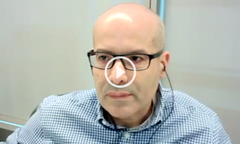





Marwan G. Fakih, MD, a professor in the Department of Medical Oncology & Therapeutics Research, associate director for Clinical Sciences, medical director of the Briskin Center for Clinical Research, division chief of Gastrointestinal Medical Oncology, and codirector of the Gastrointestinal Cancer Program at City of Hope, discusses differences and barriers he noticed for community oncologists treating metastatic colorectal cancer (CRC).
When speaking with community oncologists during a Case-Based Roundtable event, participants said many of their patients with metastatic CRC do not receive third-line treatment due to various barriers. These may include socioeconomic conditions, insurance issues, and patient performance status.
Fakih was surprised by the extent of this issue. Oncologists in comprehensive cancer centers may be less aware due to having more resources and treating different patient populations. It is important to increase awareness and support for different practices and to address unmet needs in the United States healthcare system to ensure all patients receive appropriate therapy, according to Fakih.
TRANSCRIPTION
0:10 | I was surprised that some of the participants said that a significant number of their patients do not receive third-line treatment in the setting of metastatic CRC. Unfortunately, there are still some barriers to treatment. That's what I see. And these barriers are really diverse, and they vary from one practice to another and from one area to another. Some of them may be related to patients’ socioeconomic conditions. Some of them may be related to insurance barriers, access to drugs, and some of them are related also to patient's performance status and the concerns that some providers have about the ability of patients to sustain additional treatment.
0:59 | I think the last point that we discussed was, to me, somewhat of an eye opener. Many of us academic [oncologists] who work in comprehensive cancer centers—where there is relative ease of access to support systems for patients and where perhaps there is some additional patient selection based on self-referral bias from particular patient populations—we are not really as cognizant of the fact that patients are not receiving third-line therapy as much. So that was somewhat of a surprise, which reinforces the need of improving awareness, allowing for additional support for different practices, and as a healthcare system in the United States, to figure out what are the unmet needs, and how do we level the ground so that every patient is able to receive the appropriate therapy.
Newsletter
SubscribeRelated Content
Advertisement

Pelareorep-Based Regimen Shows Durable Activity in RAS-Mutant mCRC
Published: | Updated: