Commentary|Videos|July 7, 2025
Key Takeaways of Trials in Metastatic CRC Explored
Author(s)Marwan G. Fakih, MD
Fact checked by: Dylann Bailey
Marwan G. Fakih, MD, discusses the top takeaways from using combination treatment in metastatic colorectal cancer.
Episodes in this series
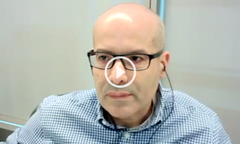





Marwan G. Fakih, MD, a professor in the Department of Medical Oncology & Therapeutics Research, associate director for Clinical Sciences, medical director of the Briskin Center for Clinical Research, division chief of Gastrointestinal Medical Oncology, and codirector of the Gastrointestinal Cancer Program at City of Hope, discusses the top takeaways from using combination treatment in metastatic colorectal cancer (CRC).
The combination of bevacizumab (Avastin) plus trifluridine/tipiracil (Lonsurf) in the SUNLIGHT trial (NCT04737187) was reviewed during a Case-Based Roundtable meeting led by Fakih. This trial showed an improvement in overall survival (OS) for the combination compared with trifluridine/tipiracil alone.
Additionally, the FRESCO-2 trial (NCT04322539) has shown OS benefit in this patient population. Because of this, many of the participants discussed that fruquintinib (Fruzaqla) could be a primary option after using the SUNLIGHT regimen when considering sequencing, according to Fakih.
TRANSCRIPTION
0:10 | The main point here is that we do have combinations that do improve, substantially, the OS of patients with metastatic disease with CRC. If we look at the combination of trifluridine and bevacizumab in the third-line setting, there's more than a 30% prolongation in OS for patients who receive that vs trifluridine/[tipiracil] alone, which is by itself, an approved treatment for metastatic CRC. These improvements are not as significant, now we see that there is an improvement of approximately a median of 3 and a half months just by adding bevacizumab to trifluridine/[tipiracil] in the SUNLIGHT clinical trial.
0:57 | Similarly, when we look at other treatments, such as fruquintinib, there's still a meaningful improvement in OS. It does not hit the 3 months in median improvement, but it nears that point. I think those are clinically significant improvements. I think the takeaway is that, in patients who are candidates…for the treatment and have a performance status of 0 to 1, we really have to take very seriously into consideration the findings from both the SUNLIGHT and the FRESCO-2 [trials].
1:34 | There has been in the discussion some relative consensus that the sequencing of treatment is trifluridine/bevacizumab followed by fruquintinib based on the data from SUNLIGHT and FRESCO-2. Some of the participants did favor, in select patient populations [where they preferred] oral therapy only without intravenous administration—the use of fruquintinib. But I think the importance of these 2 studies is that they do provide options of treatment for our patients with metastatic CRC, and they both improve the OS of patients.
Newsletter
SubscribeRelated Content
Advertisement




FDA Approves Zenocutuzumab for NRG1 Fusion–Positive Cholangiocarcinoma
Published: | Updated:




























