Now Playing
ADCs revolutionize breast cancer care, expanding beyond HER2-positive to HER2-low tumors, reshaping early therapy—and spotlighting MRD testing as the next frontier.
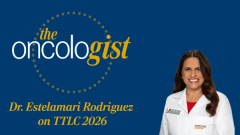
In this episode of The OncoloGIST, breast cancer oncologist and clinical researcher Dr Paolo Tarantino of Dana-Farber Cancer Institute reflects on how antibody-drug conjugates (ADCs) have transformed breast cancer treatment and where the field is headed next.
Dr Tarantino traces his early fascination with HER2-targeted ADCs to his oncology training in Italy, where he observed remarkable response rates in HER2-positive patients receiving trastuzumab deruxtecan (T-DXd; Enhertu). What followed was a field-defining discovery: that these drugs could work far beyond HER2-positive disease, which affects roughly 15% of breast cancer patients, extending benefit to HER2-low and even HER2-ultra-low tumors, a population representing up to 80–90% of all breast cancer cases.
He highlights the movement of ADCs into earlier lines of therapy as one of the biggest stories in breast oncology over the past year, with new approvals reshaping treatment in both triple-negative and HER2-positive disease. But Dr. Tarantino also spotlights two underappreciated developments: promising neoadjuvant immunotherapy data in ER-positive breast cancer from the KEYNOTE-756 trial, and the rapid dismantling of the long-standing TCHP chemotherapy regimen for HER2-positive disease, driven by compelling new data from multiple converging trials.
Looking ahead to 2026, Dr Tarantino identifies minimal residual disease (MRD) detection as the most pressing challenge facing clinicians today. Commercially available circulating tumor DNA tests can now identify patients at high risk of recurrence after surgery, but the critical question of how to act on a positive result remains unanswered. With no prospective trial data yet guiding treatment intensification in MRD-positive patients, clinicians are left navigating a technology that is prognostically powerful but clinically ahead of the evidence.
It's a challenge that will define the year—and potentially the decade—ahead.