Commentary|Videos|March 23, 2026
Lung Cancer Treatment Is Changing Fast — Here's What Doctors Learned at the 2026 TTLC Meeting
Author(s)Estelamari Rodriguez, MD, MPH
Fact checked by: Sabrina Serani
Estelamari Rodriguez, MD, delivers her top takeaways from the 2026 IASLC Targeted Therapies in Lung Cancer meeting.
Episodes in this series
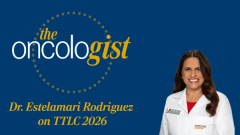
The 2026 IASLC Targeted Therapies in Lung Cancer meeting brought together leading oncologists, surgeons, and patient advocates to discuss the latest breakthroughs and challenges in lung cancer care. In this episode of The OncoloGIST, Dr Estelamari Rodriguez from the University of Miami highlighted several key takeaways from this year's program.
A standout moment was the prominent role of patient voices, particularly patient advocate Jane Perlmutter, who shared her personal experience battling multiple cancers. Her appearance alongside her own oncologist underscored the meeting's message that patients are true partners in developing better therapies. On the science side, one major focus was the growing complexity of EGFR-mutant lung cancer. As next-generation sequencing becomes more common, doctors are discovering that patients often carry multiple mutations simultaneously — something that can signal more aggressive disease and demands new treatment strategies. Alongside this, circulating tumor DNA (ctDNA) monitoring is emerging as a powerful tool, allowing doctors to track how tumors evolve in real time and catch resistance mutations as they develop.
Early-stage lung cancer also took center stage. While neoadjuvant chemoimmunotherapy has shown strong results in clinical trials, concerns were raised about treatment delays and patients who never make it to surgery due to side effects. A striking data point revealed that fewer than half of patients had their full mutation results available before their first surgical consultation — a serious gap that needs urgent attention. Looking ahead, antibody-drug conjugates (ADCs) are generating excitement as a way to deliver chemotherapy more precisely, potentially reducing reliance on harsh drugs like cisplatin. Updated immunotherapy trial data also raised important questions about whether some patients are being overtreated after surgery. The meeting closed with a call to improve multidisciplinary collaboration, especially for the community oncologists who treat most lung cancer patients across the country.
Newsletter
SubscribeRelated Content
Advertisement