Commentary|Videos|August 1, 2025
Frontline Metastatic RCC Therapy Improved With Long-Term Data
Author(s)Bradley McGregor, MD
Fact checked by: Dylann Bailey
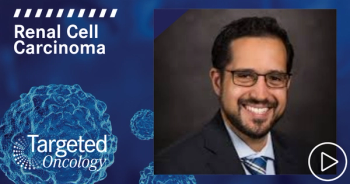
Bradley A. McGregor, MD, discusses the advancements in treating metastatic renal cell carcinoma.
Episodes in this series






Bradley A. McGregor, MD, director of Clinical Research for the Lank Center of Genitourinary Oncology at the Dana-Farber Cancer Institute, discusses the advancements in treating metastatic renal cell carcinoma (RCC).
McGregor notes the availability of multiple treatment options in the frontline setting. Recent studies have reported long-term outcomes, with over a quarter of patients surviving for 10 years. Various regimens, including immunotherapy (IO)/IO combinations and IO/tyrosine kinase inhibitors (TKIs) can improve both progression-free survival (PFS) and overall survival (OS), according to McGregor.
Drug combination such as nivolumab (Opdivo) plus ipilimumab (Yervoy) are approved for intermediate- and poor-risk patients, but long-term data showed numerically improved OS in favorable risk as well. McGregor emphasizes the importance of shared decision-making between oncologists and patients, considering the balance between short-term efficacy and the potential for durable treatment responses.
TRANSCRIPTION
0:10 | It's really an exciting time to be an oncologist, and particularly in kidney cancer, where we now have so many different options available as we treat patients in the frontline setting. I think what's exciting is that we're starting to think not only are we able to treat patients with metastatic kidney cancer, but hopefully able to offer them a prolonged treatment-free interval with recent studies reporting out a 10-year follow-up with over a quarter of patients still alive and doing well.
0:41 | We have many regimens that are now approved frontline setting for advanced RCC, with the IO/IO combination, as well as IO/TKIs, not only improving PFS, but OS. And as we've seen with recent updates, these regimens offer improvements in outcomes independent of risk classification, where nivolumab/ipilimumab is approved for intermediate-/poor-risk disease given the trial design, where with the extended follow-up it's the only combination has numerically improved OS with the favorable-risk patients.
1:19 | So it's really a great opportunity to have all these different options, and at the end of the day, it's going to come down to that shared decision making, to really see what regimen makes sense for the patient at that given time, weighing the short-term efficacy with higher response rates [and] lower progressive disease rates with IO/TKIs, vs chance for durable treatment-free intervals with IO/IO combinations, albeit with a 20% [rate of] progressive disease as best response.
Related Content
Advertisement