Videos

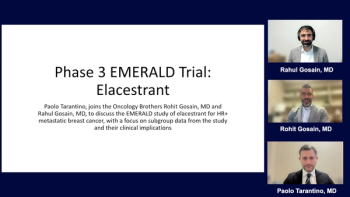
Along with the Oncology Brothers, Paolo Tarantino, MD, elaborates on results from an analysis of data from the EMERALD study that were reported at the San Antonio Breast Cancer Symposium (SABCS) 2022. This analysis identified duration of prior CDK4/6 inhibitor therapy as a potential surrogate marker for endocrine sensitivity, and discusses how these findings could help guide patient selection for elacestrant.

Joshua K. Sabari, MD, evaluates the objective clinical outcomes of emerging targeted therapies for ES-SCLC, comparing them with second-line topotecan and CAV regimens, while discussing the potential of various compounds for platinum-sensitive vs platinum-resistant subgroups. He also considers the applicability of TIGIT immunotherapy, highlighting the need for robust clinical trial data on its safety and efficacy as both monotherapy and in combination, and he reflects on whether tiragolumab is more suited for chemotherapy-naive non–small cell lung cancer than for ES-SCLC, based on the phase 2 CITYSCAPE trial results.

Joshua K. Sabari, MD, discusses the antitumor activity of second-line lurbinectedin, noting an ORR of 45%, a median DOR of 6.2 months, and a median OS of 11.2 months in patients with relapsed SCLC, and emphasizes the need for further studies to validate these findings in those with longer chemotherapy-free intervals while considering factors that may lead to lurbinectedin’s use over chemotherapy in candidates for platinum rechallenge, as well as the potential role of G-CSFs for prophylaxis.

Joshua K. Sabari, MD, describes the mechanism of action of lurbinectedin as a synthetic alkaloid that binds to guanine residues in the minor groove of DNA, forming adducts that disrupt DNA repair mechanisms and promote apoptosis in cancer cells, noting that its action contrasts with traditional alkylating agents by specifically interfering with DNA-protein interactions and transcription processes.

Joshua K. Sabari, MD, evaluates the potential of ifinatamab deruxtecan in combination with atezolizumab, with or without platinum-based chemotherapy, as first-line induction or maintenance therapy in ES-SCLC, emphasizing that statistically significant end points such as improved PFS and OS would be essential for clinical application in this patient population.

1 KOL is featured in this series.

Hatim Husain, MD, discusses how the implementation of proactive prophylaxis strategies for patients taking amivantamab, including prophylactic antibiotics, good skin hygiene, and insights from the phase 2 COCOON study, can help manage potential adverse effects and improve treatment outcomes.

Joshua K. Sabari, MD, discusses the potential treatment synergies expected from combining MK-6070, a trispecific T-cell engager, with ifinatamab deruxtecan, noting that specific patient and disease factors (eg, tumor expression profiles and previous treatment responses) could influence the decision to pursue dual T-cell engager therapy in early clinical development.

Joshua K. Sabari, MD, discusses how the dosing schedule of ifinatamab deruxtecan offers advantages in terms of simplicity and treatment adherence vs topotecan and lurbinectedin, suggesting that it may enhance the overall quality of life for patients undergoing treatment for SCLC.