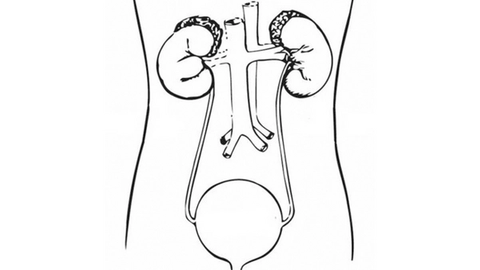


Renal Cell Carcinoma
Latest News
Latest Videos






CME Content





























More News
In a post-hoc analysis of the CheckMate 9ER trial, researchers found that, along with additional efficacy benefits, the combination of nivolumab plus cabozantinib had manageable adverse events.
The FDA has approved adjuvant pembrolizumab for the treatment of renal cell carcinoma with an intermediate-high or high risk of recurrence following nephrectomy or following nephrectomy and resection of metastatic lesions.
A significant reduction in the number of patients experiencing grade 3 or 4 toxicity was observed with modified dosing as ipilimumab combine with nivolumab in patients with advanced renal cell carcinoma.
The novel combination of belzutifan and lenvatinib will be tested against cabozantinib in a phase 3 clinical trial of patients with advanced renal cell carcinoma.
Compared with systemic therapy administered after cytoreductive nephrectomy, active surveillance was an option for some patients with metastatic renal cell carcinoma.
The combination of lenvatinib and pembrolizumab is the current standard of care for ccRCC, however, most patients still experience disease progression. The addition of a third agent may lead to improvement in outcomes.
Compared with sunitinib, the combination of nivolumab an ipilimumab produced better long-term responses, with overall survival approaching 5 years.
New findings suggest that understanding subtypes of non-clear cell renal cell carcinoma is important for personalizing treatment.

James Brugarolas, MD, PhD, discusses updated survival data in patients with metastatic renal cell carcinoma.
The frontline combination of lenvatinib and pembrolizumab is under investigation as a treatment option for patients with non-clear cell renal cell carcinoma in the recently launched phase 2 KEYNOTE-B61 trial.
While immunotherapy has high and durable response rates, most patients die of the disease.

Savolitinib in combination with durvalumab has been dosed to the first patient with MET-driven advanced papillary renal cell carcinoma in a phase 3 study.
During a presentation at the 2021 International Kidney Cancer Symposium, Bradley McGregor, MD, discussed analyses of outcomes based on histology in major RCC clinical trials, and how this approach will shape the future of treatment.

Naomi B. Haas, MD, medical oncologist, discusses the potential benefits of lenvatinib for the treatment of renal cell carcinoma.
Limited data exists on the effects of palliative care in patients with kidney cancer, and more research is needed.

Sarah P. Psutka, MD, discusses the key findings of a retrospective study of the efficacy of Immune checkpoint inhibitor plus tyrosine kinase inhibitor as any-line treatment for patients with renal cell carcinoma.
Retrospective data suggest that perinephric fat invasion, sarcomatoid or rhabdoid component, and necrosis are independent prognostic indicators of recurrence-free survival in renal cell carcinoma.
Sarah P. Psutka, MD, discussed the efficacy and toxicity of later-line ICI and TKI therapy in mRCC during an interview with Targeted Oncology.

Sarah P. Psutka, MD, discusses the efficacy of the combination of immune checkpoint inhibitor therapy plus tyrosine kinase inhibitor for the treatment of metastatic renal cell carcinoma.
Jeffrey A. Sosman, MD leads a discussion about a 59-year-old Black who woman received a diagnosis of clear cell renal cell carcinoma.
Results shared in a webinar during the 2021 European Association of Urology Congress show the potential of adjuvant pembrolizumab for the treatment of renal cell carcinoma.

Chung-Han Lee, MD, PhD, discusses the phase 2 KEYNOTE-B61 trial of pembrolizumab plus lenvatinib in patients with non–clear cell renal cell carcinoma.
Cabozantinib is a feasible perioperative treatment and induced responses in patients with intermediate and poor-risk metastatic renal cell carcinoma.

While they may differ by other genetic alterations, patients with VHL mutated clear cell renal cell carcinoma or VHL wild type ccRCC may have similar characteristics.
A lack of understanding about renal cell carcinoma (RCC), clinical trials, and the diseases psychosocial impact may exist in patients living with the illness and their families.