



Ovarian Cancer
Latest News
Latest Videos

CME Content





























More News

Susana Banerjee, MBBS, PhD, discusses the updated results of the MEDIOLA trial of patients with ovarian cancer presented at the 2022 European Society for Medical Oncology Congress.

During a Targeted Oncology case-based roundtable event, Ritu Salani, MD, MBA, discussed multiple studies that back up the use of PARP inhibition as a first-line maintenance therapy for patients with advanced ovarian cancer.

The new VENTANA FOLR1 RxDx Assay has been approved by the FDA and will aid in identifying patients with ovarian cancer who are eligible for targeted treatment with mirvetuximab soravtansine.

Mirvetuximab soravtansine has been granted FDA accelerated approval for use in patients with folate receptor alpha-high platinum-resistant ovarian cancer who have received prior treatment with 1 to 3 prior systemic therapies.
During a Targeted Oncology case-based roundtable event, Bradley J. Monk, MD, discussed recommendations for managing toxicity and dosing of PARP inhibitors as primary maintenance for ovarian cancer.
In an interview with Targeted Oncology, Ursula A. Matulonis, MD, discussed the pooled analysis of 3 studies which examined single agent mirvetuximab in patients with FRα-high platinum-resistant ovarian cancer.
In an interview with Targeted Oncology, Susana K. Banerjee, PhD, further discussed the updated results of the MEDIOLA trial and the implications of these findings.
A pooled analysis of 3 studies showed that there was an extended treatment benefit for patients with FRα positive recurrent ovarian cancer treated with the novel antibody-drug conjugate mirvetuximab soravtansine.

In a first-in-human trial, a peptide-drug conjugate showed tolerability and antitumor activity in patients with advanced solid tumors.
Additional findings fro the phase 2 SOLO2 study shows that there is a need for research to determine the optimal strategy for patients who relapse after treatment with a PARP inhibitor.

Amit M. Oza, MD, discusses progression-free survival findings from the phase 3 ARIEL4 clinical trial.
In an interview with Targeted Oncology™, Amit M. Oza, MD, discussed the overall survival analysis of the ARIEL4 clinical trial and unanswered questions about rucaparib treatment in certain ovarian cancer subgroups.
During a Targeted Oncology case-based roundtable event, Chad Hamilton, MD, broke down the data that shows how the use of PARP inhibition as a first-line maintenance therapy for patients with advanced ovarian cancer is impacting patients.
There is no single best treatment algorithm for ovarian cancer. Treatment decisions, which become increasingly complex with disease progression, are informed by several patient-specific clinicopathologic parameters and genomic results.
During a case-based roundtable event, Bhavana Pothuri, MD, discussed the use of PARP inhibitors to treat first-line advanced ovarian cancer.

David O'Malley, MD, looks at the preclinical signals of the novel MUC16 antibody ubamatamab, which showed promising results for patients with recurrent ovarian cancer.
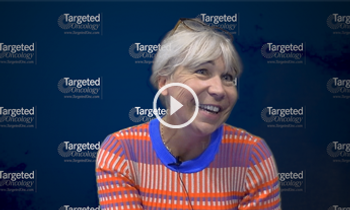
Isabelle Ray-Coquard, MD, discusses the final overall survival results from the phase 3 PAOLA-1/ENGOT-ov25 trial.
To determine the effectiveness of nirogacestat at 150mg twice a day in patients with ovarian granulosa cell tumors, the agent has been administered to the first patient in a phase 2 trial.

At a live virtual event, Saketh Guntupalli, MD, discussed with participants the role of PARP inhibitors in the first-line setting for patients with advanced ovarian cancer.

Enrollment has begun in the phase 1b trial examining PY159 alone and in combination with pembrolizumab in patients with unresectable and/or metastatic solid tumors that are refractory or relapsed to standard of care.
Celsion Corporation announced it had reached enrollment of 110 patients for the OVATION 2 trial of GEN-1 plus neoadjuvant chemotherapy for patients with advanced ovarian cancer.

In an interview with Targeted Oncology during the EMSO Annual Congress, David O’Malley, MD, discussed the phase 1 study of ubamatamab in ovarian cancer.
Data from the monotherapy analysis of the phase 3 ATHENA trial has led to the submission of a supplemental new drug application to the FDA and EMA for rucaparib as treatment for patients with advanced ovarian cancer.

Maintenance rucaparib (Rubraca) induced a progression-free survival (PFS) improvement in patients with newly diagnosed ovarian cancer compared with placebo, which was also seen across all prespecified subgroups.
ADP-A2M4CD8, an autologous T-cell therapy, showed promising antitumor activity in several solid tumor types including ovarian, gastric, and urothelial cancer.