LUNG CANCER
Latest News
Latest Videos

CME Content

More News


Lung Cancer

The FDA has approved a 4-week dosing schedule for the PD-1 inhibitor nivolumab (Opdivo) across several indications.



NonDriver Metastatic Lung Large Cell Carcinoma
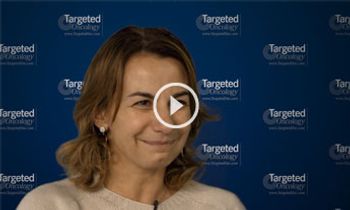
Marina C. Garassino, MD, medical consultant in the Medical Oncology Division, Fondazione IRCCS Istituto Nazionale dei Tumori, Milan, Italy, discusses current advancements with immunotherapy as first- and second-line treatments for patients with lung cancer.

A novel regimen of immunotherapy, angiogenesis inhibition, and chemotherapy brings promising outcomes for patients with non-small cell lung cancer (NSCLC). The synergic combination, notes Benjamin P. Levy, MD, would be exciting to have in the landscape.

Joshua Bauml, MD, an assistant professor at Perelman School of Medicine at the University of Pennsylvania, discusses the possibilities with using liquid biopsies in patients with lung cancer.

Updates from the KEYNOTE-189 and IMpower150 trials demonstrated the significant impact of adding immunotherapy to treatment regimens for patients with non–small cell lung cancer.

Hossein Borghaei, DO, MS, chief of the Division of Thoracic Medical Oncology at Fox Chase Cancer Center, discusses biomarkers that may help identify patients with lung cancer who can benefit from immunotherapy agents. Since the introduction of these agents, PD-L1 has been used as a potential biomarker for selecting patients that may benefit from treatment. As PD-L1 is not completely reliable, there is interest in developing additional biomarkers.

The primary endpoint of improving overall survival was not met in the phase III JAVELIN Lung 200 Trial of avelumab in patients with non–small cell lung cancer, according to Merck KGaA and Pfizer, the co-developers of avelumab.

Jean-Charles Soria, MD, PhD, will be honored with the Targeted Anticancer Therapies 2018 Honorary Award for cancer drug development. Soria has played a large part in cancer drug development across molecular targeted agents, precision medicine, and immunotherapy for the last 15 years.

Based on results from the phase III PACIFIC trial, durvalumab has been granted approval by the FDA for the treatment of patients with locally advanced, unresectable stage III non–small cell lung cancer who have not progressed following chemoradiotherapy.

Ulixertinib, a novel ERK1/2 inhibitor, demonstrated encouraging antitumor activity in patients with solid tumors harboring mutations in the MAPK/ERK pathway, according to the results of a phase I study published in <em>Cancer Discovery</em>.

The day when oncologists can order a Medicare-covered next-generation sequencing diagnostic test may be near at hand, but once this change goes into effect, will oncologists be limited to certain tests, labs, and cancer settings? The answer is unclear.

The prognosis for patients with metastatic non–small cell lung cancer (NSCLC) is poor. However, with recent trials showing improved overall survival with checkpoint inhibitors compared with standard chemotherapy, disease management is changing.

A new drug application for lorlatinib for use in patients with <em>ALK</em>-positive metastatic non–small cell lung cancer who have progressed on 1 or more ALK tyrosine kinases inhibitors has been granted a priority review by the FDA.

Based on data from part 1a of the phase III CheckMate-227 trial, nivolumab (Opdivo) and ipilimumab (Yervoy) in combination show improved progression-free survival (PFS) versus with chemotherapy in treatment-naïve patients with high tumor mutation burden (TMB) non–small cell lung cancer (NSCLC).

Jhanelle E. Gray, MD, recently shared the treatment considerations and decisions she makes when treating patients with non–small cell lung cancer, with a special focus on immunotherapy. Gray, associate member, Director of Thoracic Clinical Research, Moffitt Cancer Center, Tampa, Florida, explained her treatment decisions based on 2 case scenarios during a <em>Targeted Oncology</em> live case-based peer perspectives dinner.

Rapid growth continues for research surrounding combination therapies of immunotherapy with chemotherapy for patients with NSCLC.