
LUNG CANCER
Latest News
Latest Videos






CME Content





























More News

Shared insight on recent advances in KRAS-mutant NSCLC, with a focus on new therapies on the horizon.

Nivolumab plus ipilimumab in combination with chemotherapy was granted approval for the frontline treatment of patients with metastatic or recurrent non–small cell lung cancer who do not harbor EGFR or ALK genomic tumor abberations.
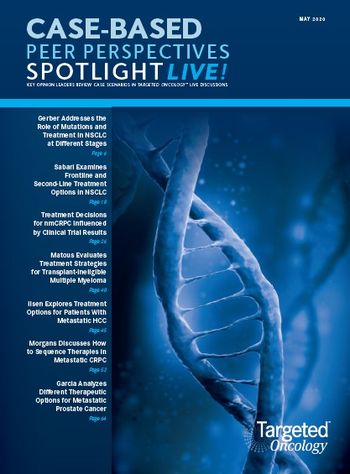
Joshua K. Sabari, MD, goes through treatment options in the frontline and second-line for patients with non–small cell lung cancer in a Targeted Oncology case-based peer perspectives live discussion.

"Our trial, together with ongoing randomized trials, provides more evidence on the risks and benefits of immunotherapy as a neoadjuvant treatment, and could help to answer questions regarding the optimal duration, best surrogate endpoint, and best predictive biomarkers for treatment."
In a Targeted Oncology case-based peer perspectives live discussion, David Gerber, MD, addresses the role of biomarkers in guiding treatment decisions for patients with non–small cell lung cancer based on a patient scenario.
The FDA has granted approval to brigatinib for the frontline treatment of patients with ALK-positive metastatic non–small cell lung cancer, as detected by an FDA-approved test.
Atezolizumab has received its fifth indication in NSCLC as treatment of adult patients with metastatic non–small cell lung cancer who have high PD-L1 expression.
A study found correlation between body mass index in patients with non–small cell lung cancer treated with atezolizumab and improved survival outcomes.
"Today’s news is very welcome as we continue to evaluate the potential of Enhertu to help patients with this devastating type of lung cancer. Targeted treatments and immunotherapies are demonstrating tremendous advancements, but there remains an unmet medical need for patients with HER2 mutations who are not benefiting from such therapies or for those whose cancer continues to progress."
The combination of the combination of nivolumab and ipilimumab is now approved by the FDA for the treatment of metastatic or recurrent non–small cell lung cancer with PD-L1 expression greater than 1%...
"...These results leave us increasingly confident that ADXS-503 has the potential to restore or enhance sensitivity to checkpoint inhibitors..."
With the identification of new oncogenes leading to the development of drugs that target mutations, lung cancer can now be considered a treatable disease. In addition to advances in therapy, improved tumor testing can help the oncologist develop a personalized approach to treating patients.
The FDA has approved selpercatinib capsules for the treatment of patients with lung cancer or thyroid cancer harboring RET alterations. This marks the first treatment approved to target RET gene alterations.
"This simultaneous therapy and companion diagnostic approval marks an important step forward in the treatment of rare cancer and demonstrates how deep collaboration across industry partners can advance patient care.”
Based on these findings, the 200 mg dose of canakinumab administered subcutaneously every 3 weeks in combination with the standard dose of pembrolizumab and a platinum-based chemotherapy doublet will be used in the next phase of the CANOPY-1 study.
"The emergence of the anti-PD-1 antibody has brought a new treatment modality for patients with squamous NSCLC."
“We are pleased that the FDA has approved Tabrecta for patients with METex14 NSCLC. Having a therapy that targets the recognized oncogenic driver will provide a much needed treatment option for patients with METex14 NSCLC who currently have limited treatment options.”
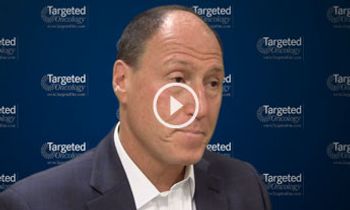
Rogerio C. Lilenbaum, MD, discusses molecular panels and other testing for patients with nonsquamous non-small cell lung cancer.
"We are delighted to add the first FDA approval of this important companion diagnostic on Dako Omnis."
“We don’t have a good understanding of why some patients have a robust response to immunotherapy and others do not. That’s important, not only in terms of selecting patients but also in terms of the therapy approach. This is one reason why clinical trials are incredibly important.”
“These topline results from the CheckMate 743 trial demonstrate the potential of Opdivo plus Yervoy in previously untreated patients with malignant pleural mesothelioma, and is another example of the established efficacy and safety of the dual immunotherapy combination seen in multiple tumor types.”
In a Targeted Oncology case-based peer perspectives live discussion, Charu Aggarwal, MD, MPH, discussed systemic treatment options for stage III non–small cell lung cancer, based on a real case of a 63-year-old male patient.
Brain metastasis responses were elicited from treatment with pembrolizumab in patients with non–small cell lung cancer, in a PD-L1–positive cohort of a phase II clinical trial conducted by researchers at Yale Cancer Center. According to a YCC press release, pembrolizumab prolonged overall survival with limited toxicity in these patients.
The FDA has provided clearance to an Investigational New Drug application for GT103 for the treatment of solid tumors. A phase I clinical trial will be initiated to evaluate this novel targeted immunotherapy in patients with refractory non–small cell lung cancer, announced Grid Therapeutics, LLC.
The combination of tislelizumab, a PD-L1 antibody, pemetrexed and platinum-based chemotherapy achieved a statistically significant prolongation in progression-free survival compared with pemetrexed and platinum chemotherapy alone as first-line treatment of patients with nonsquamous non–small cell lung cancer, meeting the primary end point of a phase III BGB-A317-304 trial.