





























Jennifer Brown, MD, PhD, Director, Chronic Lymphocytic Leukemia Center, Dana-Farber Cancer Institute, Assistant Professor of Medicine, Harvard Medical School, discusses the Bcl-2 inhibitor ABT-199 for the treatment of patients with CLL.

Jennifer Brown, MD, PhD, Director, Chronic Lymphocytic Leukemia Center, Dana-Farber Cancer Institute, Assistant Professor of Medicine, Harvard Medical School, discusses the Bcl-2 inhibitor ABT-199 for the treatment of patients with CLL.
John C. Byrd, MD, from OSUCCC – James, describes a phase I/Ib trial looking at dinaciclib for patients with relapsed or refractory chronic lymphocytic leukemia (CLL).
Jae Park, MD, attending physician, Leukemia Service, Memorial Sloan-Kettering Cancer Center, describes the design of a trial analyzing vemurafenib for the treatment of patients with hairy cell leukemia.
Miguel-Angel Perales, MD, from Memorial Sloan-Kettering Cancer Center, discusses the challenges regarding access to bone marrow transplant donors.
Mark J. Levis, MD, PhD, discusses the ideal way to use quizartinib to treat a patient with an FLT3-ITD mutation in acute myeloid leukemia (AML).
Renier J. Brentjens, MD, PhD, associate professor, chief, Cellular Therapeutics Center, Memorial Sloan-Kettering Cancer Center, discusses the differences between the CAR-modified T cells of three institutions.

The FDA approval of two anti-CD20 antibodies—ofatumumab (Arzerra) and, just recently, obinotuzumab (Gazyva)—has greatly advanced the outlook for managing chronic lymphocytic leukemia.
Richard R. Furman, MD, Richard A. Stratton Assistant Professor in Hematology and Oncology, Weill Cornell Medical College, gives an overview of the efficacy and safety of idelalisib and rituximab for previously treated CLL.
Mark J. Levis, MD, PhD, discusses the difficulty of treating a patient with a FLT3-ITD mutation in acute myeloid leukemia.
Marcel R.M. van den Brink, MD, PhD, Head, Division of Hematologic Oncology, Alan N. Houghton Chair, Memorial Sloan-Kettering Cancer Center, highlights two studies that will be presented at the 2013 American Society of Hematology (ASH) Meeting.
Jae Park, MD, attending physician, Leukemia Service, Memorial Sloan-Kettering Cancer Center, comments on the treatment of patients with hairy cell leukemia.

Renier J. Brentjens, MD, PhD, discusses the potential of using CAR-modified T cells to treat hematologic cancers.
Mark J. Levis, MD, PhD, Johns Hopkins University, discusses the background and future of quizartinib for FLT3-ITD acute myeloid leukemia at the 2013 Chemotherapy Foundation Symposium, which took place from November 6-8.

Obinutuzumab (Gazyva) plus chlorambucil has been approved by the FDA as a first-line treatment for patients with CLL, based on clinical trial data demonstrating that the combination more than doubled median PFS over the chemotherapy agent alone.

A phase III EPIC trial exploring ponatinib (Iclusig) in untreated patients with chronic myeloid leukemia (CML) has been discontinued. The decision comes following a high occurrence of arterial thrombotic events, according to a statement released by Ariad Pharmaceuticals, Inc., the company developing the drug.

A Q&A with Jennifer Brown MD, PhD, director of the Chronic Lymphocytic Leukemia Center, Dana-Farber Cancer Institute, and assistant professor of Medicine at Harvard Medical School in Boston, MA.

Following a positive interim analysis, a phase III study of the PI3K-delta inhibitor idelalisib in combination with rituximab (Rituxan) has been stopped.

The FDA has placed a partial hold on the clinical development of the BCR-ABL inhibitor ponatinib (Iclusig), following the high occurrence of arterial thrombosis in patients treated with the drug.
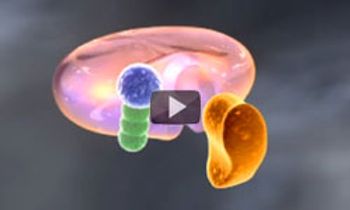
Volasertib (BI 6727) is a potent and selective inhibitor of PLK1 in vitro that is currently being evaluated for its therapeutic potential to target the cell cycle.

Jennifer Woyach, MD, discusses peripheral lymphocytosis in patients with chronic lymphocytic leukemia (CLL) following treatment with ibrutinib.
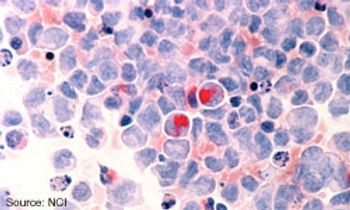
The FDA has granted a Breakthrough Therapy designation to the novel PLK1 inhibitor volasertib in combination with LDAC for its potential as a treatment for patients with untreated AML who are ineligible for intensive remission induction therapy.

Valentin Goede, MD, Department I of Internal Medicine and Center of Integrated Oncology Cologne-Bonn, University of Cologne, Germany, discusses the findings of the phase III CLL11 trial.
Craig L. Tendler, MD, discusses the mechanism of action of ibrutinib in various tumor types.

The use of tyrosine kinase inhibitors (TKIs) to inhibit BCR-ABL protein in chronic myeloid leukemia (CML) is one of the major milestones in modern oncology.
Clinical study results presented at the 2013 American Society of Clinical Oncology Annual Meeting may offer new hope for patients with chronic lymphocytic leukemia.