

GENITOURINARY CANCERS
Latest News
Latest Videos






CME Content





























More News

Toni Choueiri, MD, discusses some of the ongoing clinical trials in metastatic renal cell carcinoma (mRCC).
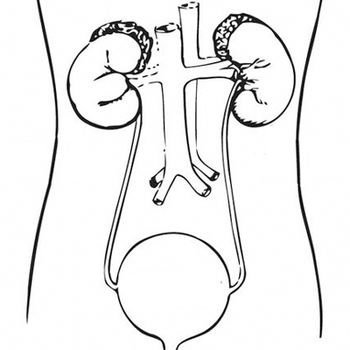
The FDA has updated the label for enzalutamide (Xtandi) in metastatic castration-resistant prostate cancer (mCRPC) to include new data from the phase II TERRAIN study, according to the codevelopers of the androgen receptor inhibitor, Astellas and Pfizer.

Rahul Tendulkar, MD, associate, Cleveland Clinic, discusses findings of a recent study looking at post-prostatectomy radiation and its impact on prostate cancer mortality.
Study results that examined patient-reported outcomes and quality of life measures demonstrate that hypofractionated radiotherapy (H-RT) is a viable, safe, and value-added alternative to patients with low-risk prostate cancer.
Men with bone-metastatic castration-resistant prostate cancer (mCRPC) appeared to derive additional benefits from treatment with radium-223 with concomitant bone-targeted therapies.

A move by CVS Health to place in-house physician dispensaries out-of-network for purposes of Medicare Part D drug payment would force hundreds of thousands of cancer patients across the country to find alternate sources for their oral oncolytic drugs, the Community Oncology Alliance (COA) argued in a new white paper.
The addition of external-beam radiotherapy (EBRT) to interstitial brachytherapy failed to reduce prostate cancer progression compared to brachytherapy alone in men with intermediate-risk disease, interim data from a randomized trial showed.
Although prostate cancer was among the first tumor types to be studied with immunotherapy treatments, prostate cancer appears to not be immunologic, according to Susan F. Slovin, MD, PhD.
Advances in the computerization of the imaging, blood flow, and tumor measures of exact volume and vessel density are now less operator dependent. That provides for an accurate and repeatable diagnosis, and a means to follow the individual patient’s unique pattern of cancer development, progress, and response to treatment.

The European Commission (EC) has granted its approval for lenvatinib (Kisplyx; EU) in combination with everolimus (Afinitor) for patients with advanced renal cell carcinoma (RCC) following 1 prior VEGF-targeted therapy.

Though the current standard of care when treating muscle-invasive bladder cancer calls for neoadjuvant chemotherapy followed by radical cystectomy, the procedure is associated with a fair amount of morbidity and is not suggested lightly, according to Stanley Yap, MD.
Cell cycle progression (CCP) and homologous recombination deficiency (HRD) may be linked to bladder cancer recurrences and pathologic complete responses, according to Hristos Kaimakliotis, MD.
As a group, Rio Grande Urology shares a sense of obligation and culture. Its leaders have embraced an integrative model approach and sees the advantages of it. It was formed by 4 urology practices merging to build a main campus that houses the cancer center and radiation therapy center.

Luke Nordquist, MD, FACP, a urologic medical oncologist and CEO of the Urology Cancer Center and GU Research Network, gives an overview of the Alpharadin in Symptomatic Prostate Cancer Patients (ALSYMPCA) study, and he discusses ongoing trials examining the use of radium-223 dichloride (Xofigo) in metastatic castration-resistant prostate cancer (mCRPC).
In an interview with <em>Targeted Oncology</em>, Julio Pow-Sang, MD, chair of Urological Oncology at Moffitt Cancer Center, discussed the significance of assessing risk status, options for patients whose risk status falls in a “grey-zone,” and how technology is helping oncologists more accurately characterize risk.
In an interview with <em>Targeted Oncology</em>, Richard Levine, MD, medical director, Moffitt International Plaza, Moffitt Cancer Center, discussed the selection of therapies available for patients with metastatic castration-resistant prostate cancer (mCRPC) and the next steps in the field.
Pfizer has announced plans to acquire the biopharmaceutical company Medivation, which is the developer of the androgen receptor inhibitor enzalutamide (Xtandi). Under the terms of the agreement, Pfizer will pay $81.50 per share in cash for Medivation, totaling approximately $14 billion. Both companies agreed to the transaction, which is expected to complete later this year.
<p>Approximately four years after the FDA approval of two powerful new oral androgen-targeting agents for metastatic castration-resistant prostate cancer, an analysis heightened clinical awareness of the potential for both under-treatment and over-treatment with abiraterone acetate, as well as potential drug-drug interactions with both abiraterone acetate and enzalutamide.</p>
Across the fields of renal cell carcinoma, bladder cancer, and prostate cancer, immunotherapy agents are moving through the pipeline and impacting patient outcomes—some quicker than others.
For patients with prostate cancer, prostatectomy—whether laparoscopic or robotic—can provide a significant clinical benefit.
The pivotal phase III prostate cancer trial ARMO 3-SV will be discontinued based on recommendations made by the trial's independent data monitoring committee.

Christopher E. Barbieri, MD, PhD, surgeon, researcher in prostate cancer, Sandra and Edward Meyer Cancer Center at Weill Cornell Medicine and New-York Presbyterian, discusses the role of PARP inhibitors in castration-resistant prostate cancer.

<p>Charles J. Ryan, MD, professor of Clinical Medicine, Urology, Helen Diller Family Comprehensive Cancer Center at the University of California, San Francisco, discusses the role of abiraterone acetate in the treatment of patients with prostate cancer, and the questions that remain about its use.</p>
While the United States Preventative Services Task Force has taken a stand against routine prostate-specific antigen screening for prostate cancer, updated findings from the landmark Prostate, Lung, Colorectal, and Ovary screening trial could flip opinions.