

GI CANCERS
Latest News
Video Series

Latest Videos



CME Content





























More News
FDA fast-tracks muzastotug and pembrolizumab for metastatic colorectal cancer, showcasing promising efficacy and safety in early studies.
Givastomig shows promising antitumor activity and a manageable safety profile in patients with CLDN18.2-positive gastroesophageal carcinoma.
FDA approves durvalumab with FLOT chemotherapy for early-stage gastric cancer, showing promising survival rates in recent clinical trials.
Recent research reveals that GLP-1 receptor agonists significantly lower 5-year mortality rates in colon cancer patients, highlighting their potential in cancer treatment.
A novel combination therapy shows promising results in extending progression-free survival for patients with advanced pancreatic cancer, highlighting potential biomarkers for immunotherapy.
OBI-902 receives FDA orphan drug designation for cholangiocarcinoma, promising new hope in treating this rare and aggressive cancer.
DPTX3186 gains FDA fast track status, promising a novel treatment for gastric cancer with potential for significant patient impact.
Zanidatamab plus chemotherapy shows significant survival benefits for HER2-positive gastroesophageal adenocarcinoma, potentially transforming first-line treatment options.
The FDA accepts 177Lu-edotreotide for GEP-NETs, showcasing significant survival benefits over everolimus in recent trials.
FDA fast-tracks alnodesertib and irinotecan for ATM-negative metastatic colorectal cancer, showing promising efficacy and safety in early trials.

A new treatment combination shows significant promise for patients with resistant gastrointestinal stromal tumors, improving survival rates and tolerability.
New findings reveal promising antitumor responses in HER2-positive esophagogastric adenocarcinoma with a novel chemoimmunotherapy approach.
A phase 1b trial reveals the safety and potential efficacy of combining PolyPEPI1018 vaccine with TAS-102 in treating advanced colorectal cancer.
Dr. Strosberg discusses the safety profile and long-term toxicities of 212Pb-DOTAMTATE treatment, highlighting renal issues and achalasia in patients.
The EDGE-Gastric trial reveals promising results for domvanalimab and zimberelimab in treating advanced gastric cancer, showcasing durable efficacy and manageable safety.
Dr. Jonathan Strosberg discusses the promising results of the ALPHAMEDIX-02 trial, evaluating a new therapy for advanced neuroendocrine tumors.
A novel combination therapy shows promising results for advanced esophageal squamous cell carcinoma, achieving high response rates and manageable safety.
Healthcare professionals adjust octreotide and lanreotide doses for effective symptom control in patients with carcinoid syndrome, following NCCN guidelines.
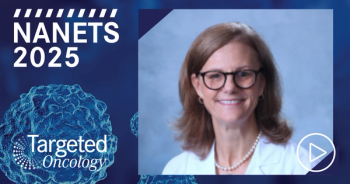
Mary Maluccio, MD, MPH, FACS, discusses the promising next steps for 212Pb-DOTAMTATE in treating GEP-NETs, including a pivotal phase 3 trial and ongoing patient follow-up.
Dr Mary Maluccio discusses promising results and safety concerns from the ALPHAMEDIX-02 trial on innovative therapy for GEP-NETs.
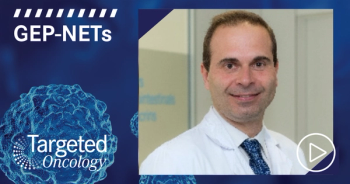
New trial results reveal ITM-11 significantly improves survival rates in GEP-NET patients, outperforming everolimus with better efficacy and safety profiles.

Experts discuss the integration of GLP-1 receptor agonists in treating neuroendocrine tumors, highlighting safety concerns and the need for further research.
Explore the latest insights on somatostatin analogs, dose adjustments, and emerging treatments for managing carcinoid syndrome symptoms effectively.

Experts discuss the CUTNETs collaborative's efforts to enhance surgical care and standardize treatment for neuroendocrine tumors across multiple centers.

AI transforms healthcare by personalizing treatment plans and enhancing patient-provider communication, revolutionizing how we approach medical care.