

Colorectal Cancer
Latest News

Latest Videos





CME Content





























More News
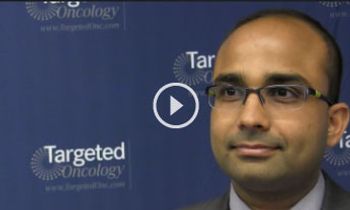
Kanwal Raghav, MBBS, MD, assistant professor, Department of Gastrointestinal Medical Oncology, Division of Cancer Medicine, The University of Texas MD Anderson Cancer Center, discusses the clinical application of the data on HER2 gene amplification in patients with metastatic colorectal cancer, as well as the benefits of using a therapy that combines trastuzumab and pertuzumab.

Early tumor shrinkage is linked to overall survival and could be a stronger surrogate marker than progression-free survival in metastatic colorectal cancer.
Matthew Yurgelun, MD, instructor in Medicine, Harvard Medical School, Dana-Farber Cancer Institute, discusses the prevalence of germline cancer susceptibility gene mutations in patients with colorectal cancer, as well as the next steps in identifying these mutations.
Liver metastases have long led to a poor diagnosis for patients with metastatic colorectal cancer (mCRC), especially when the metastases are unresectable. However, an increasing number of adjunct techniques can treat the liver until surgery becomes possible, and there are also alternatives to surgery for nonresectable patients.
Nintedanib may be a promising treatment option for patients with metastatic colorectal cancer who are not responding to treatment.

Volker Heinemann, MD, PhD, director of the Comprehensive Cancer Center at Ludwig Maximilian University of Munich, discusses how depth of response plays an important role in the treatment of colorectal cancer.

Axel Grothey, MD, Mayo Clinic in Rochester, Minnesota, discusses the Lume 1 and 2 trials as well as new treatment options for metastatic colorectal cancer.

Kanwal Raghav,MBBS, MD, Assistant Professor, Department of Gastrointestinal (GI) Medical Oncology, Division of Cancer Medicine, the University of Texas M.D. Anderson Cancer Center, discusses HER2 amplification as a negative predictive biomarker for anti-epidermal growth factor receptor antibody therapy in metastatic colorectal cancer.
A recent retrospective analysis of the phase III 80405 trial determined that tumor location played a significant role in survival outcome differences for patients with KRAS wild-type metastatic colorectal cancer (mCRC).
Two recent clinical trials have demonstrated intriguing findings for new combination regimens for patients with microsatellite stable or instable metastatic colorectal cancer.
Adding selective internal radiation therapy with SIR-Spheres Y-90 resin microspheres to standard first-line chemotherapy significantly increased hepatic depth of response in patients with metastatic colorectal cancer.
The addition of cetuximab (Erbitux) to standard FOLFOX-4 chemotherapy in the first-line treatment of patients with RAS wild-type metastatic colorectal cancer (mCRC) significantly improved survival outcomes in a phase III clinical trial that builds upon the regimen's efficacy, particularly for Asian patients, and may help pave the way for its approval in China.
A recent study uncovered BRCA1 and BRCA2 mutations as possible risk markers for colorectal cancer.

The treatment of colorectal cancer (CRC) has remained a significant clinical challenge, since over 50% of patients present with or develop liver metastases, which is a leading cause of death; however, a recent phase III study showed promise for selective internal radiation therapy (SIRT) in combination with standard chemotherapy as a first-line treatment.
Screening for microsatellite instability in patients with colorectal cancer tumors is a significant step in determining which patients will benefit from immunotherapy, specifically pembrolizumab.
Many patients with metastatic colorectal cancer (CRC) will ultimately progress on standard first- and second-line therapy while maintaining a good performance status, placing importance on the optimal use of third-line treatments.

Michael J. Overman, MD, associate professor, Department of Gastrointestinal Medical Oncology, Division of Cancer Medicine, The University of Texas MD Anderson Cancer Center, discusses the potential role of immunotherapy as a treatment for patients with colorectal cancer.
Hendrik-Tobias Arkenau, MD, PhD, discusses the phase I JAVELIN trial as well as the future of treatments and immunotherapies in the treatment paradigm of gastrointestinal cancers.
The combination of nivolumab (Opdivo) and ipilimumab showed efficacy in a recent study looking at patients with colorectal cancer (CRC), according to Michael Overman, MD.

Barry M. Berger, MD, FACP, chief medical officer, Exact Sciences, discusses how the Cologuard test compares with other screening tools for colorectal cancer.
Colorectal cancer (CRC) patients that express amplified HER2 genes may be resistant to standard-of care therapy, says Kanwal Raghav, MD.
The United States Preventative Services Task Force (USPSTF) has updated its 2008 recommendation for colorectal cancer (CRC) screening to include 7 CRC screening tests for average-risk, asymptomatic adults between the ages of 50 and 75 to reduce the risk of CRC mortality.

Nivolumab (Opdivo) treatment provided antitumor responses in patients with microsatellite instability-high (MSI-H) metastatic colorectal cancer (mCRC), whether given as a single agent or in combination with ipilimumab (Yervoy). Interim data from the phase II CheckMate-142 trial was presented at the 2016 ASCO Annual Meeting.
Updated results of the prevalence of germline cancer susceptibility gene mutations in a clinic-based series of patients with colorectal cancer (CRC) were given in an oral presentation at the 2016 ASCO Annual Meeting.
Neratinib, an experimental TKI being developed for breast cancer, achieved a 36% clinical benefit rate in a phase II trial, according to a poster presented June 5, 2016 at the ASCO Annual Meeting in Chicago.