



Chronic Lymphocytic Leukemia
Latest News
Latest Videos


CME Content





























More News
Progression on treatment with ibrutinib in patients with chronic lymphocytic leukemia (CLL) was associated with pretreatment BCL6 abnormalities, acquired mutations in BTK and PLCG2, and complex karyotypes.
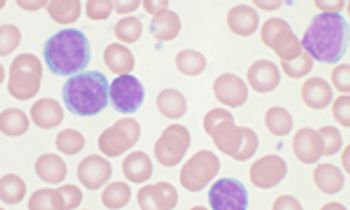
Combination therapy with ibrutinib plus bendamustine and rituximab significantly extended progression-free survival compared with BR alone in patients with chronic lymphocytic leukemia or small lymphocytic lymphoma enrolled in the phase III HELIOS trial.

Cytogenetic and molecular data are becoming increasingly important in the individualization of treatment of patients with acute myeloid leukemia (AML).

Although advances are being made in novel therapies for patients with chronic lymphocytic leukemia (CLL), standard chemotherapy remains part of the treatment paradigm, but its role is undergoing a major shift.

Experts on hematologic malignancies will convene for the 19th Annual International Congress on Hematologic Malignancies, from February 20-21 in Miami, Florida, to provide insight into recent developments in the treatment of the diseases.

Ibrutinib (Imbruvica) showed promising activity in heavily pretreated, relapsed/refractory chronic lymphocytic leukemia (CLL) after allogeneic stem cell transplantation (ASCT).

The FDA has granted a Fast Track Designation to CPX-351, a liposomal formulation of cytarabine and daunorubicin, for the treatment of elderly patients with relapsed acute myeloid leukemia (AML).

ASCO named the improved outlook for patients with chronic lymphocytic leukemia (CLL) as its inaugural “Cancer Advance of the Year.â€

Fulvestrant (Faslodex) improved overall survival (OS) by 5.7 months compared with anastrozole as a frontline treatment for postmenopausal women with HR-positive metastatic breast cancer. These findings from the phase II FIRST trial were presented at the 2014 San Antonio Breast Cancer Symposium.

Jae Park, MD, assistant attending physician, Memorial Sloan Kettering Cancer Center, discusses CAR T-cell therapy for the treatment of acute lymphoblastic leukemia.

Adrian Wiestner, MD, PhD, senior investigator, National Institutes of Health, discusses curing or managing patients with chronic lymphocytic leukemia (CLL).

Idelalisib monotherapy shows activity in treatment-naïve patients ≥65 years with chronic lymphocytic leukemia (CLL) or small lymphocytic lymphoma (SLL) — nearly 90% of patients enrolled in a phase II study demonstrated a partial response.

The anti-CD19 immunotherapy blinatumomab (Blincyto) has been approved by the FDA as a treatment for patients with Philadelphia chromosome-negative relapsed/refractory B-precursor acute lymphoblastic leukemia (ALL), based on findings from a phase II trial.

Marcel R.M. van den Brink, MD, PhD, Head, Division of Hematologic Oncology, Memorial Sloan Kettering Cancer Center, discusses two abstracts being presented at ASH looking at CAR T cell therapies for the treatment of ALL and NHL.
As its CAR T cell and high-affinity TCR products continue to advance in clinical trials, Juno Therapeutics, Inc, filed a registration statement for an initial public offering (IPO) of its common stock on November 17.

The monoclonal antibody cirmtuzumab, currently in clinical trials to treat CLL, targets ROR1 on the surface of cancerous B cells, and the agent may have a wider reach in the treatment of ovarian and other cancers.

When Gail J. Roboz, MD, took the stage Wednesday to give her talk on what’s ahead in the treatment of acute myeloid leukemia (AML), she admitted feeling a little jealousy toward her colleagues in the lymphoid diseases.

As the targeted therapy era in chronic lymphocytic leukemia (CLL) continues to unfold, two next-generation agents are generating responses with improved safety profiles as single agents and in combination regimens.
The investigational chimeric antigen receptor (CAR) therapy CTL019 elicited complete remissions in 27 of 30 pediatric and adult patients (90%) with relapsed/refractory acute lymphoblastic leukemia (ALL) in 2 pilot trials.

The FDA has assigned a priority review designation to blinatumomab as a treatment for adult patients with Philadelphia chromosome-negative (Ph-) relapsed/refractory B-precursor acute lymphoblastic leukemia.
Julian Adams, PhD, president, Research and Development, Infinity Pharmaceuticals, discusses the rationale behind the DUO trial.
The bromodomain inhibitor, OTX015, may have use in the treatment of hematologic malignancies, including acute leukemia and other hematologic malignancies that include lymphomas and multiple myeloma.

The FDA has expanded the approval of ibrutinib (Imbruvica) to include the treatment of patients with chronic lymphocytic leukemia (CLL) who have received at least one previous therapy and harbor a 17p deletion.

Jennifer Woyach, MD, assistant professor of Internal Medicine, Division of Hematology, The Ohio State University Comprehensive Cancer Center, discusses the association of disease progression on ibrutinib therapy with the acquisition of resistance mutations as seen at The Ohio State University Comprehensive Cancer Center.