
Jeff Auletta, MD, discussed the ACCESS trial and explained that mismatched unrelated donor transplants can be a viable option.
Jordyn Sava is an editor for Targeted Oncology.
Jeff Auletta, MD, discussed the ACCESS trial and explained that mismatched unrelated donor transplants can be a viable option.

The FDA cleared the investigational new drug application for ALX2004, with phase 1 trials expected to begin in mid-2025 for EGFR+ solid tumors.
Paige PanCancer Detect has gained FDA breakthrough device designation, a first for AI identifying diverse cancers across tissues.
Akriti Jain, MD, discussed how emerging data on non-ABL1 mutations is reshaping chronic myeloid leukemia management.

The primary end point of overall response rate has been met in the COMPANION-002 trial of tovecimig and paclitaxel in advanced biliary tract cancer.
Following a successful Type B end-of-phase 2 meeting, the FDA has approved the start of a phase 3 trial of linperlisib in peripheral T-cell lymphoma.
Matt Galsky, MD, delved into the recent approval of a perioperative durvalumab regimen in muscle-invasive bladder cancer.

A pilot study will evaluate Alpha DaRT for the treatment of patients with recurrent glioblastoma.

Subcutaneous pembrolizumab demonstrated comparable efficacy vs intravenous administration in non–small cell lung cancer, with a significantly shorter injection time.
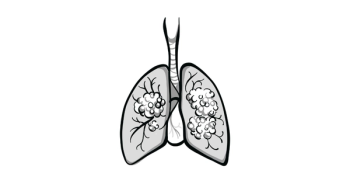
Amit Gupta, MD, discussed a new collaboration between University Hospitals Cleveland Medical Center and Qure.ai that aims to enhance early lung cancer detection.
Here is a look back on all the FDA happenings from the month of March 2025.
A second phase 1 trial plans to evaluate CER-1236, a novel chimeric antigen receptor therapy, for solid tumors.
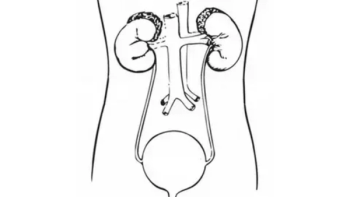
Neal Shore, MD, FACS, discussed findings from the SunRISe-4 trial of TAR-200 and cetrelimab in muscle-invasive bladder cancer.
A phase 3 trial plans to further assess neoadjuvant darovasertib for the potential treatment of patients with primary uveal melanoma.

The combination of relacorilant and nab-paclitaxel improved progression-free and overall survival in patients with platinum-resistant ovarian cancer.

The fourth cohort of an ongoing phase 1/2 has dosed its first patient with TTX-MC138 in advanced solid tumors.
Final phase 2a results showed that CAN-2409 led to a median overall survival of 24.5 months in immune checkpoint inhibitor–refractory patients with NSCLC.
This approval of durvalumab marks the first and only perioperative immunotherapy regimen available in muscle-invasive bladder cancer.
The FDA approved 177Lu PSMA-617 for prostate-specific membrane antigen-positive metastatic castration-resistant prostate cancer after androgen therapy.

Frederick L. Locke, MD, discussed cema-cel's safety, efficacy, and potential for treating large B-cell lymphoma in earlier lines in the ALPHA trials.
BNT327 combined with chemotherapy showed an overall response rate of 85.4% when used as a first-line treatment for extensive-stage small cell lung cancer.
A phase 2 trial will evaluate leronlimab’s safety and efficacy for the treatment of patients with microsatellite stable metastatic colorectal cancer.

Early results show that the combination of VXM01 plus avelumab demonstrated tolerable safety in recurrent glioblastoma.

Final overall survival data from the MARIPOSA trial show that amivantamab and lazertinib improves survival vs osimertinib in EGFR-mutated NSCLC.

Early trial results show combining the oncolytic virus olvi-vec with chemotherapy led to disease control and tolerable safety in extensive-stage small cell lung cancer.
A phase 3 trial will evaluate IMNN-001, the first immunotherapy to show an overall survival benefit in ovarian cancer.
Belzupacap sarotalocan showed rapid immune activation and a favorable safety profile as a treatment for non–muscle-invasive bladder cancer.
Nemvaleukin alfa with pembrolizumab missed the overall survival primary end point in ARTISTRY-7 for platinum-resistant ovarian cancer.

Tilsotolimod plus ipilimumab did not show benefit vs ipilimumab alone in anti–PD-1 refractory melanoma, despite prior positive phase 1/2 trial data.