John M. Burke, MD, discusses the 2 phase 3 trials presented at the 2023 ASH Annual Meeting that have potential to be practice changing for patients with multiple myeloma and chronic lymphocytic leukemia.
John Burke, MD, is a hematologist, medical oncologist, and blood cancer specialist at Rocky Mountain Cancer Centers.
John M. Burke, MD, discusses the 2 phase 3 trials presented at the 2023 ASH Annual Meeting that have potential to be practice changing for patients with multiple myeloma and chronic lymphocytic leukemia.

In this article, John M. Burke, MD, discusses the high prices of prescription drugs and the new law that allows the government to negotiate drug prices with manufacturers.

John M. Burke, MD, discusses how Bruton tyrosine kinase inhibitors have demonstrated unexpected promise in treating follicular lymphoma, challenging previous assumptions in the field of oncology.

During the plenary session of the 2023 American Society of Clinical Oncology Annual Meeting, we learned that BV-AVD’s reign at the top may be short lived.
John M. Burke, MD, turns to ChatGPT to uncover what artificial intelligence may do for hematologists/oncologists.
John M. Burke, MD, highlights progress in the field of hematology and oncology presented at the 64th American Society of Hematology Annual Meeting and Exposition.
According to John M. Burke, MD, significant attention has been paid in recent years to the problem of physician burnout and as oncologists continue to care for patients, it important to also care for themselves.
Additional data emerged demonstrating the value of blinatumomab not only in patients with relapsed acute lymphoblastic leukemia but also in those with detectable minimal residual disease.
After a meeting like the 2022 ASCO Annual Meeting, one cannot help but be reinvigorated to continue advancing cancer care and feel optimistic about the future of oncology, says John M. Burke, MD.
In this month's 10-year anniversary issue of Targeted Therapies in Oncology™, we feature an article on the evolution of immunotherapy approaches in oncology over the past decade.
Improving our diagnostic and prognostic testing capabilities is one of the most important and exciting ways to improve how we care for patients with cancer, according to John M. Burke, MD.

Amid the surge of the omicron variant, the FDA issued an emergency use authorization for the orally administered antiviral combination, which can reduce the rate hospitalization or death by 87% compared with no treatment.
Clinical trial findings presented during the ASH annual meeting have the potential to change the management of diffuse large B-cell lymphoma, according to John M. Burke, MD.
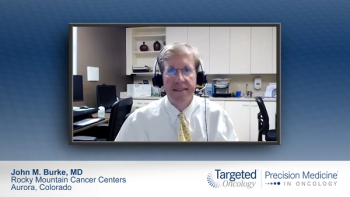
The future of combined treatment approaches with anti-CD19 therapies for diffuse large B-cell lymphoma.
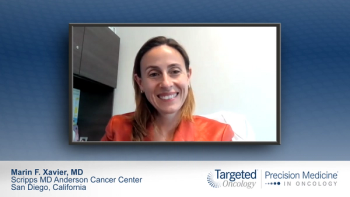
Suggestions to hematologist-oncologists when talking to patients with relapsed/refractory diffuse large B-cell lymphoma about the potential benefits of CAR T-cell therapy and toxicities.
Recommendations to increase the uptake of CAR T-cell therapies into clinical practice when managing patients with relapsed/refractory diffuse large B-cell lymphoma.
Variables that are likely to impact the use of loncastuximab vs a combination approach with tafasitamab and lenalidomide to treat relapsed/refractory diffuse large B-cell lymphoma.
An overview of the LOTIS-1 clinical trial and the rationale for the accelerated approval of loncastuximab for relapsed/refractory diffuse large B-cell lymphoma.
Recommendations for managing patients with diffuse large B-cell lymphoma on tafasitamab.
An overview of potential strategies being explored to improve frontline therapy with R-CHOP for patients with relapsed/refractory diffuse large B-cell lymphoma.
Drs John M. Burke and Marin F. Xavier consider the potential utilization of tafasitamab plus lenalidomide plus R-CHOP chemotherapy vs R-CHOP chemotherapy alone as relapsed/refractory diffuse large B-cell lymphoma treatment.
Implications for treating unfit patients with relapsed/refractory diffuse large B-cell lymphoma with chemotherapy or the combination of tafasitamab and lenalidomide based on patient characteristics and the L-MIND trial.
Recommendations for approaching patients with relapsed/refractory diffuse large B-cell lymphoma with newer targeted treatment approaches as frontline therapy vs referral for transplant.
The rationale for sequencing therapy with CD19-targeted agents when managing patients with various subtypes of diffuse large B-cell lymphoma.
Variables that impact a patient with diffuse large B-cell lymphoma, and prognosis and strategies for counseling patients on goals of therapy.
Debates regarding the proper timing for repeat scans, interval CT testing, and surveillance imaging on patients with diffuse large B-cell lymphoma following frontline therapy.
The differences between frontline treatment strategies for early stage vs double- or triple-hit diffuse large B-cell lymphoma.
A discussion of standard frontline treatment approaches and considerations for utilizing maintenance therapy for patients with germinal center B-cell and activated B-cell subtypes of diffuse large B-cell lymphoma.
A review of the criteria that help hematologist-oncologists appropriately manage patients with diffuse large B-cell lymphoma.
John Burke, MD, provides clinical pearls in the recognition in treatment of relapsed/refractory diffuse large B-cell lymphoma (R/R DLBCL).