Now Playing
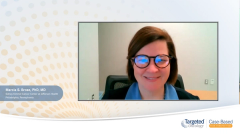
Marcia S. Brose, MD, PhD, presents the case of a 43-year-old man with radioiodine-refractory differentiated thyroid cancer (RAI-R-DTC) and offers her initial impressions.
Case: A 43-Year-Old Man with RAI-R-DTC
Initial presentation and initial treatment:
Clinical workup
Subsequent treatment and follow-up
This is a video synopsis/summary of a Case-Based Peer Perspectives featuring Marcia S. Brose, MD, PhD.
Brose presents a case of a 43-year-old man diagnosed with papillary thyroid cancer 10 years prior. The patient had undergone a total thyroidectomy and multiple rounds of radioactive iodine therapy. He presented with fatigue, neck pain, difficulty swallowing, and a palpable mass in the left neck. Imaging revealed a neck mass invading surrounding structures and multiple pulmonary nodules. A radioactive iodine uptake scan confirmed disease refractory to radioactive iodine. Next-generation sequencing was negative for mutations and rearrangements. The patient started on lenvatinib at 24 mg.
Brose discusses the appropriateness of lenvatinib treatment, noting its superior response rate and progression-free survival rate when compared with sorafenib, as demonstrated in a phase 2 head-to-head study. She also emphasizes the importance of starting lenvatinib at the full 24 mg dose, as supported by dose-finding studies showing improved outcomes without increased grade 3 adverse events or detriment to overall functioning.
Video synopsis is AI-generated and reviewed by Targeted Oncology™ editorial staff.